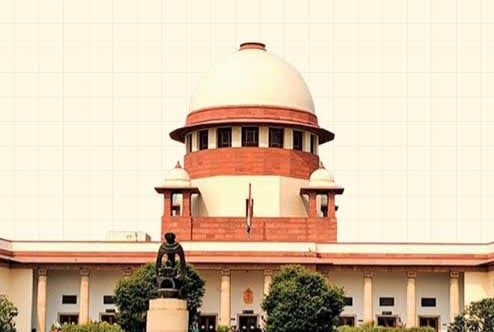
President Droupadi Murmu promulgated the Supreme Court (Number of Judges) Amendment Ordinance, 2026, raising the sanctioned strength of the apex court from 33 to 37 judges, excluding the Chief Justice of India.
With the Chief Justice included, the court can now function with a total strength of 38 judges.
The Union Cabinet approved the amendment earlier this month amid concerns over more than 92,000 pending cases. The ordinance aims to improve judicial efficiency and accelerate the disposal of matters.
This marks the second expansion of the Supreme Court under the present Union government. In 2019, the sanctioned strength was increased from 30 to 33 judges. The latest increase has been enabled under Article 124 of the Constitution, which empowers Parliament to determine the number of judges beyond the Chief Justice.
Officials argue that rising fresh filings and existing pendency have put enormous pressure on sitting judges. By adding four more judges, the Supreme Court can constitute more benches simultaneously. Since most matters are heard by two‑ or three‑judge benches, the expansion is expected to enhance hearing capacity and reduce delays.
Legal experts believe the measure will provide immediate relief by improving listing schedules, reducing adjournments, and easing workload on individual judges. The ordinance also comes at a time when digital filing and post‑pandemic litigation growth have sharply increased the burden on the judiciary.
While the move promises short‑term gains, experts caution that broader judicial reforms across subordinate courts remain essential to address systemic delays. For now, the ordinance signals the Centre’s attempt to relieve pressure on the Supreme Court and deliver faster justice.