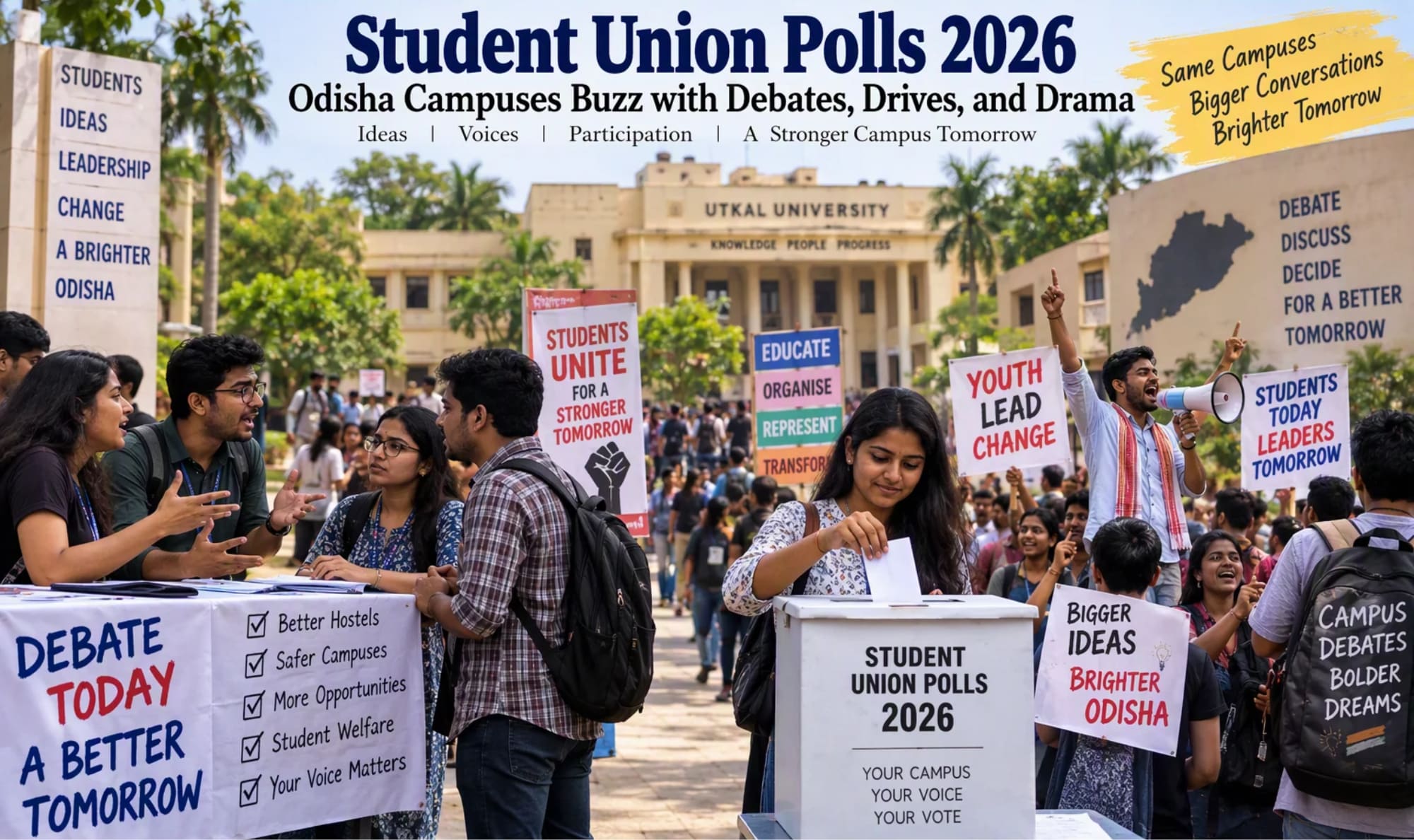
After a long eight-year wait, vibrant political energy has returned to higher education campuses across Odisha as student union elections kick into high gear.
With voting scheduled for October 15, candidates across state colleges and universities are leaving no stone unturned to woo voters, making the most of every hour left on the campaign clock.
Election Schedule & Key Milestones
According to the timeline issued by the Department of Higher Education, the formal election notification was released on October 7. Nomination filings and scrutiny concluded on October 9, followed by the final withdrawal phase on October 10 to yield the final list of contesting candidates.
The highlight of the election calendar—the famous ‘Why I Stand’ (Why I Want to Contest) assembly—will take place on October 14. During this forum, candidates will pitch their manifestos, priorities, and visions directly to the student body.
Polling will take place on October 15 from 8:00 AM to 2:00 PM, followed immediately by vote counting and result declarations later that afternoon. The newly elected student representatives will take their oath on October 16.
Key Statistics at a Glance
| Category | Details / Numbers |
| Total Nominations Filed | ~8,300 |
| Nominations Rejected | ~1,175 |
| Valid Candidates Contesting | ~7,168 |
| Presidential Candidates | 1,149 |
| General Secretary Candidates | 758 |
| Uncontested Winners | 1,620 (College Level) / 33 (Varsity Level) |
| Participating Institutions | 13 Universities & 328 Colleges (Direct Voting) |
High-Voltage Campaigning and Strict Rules
Even on Sunday, hostellers and day scholars witnessed non-stop door-to-door campaigning across major education hubs including Bhadrak, Sundargarh, Bhubaneswar, Balangir, and Rourkela. Slogans and rallies resonated through premier institutions like Vani Vihar (Utkal University) as candidates canvassed hostel rooms to secure support.
To keep elections fair and disciplined, the state is strictly implementing the Lyngdoh Committee guidelines:
-
Age Limits: 17 to 22 years for undergraduates; up to 25 years for postgraduates.
-
Academic Criteria: Minimum 75% class attendance with no active backlogs for the academic year.
-
Expenditure Cap: Candidates are allowed a maximum campaign budget of Rs 5,000.
Tensions and Security Measures
While campaigning remains peaceful across most campuses, isolated incidents of unrest over nomination rejections have surfaced. Deogarh College was forced to close indefinitely after protests flared up following candidates’ disqualifications. In Umarkote, a clash between two rival groups outside a campus resulted in one youth sustaining serious injuries.
In response, local authorities have tightened security around sensitive campuses and deployed police personnel to maintain peace and ensure order leading up to voting day.
Despite minor disruptions, students across Odisha are embracing the democratic process with enthusiasm, viewing the elections as a vital training ground for leadership and civic engagement.