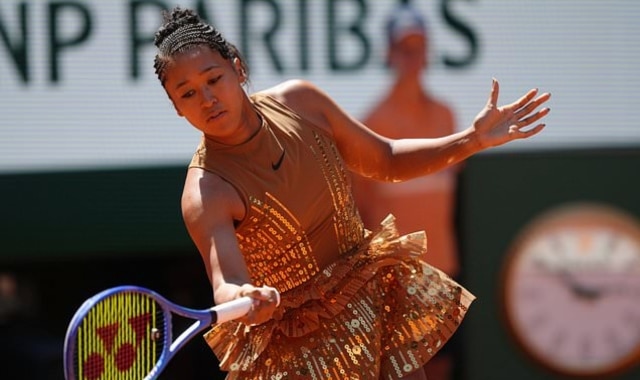
Naomi Osaka dazzled at the French Open with a sequined gold dress designed by Nike, paired with a ceremonial black skirt and bodice by Swiss designer Kevin Germanier.
She described the outfit as “very couture,” inspired by the sparkling Eiffel Tower.
Osaka defeated Germany’s Laura Siegemund 6-3, 7-6 (3), proving she could balance high fashion with top-tier performance. “Athletes are in show business,” she said, adding that Grand Slam walk-ons make her feel like an entertainer.
Her bold choice drew mixed reactions online. Supporters praised her confidence and creativity, while critics accused her of disrespecting tennis traditions. Osaka responded by saying she expresses herself through fashion: “I don’t talk a lot, so I talk through my clothes.”
The controversy revived long-standing debates about sexism in tennis dress codes. Historically, female players have faced scrutiny for attire deemed too bold or unconventional. Serena Williams’ banned catsuit at the 2018 French Open and Anne White’s spandex suit at Wimbledon in 1985 remain notable examples.
Despite progress—such as the Women’s Tennis Association allowing leggings and compression shorts—many still judge women’s outfits more harshly than men’s. Former British No.1 Annabel Croft said Osaka’s confidence allows her to “live up to the expectation” of her extraordinary outfit.
Osaka’s gold ensemble symbolises more than style—it challenges outdated norms and celebrates individuality in a sport still learning to embrace self-expression.