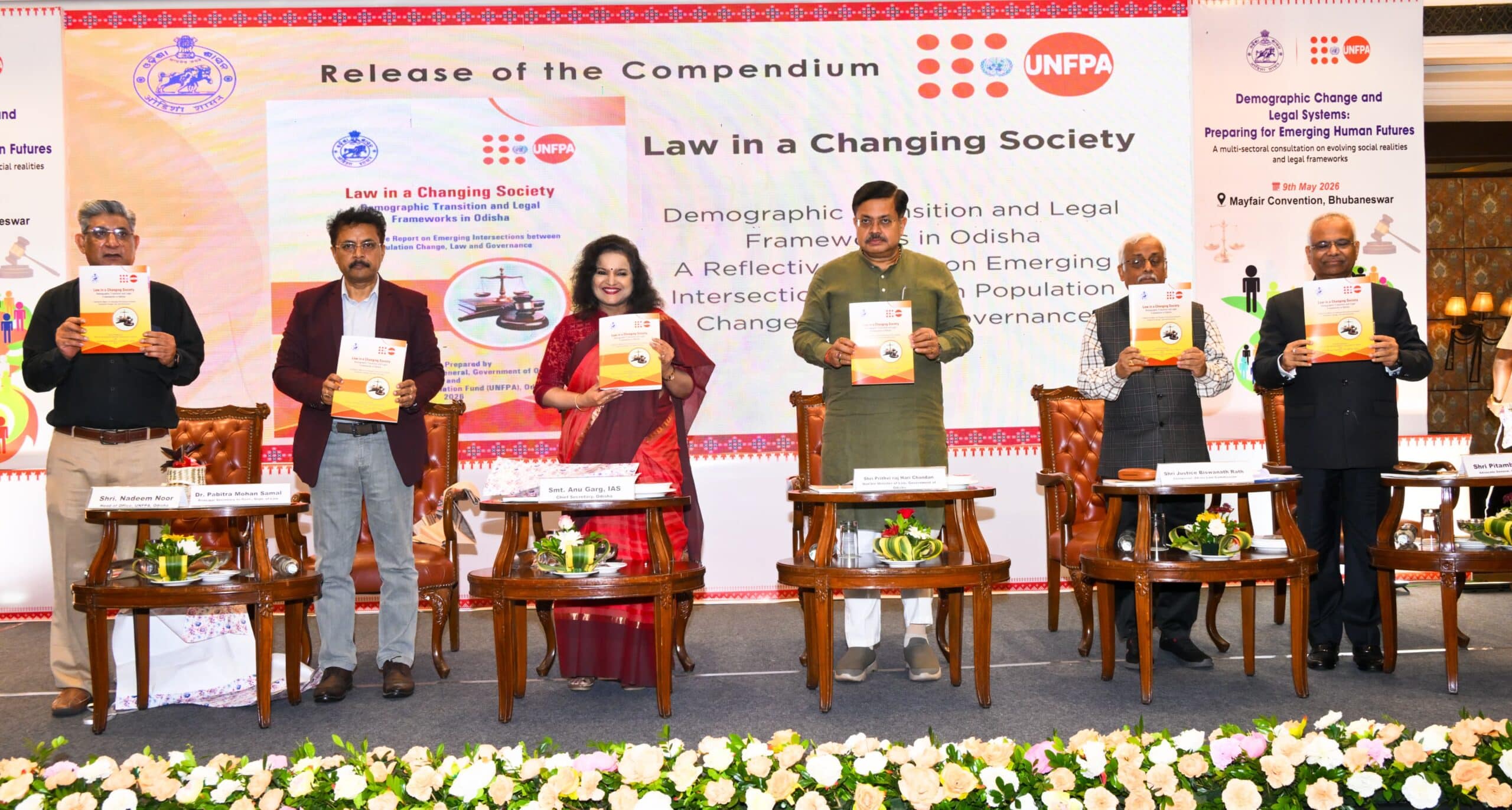
As Odisha and India stand at the cusp of a massive demographic shift—with a bulging youth population today poised to give way to a rapidly ageing society tomorrow—the state government is rewriting the rules of justice to match.
Law, Works and Excise Minister Prithviraj Harichandan declared that the legal system must evolve now to serve the next 50 years, not yesterday’s realities.
Speaking at a high-level workshop jointly organised by the Odisha Law Department and the United Nations Population Fund (UNFPA), Harichandan stressed the urgency of long-term planning. “More than 50% of our population is currently youth. In the coming decades, the number of senior citizens will surge. We must prepare today for Viksit Odisha 2036 and Viksit Bharat 2047,” he said.
The minister announced two landmark initiatives: the establishment of seven Women Fast-Track Courts across the state to deliver swift justice to women, and five independent Cyber Courts to combat rising cybercrime and ensure speedy punishment. He also revealed plans for grassroots legal awareness drives in local languages for rural communities, especially among Odisha’s 62 tribal groups and 13 Particularly Vulnerable Tribal Groups (PVTGs).
“Development is not just economic—it is holistic,” Harichandan added. “We are building a future where every district, every region, and every community is taken into account.”
Chief Secretary Anu Garg painted a broader picture, linking demographic change to family structures, social security, and the justice system itself. “Population transition is not only about numbers; it is deeply intertwined with the justice delivery mechanism,” she noted.
Law Commission Chairperson Justice Biswanath Rath called for making laws more people-centric and sensitive to shifting social realities. Advocate General Pitambar Acharya pointed out that changing family dynamics and responsibilities have already led to a sharp rise in court cases, urging laws that ordinary citizens can actually understand.
UNFPA’s Odisha Chief, Md. Nadim Noor highlighted how social programmes and the justice system must reflect these demographic realities.
The workshop culminated in the release of a significant publication titled “Law in a Changing Society: Demographic Transition and Legal Frameworks in Odisha”, which analyses the interplay between population trends, governance, and judicial decisions. Three technical sessions followed, featuring insights from experts including former MP Amar Patnaik on ageing, youth, family structures, assisted reproductive technology, and institutional responses.
The message from Bhubaneswar was loud and clear: Odisha is not waiting for the future—it is legislating it today.