In a significant step toward putting Odisha’s rich food culture on the world map, the Odisha University of Agriculture and Technology (OUAT) has advanced applications for Geographical Indication (GI) tags for three iconic traditional products: Sambalpur Sarpotia, Manikpatna Dahi and Dhenkanal Pala Baurali.
University officials confirmed that these applications have reached the final stage of approval, promising enhanced global recognition and market value for these time-honoured local delicacies.
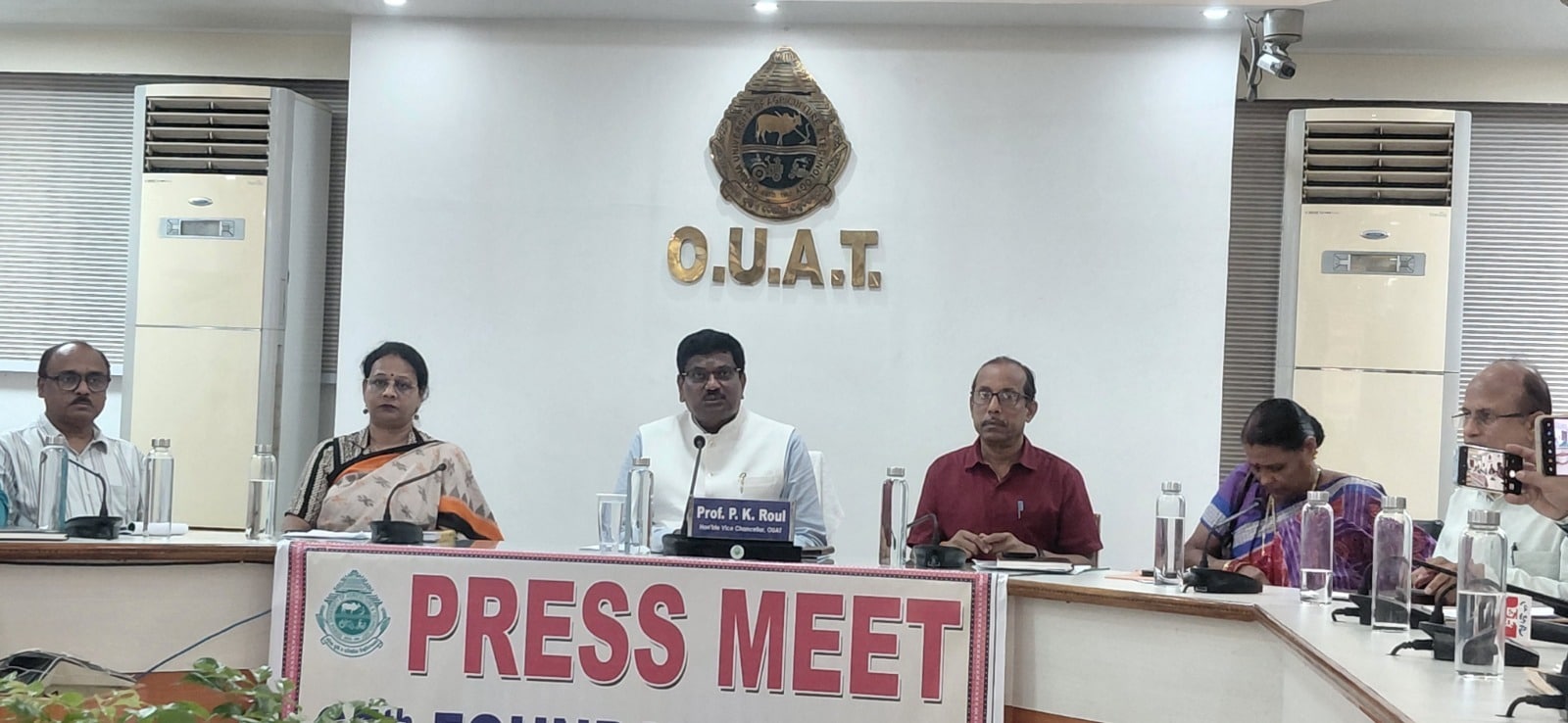
The announcement came ahead of OUAT’s 65th Foundation Day celebrations scheduled for Monday. Vice-Chancellor Professor Dr. Pravat Kumar Roul shared the updates during a special press conference, highlighting the university’s high-impact research projects and community-focused initiatives. “OUAT continues to lead the nation in innovative discoveries while remaining deeply rooted in serving Odisha’s farmers and rural communities,” he said.
Established in 1962, OUAT stands as the state’s sole agricultural university, dedicated to education, research, extension services and skill development in agriculture and allied sectors. Over six decades, it has carved a distinctive identity by consistently advancing farming practices and rural livelihoods across Odisha.
Among recent milestones, the university’s Centre for Wildlife Health has earned NABL accreditation, becoming the first such laboratory in the state. In a boost to higher education, postgraduate students will now receive a monthly stipend of ₹10,000, while PhD scholars will get ₹15,000. Parallel efforts are underway to sharpen the skills of rural youth through targeted training programmes.
Expansion plans are also gaining momentum. With state government approval, two new colleges of agriculture are being established in Mayurbhanj and Balangir districts. Additional institutions — a college of physiotherapy and animal husbandry in Sambalpur and a college of fisheries science in Sonpur — are on the anvil. The Mayurbhanj College of Agriculture has already received sanction for 24 teaching and 53 non-teaching posts, with all 60 seats filled.
On the ground, OUAT’s Krishi Vigyan Kendras delivered impressive results in 2025-26. Through 15,577 training camps, they reached 43,518 farmers. Another 275 camps benefited 4,884 rural young men and women, while 183 programmes trained 3,241 extension personnel.
Looking ahead, Professor Roul outlined a clear vision: strengthening quality agricultural education, cutting-edge research, technology transfer, skill development, entrepreneurship and farmer-centric extension services. “We are committed to driving the holistic growth of Odisha’s agriculture and allied sectors,” he affirmed.
As OUAT enters its 66th year, the impending GI tags for three of Odisha’s cherished traditional foods symbolise more than institutional achievement — they represent a proud assertion of the state’s cultural and agricultural legacy on the global stage.