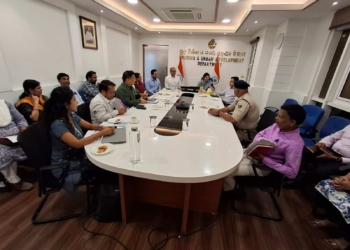
Odisha has crossed a major clean energy milestone by installing 3,01,720 residential rooftop solar systems under the PM Surya Ghar: Muft Bijli Yojana, beating its 2027 state target well ahead of schedule.
Affordable financing and doorstep outreach have turned rooftop solar into a household reality across both urban and rural Odisha. Backed by the joint commitment of the Government of India under Prime Minister Shri Narendra Modi and the Government of Odisha, families can access combined central and state subsidies of up to ₹1.38 lakh. Adding state financial assistance to central support has sharply lowered upfront installation costs for everyday households.
Under the guidance of Deputy Chief Minister Kanak Vardhan Singh Deo, local solar camps, community drives, and the mobile “Solar Ratha” outreach campaign have brought clear guidance on subsidies, net metering, and online registration straight to neighbourhoods.
“Crossing the 3 lakh rooftop solar installation milestone well ahead of the 2027 deadline under the PM Surya Ghar: Muft Bijli Yojana is a significant achievement in Odisha’s clean and sustainable energy journey. The Government of Odisha remains committed to accelerating the adoption of renewable energy by taking the benefits of rooftop solar directly to the people through additional financial support, widespread awareness drives, and initiatives like the ‘Solar Ratha’. While making clean and affordable energy more accessible to households, we are empowering consumers to become active participants in the state’s green energy transition.” — Kanak Vardhan Singh Deo, Deputy Chief Minister, Odisha.
Execution across all 30 districts has relied on close coordination with Odisha’s four power distribution companies—TPCODL, TPNODL, TPSODL, and TPWODL. By onboarding vendors, speeding up technical approvals, and simplifying consumer registration, these DISCOMs have helped move families from inquiry to grid connection faster across every region.
With more than three lakh rooftops now generating clean power, Odisha has set an early benchmark for residential solar adoption and turned everyday homeowners into active contributors to the state’s green transition.