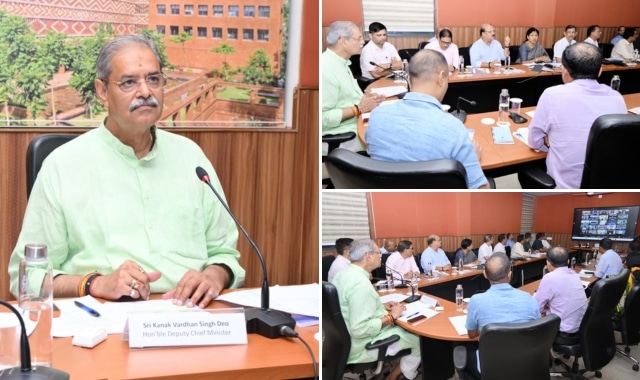
Odisha reinforced its Kharif 2026 preparedness following a high-level review by Union Agriculture Minister Shivraj Singh Chouhan.
Deputy Chief Minister Kanak Vardhan Singh Deo joined the meeting along with senior officials to assess the state’s readiness against potential El Niño challenges.
The India Meteorological Department (IMD) projected a below‑normal southwest monsoon at 92 per cent of the long‑period average. Eight districts—Deogarh, Sundargarh, Keonjhar, Mayurbhanj, Koraput, Rayagada, Malkangiri, and Nabarangpur—are under special monitoring for rainfall deficit and moisture stress.
Odisha has finalised a cropping programme covering 57.88 lakh hectares. The state distributed certified seeds at subsidised rates and created a strategic seed reserve of 14,350 quintals, including 7,500 quintals of paddy and 6,850 quintals of non‑paddy seeds. To support farmers, 6.40 lakh MT of fertilisers are already available against the seasonal requirement of 11.42 lakh MT.
The government is leveraging technology and community engagement to strengthen resilience. Crop weather advisories are being issued through the Krushi Samrudhi Helpline IVRS, while the Khet Bachao Abhiyan and natural farming workshops promote sustainable practices.
Deputy CM Singh Deo emphasised rapid response and financial security for farmers. Teams from OUAT and Krishi Vigyan Kendras are conducting pest surveillance and promoting enrollment under the Pradhan Mantri Fasal Bima Yojana (PMFBY). The Crop Contingency Plan is operational at the state and district levels, with block‑level plans underway to ensure timely action.