Odisha has successfully completed the first phase of the Census 2026 operations, marking a major milestone in the state’s data-gathering exercise.
The House Listing Operation and Housing Census, conducted across the state from April 16 to May 15, 2026, concluded smoothly, thanks to the coordinated efforts of thousands of officials and field workers.
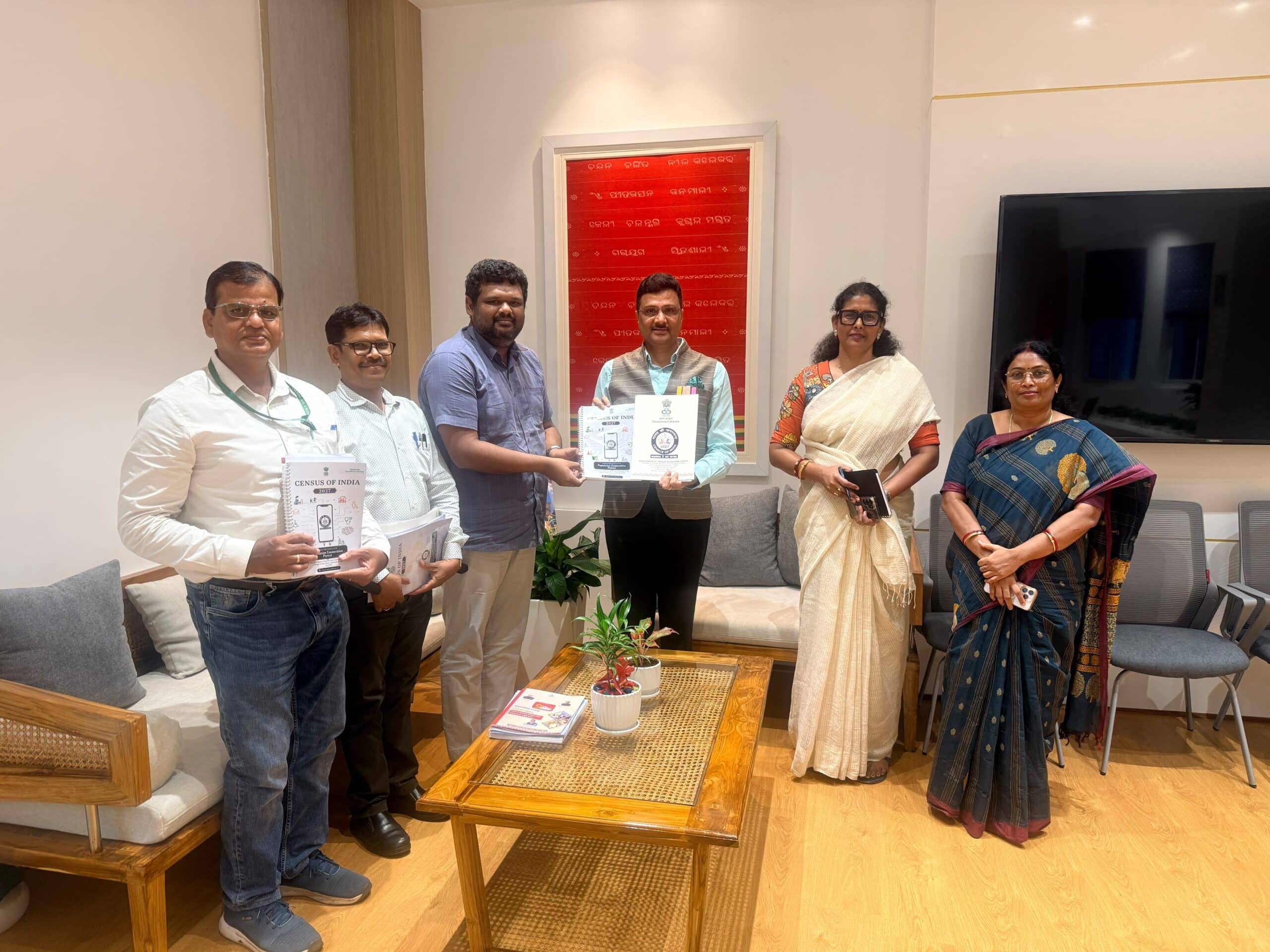
The achievement was reviewed today at Lok Seva Bhavan by Dr Arabinda Kumar Padhee, Additional Chief Secretary, Revenue and Disaster Management Department. Director of Census Operations, Nikhil Pawan Kalyan, presented a detailed report on the successful completion of the first phase to Dr. Padhee.
Dr Padhee extended heartfelt congratulations and high praise to every officer, enumerator, supervisor, district collector, and municipal commissioner involved in the massive exercise. He particularly highlighted the crucial role played by field-level workers.“The success of a national programme like the Census depends heavily on the dedication and hard work of personnel working at the grassroots level,” Dr Padhee said during the review meeting.
The Self Enumeration phase, which ran from April 1 to April 15, 2026, had already set a positive tone, and the subsequent 30-day House Listing and Housing Census phase built on that momentum to deliver strong results statewide.
Along with reviewing the completed phase, the meeting focused on detailed preparations for the next and most critical stage — the Population Enumeration, scheduled for February 2027. Dr Padhee directed officials to ensure all preparatory work, planning, and logistics are completed in a time-bound manner so that the second phase can be executed with equal efficiency and accuracy.
Senior officials present at the meeting included Additional Secretaries Prajnadhara Mishra and Alomani Sethi, along with Joint Directors of Census Operations Hemant Kumar Singh and Shri Haradhan Karmi.
With the first phase now successfully behind them, the Census team in Odisha is fully geared up for the upcoming Population Enumeration, which will provide comprehensive data on the state’s population and help shape future development policies.