For the inhabitants of Chirupada and Badabaliposhi villages under Keshadiha Gram Panchayat in Mayurbhanj district, everyday commuting has turned into an agonizing ordeal.
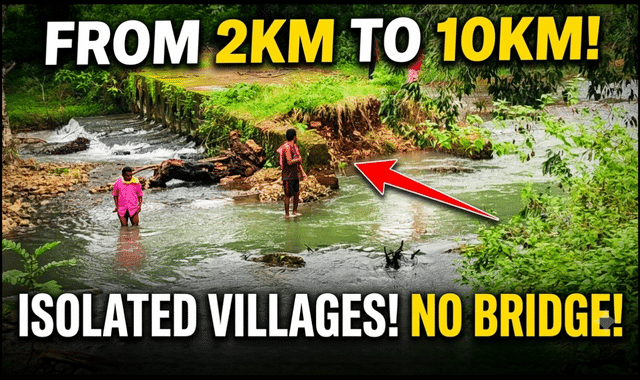
Nestled in the foothills of the Similipal biosphere, these predominantly tribal communities are being forced to travel an extra 10 kilometers simply to reach their panchayat headquarters—a journey that should logically span just 2 kilometers.
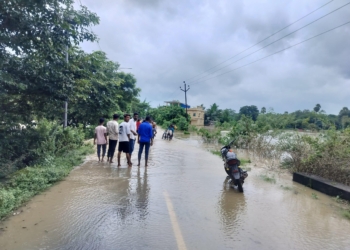
The crux of the crisis lies in the absence of a durable bridge over the Gobarjoda channel. A temporary hume pipe bridge previously facilitated movement across the river, connecting Chirupada and Badabaliposhi directly to Keshadiha via Mandaljhari. However, severe monsoon flooding swept the structure away, leaving a gaping void in local infrastructure. Years have passed, yet no concrete bridge has been constructed in its place.

Healthcare, Education, and Livelihoods Hit Hard
The missing link has disrupted life across all demographics. Ward Nos. 1 and 2 of Keshadiha GP—comprising Chirupada (187 households, 888 residents) and Badabaliposhi (180 households, 889 residents)—are almost entirely inhabited by indigenous tribal families.
Pregnant women, critical medical patients, school students, and senior citizens bear the heaviest burden of this prolonged isolation. Furthermore, local farmers, who form the backbone of the area’s agrarian economy, struggle to transport their paddy and vegetable harvests to regional markets. Unable to trek the lengthy 10 km alternate route with heavy loads, many are forced to sell their hard-earned produce to middlemen at throwaway prices.
Public transit access has similarly been curtailed. While state-run buses operate 7 trips daily from the block headquarters to Keshadiha, they currently detour through Mituani. Local residents point out that a functional bridge over the Gobarajoda River would allow buses to run seamlessly through Badabaliposhi, Chirupada, and Mandaljhari, directly benefiting commuters, students, and patients across multiple hamlets.
Administrative Neglect Raises Questions
Despite nearly 99% of the affected population belonging to tribal communities, interventions from specialized welfare bodies like the Integrated Tribal Development Agency (ITDA) or the Rural Development Department remain nowhere in sight. Villagers contend that the road and bridge project fully qualifies for funding under the Pradhan Mantri Gram Sadak Yojana (PMGSY), yet official action remains stagnant.
Addressing the issue, the local Sarpanch stated that constructing a permanent bridge requires substantial government intervention and funding, as the project far exceeds the financial capacity of the Gram Panchayat.
Left with unanswered petitions to representatives and district officials, the villagers continue to wait for basic infrastructure that could instantly transform their quality of life.