• About us
  • Privacy Policy
  • Disclaimer
  • Contact
Saturday, September 26, 2026
Pragativadi I Latest Odisha News in English I Breaking News
  • EPAPER
  • Odisha
  • Twin City
  • Politics
  • National
  • World
  • Sports
  • Entertainment
  • Business
  • Lifestyle
  • Tech
  • Quiz
  • Prativa Vikash 2026
No Result
View All Result
  • EPAPER
  • Odisha
  • Twin City
  • Politics
  • National
  • World
  • Sports
  • Entertainment
  • Business
  • Lifestyle
  • Tech
  • Quiz
  • Prativa Vikash 2026
No Result
View All Result
Pragativadi I Latest Odisha News in English I Breaking News
No Result
View All Result

Home » Greenhouse Gas Emissions: Causes, Impacts & Renewable Energy Solutions

Greenhouse Gas Emissions: Causes, Impacts & Renewable Energy Solutions

pragativadinewsservice by pragativadinewsservice
September 22, 2026
in Tech
Reading Time: 6 mins read
0 0
0
7
VIEWS

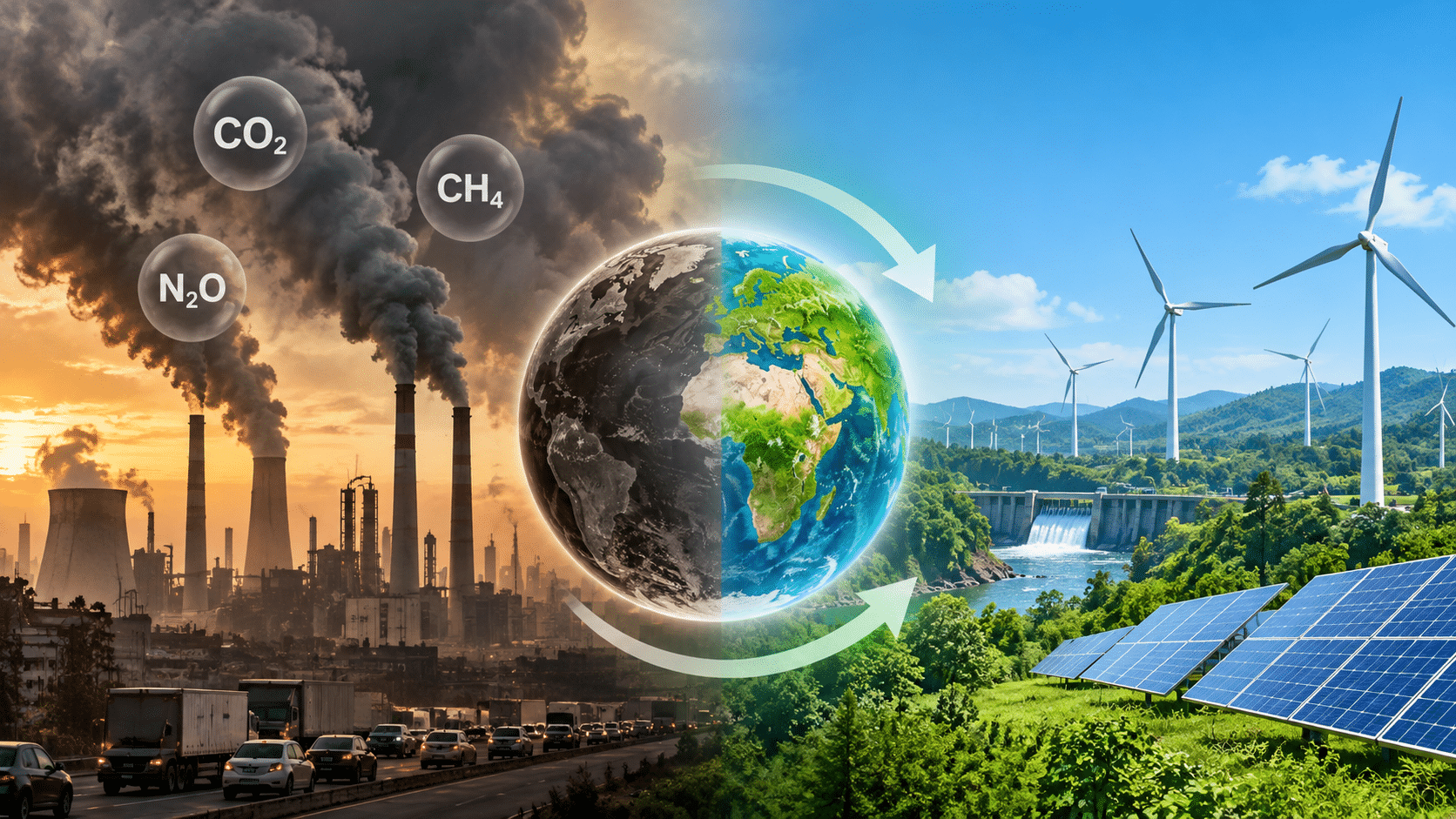
Climate change is strongly influenced by human activities that release gases into the atmosphere and affect Earth’s natural balance. Energy production, transportation, industrial processes, agriculture, land-use changes, and waste management are some of the key sources of these releases. These activities contribute to increasing levels of greenhouse gas emissions, which trap heat in the atmosphere and accelerate global temperature rise.


Carbon dioxide, methane, nitrous oxide, and fluorinated gases are among the major greenhouse gases associated with human activities. Understanding their sources and impact on natural and human systems highlights the importance of adopting cleaner solutions, including renewable energy, to reduce emissions and support long-term climate change mitigation.

Major Sources of Greenhouse Gas Emissions

Different economic activities release different types and quantities of greenhouse gases. The major sources include:

● Fossil Fuel Combustion: Burning coal, oil, and natural gas for electricity, transportation, heating, and other energy needs releases carbon dioxide. Energy-related activities therefore account for a significant share of human-caused emissions worldwide.
● Industrial Processes: Manufacturing can generate emissions through fuel consumption and chemical or physical processes. Cement and chemical production are examples. Certain applications, including refrigeration and electronics manufacturing, can also involve fluorinated gases.
● Agriculture and Land-Use Change: Livestock digestion and manure management produce methane, while agricultural soils and fertilizer use contribute nitrous oxide. Forests and vegetation absorb carbon dioxide, making responsible land management important for preserving carbon storage.
● Waste Management: Organic waste can generate methane as it decomposes under low-oxygen conditions in landfills. Wastewater treatment can also produce methane and nitrous oxide through biological processes.

Recognizing these sources helps identify where energy, technology, land management, and resource-efficiency measures can contribute to emission reductions.

Effects of Greenhouse Gas Emissions

As greenhouse gas concentrations increase, additional heat remains within the climate system, influencing temperatures, oceans, weather patterns, ecosystems, and communities.

Rising Global Temperatures

The natural greenhouse effect helps maintain temperatures suitable for life. Higher concentrations of heat-trapping gases from human activities increase energy retained within Earth’s climate system, contributing to higher average global temperatures.

This warming influences interconnected parts of the planet. Temperature changes affect oceans, glaciers, ice sheets, atmospheric circulation, rainfall, and ecosystems, linking global warming with broader climate shifts.

Changes in Weather and Climate Patterns

A warmer climate influences precipitation patterns and certain weather extremes, including more frequent or intense heat extremes, shifts in drought conditions, and heavier precipitation in many regions.

These patterns can influence water availability, agriculture, infrastructure, electricity demand, and community planning. Climate-informed development and resource management can help communities prepare for changing conditions and related climate risks.

Rising Sea Levels

Warming contributes to global sea-level rise in two ways. Seawater expands as its temperature increases, while melting glaciers and ice sheets on land add water to the oceans.

Sea-level changes have implications for coastal planning. Incorporating climate information into infrastructure, water management, and development decisions can help coastal communities prepare for changing conditions over time.

Impacts on People and Ecosystems

Climate change can influence agriculture, freshwater resources, public health, biodiversity, and natural habitats. Temperature and precipitation shifts can affect growing conditions, water resources, and the distribution of some plant and animal species.

These environmental changes also influence human systems. Climate-informed agriculture, efficient water management, resilient infrastructure, ecosystem conservation, and public-health planning can help communities respond to changing climate conditions.

Together, these effects show how atmospheric changes influence physical climate processes and the human and natural systems connected to them.

How Renewable Energy Can Reduce Greenhouse Gas Emissions

Renewable energy can reduce energy-related emissions by providing lower-carbon electricity and supporting cleaner energy use across transportation, buildings, and industry.

Replacing Fossil Fuels in Electricity Generation

Solar, wind, hydropower, and other renewable technologies generate electricity with substantially lower life-cycle emissions than fossil-fuel power sources. Increasing their share can reduce fossil fuel use for power generation.

As renewable capacity grows, electricity systems can meet more demand using low-carbon sources. This transition can reduce energy-related greenhouse gas emissions while supplying electricity for households, businesses, infrastructure, and industries.

Enabling Cleaner Transport, Buildings, and Industry

Low-carbon electricity can support emission reductions through electrification. Electric vehicles, heat pumps, electric cooking, and suitable industrial technologies can increasingly operate using electricity from renewable sources.

As power systems add renewable capacity, electrified technologies can support lower-emission energy use across transportation, buildings, commercial operations, and applicable industrial processes.

Reducing Dependence on Carbon-Intensive Energy

A diverse renewable energy mix can combine solar, wind, hydropower, and other suitable resources to increase the availability of low-carbon electricity across different locations and operating conditions.

Companies such as Hero Future Energies operate across solar, wind, hybrid power, and energy storage. Combining these technologies can support a more diverse renewable energy supply and help meet changing electricity requirements.

Supporting Renewable Energy With Storage and Modern Grids

Infrastructure and technologies can support renewable electricity by helping coordinate power generation and demand. Important measures include:

● Energy Storage: Batteries and other storage systems can store electricity for later use, helping balance supply and demand when solar and wind output varies.
● Grid Modernization: Digital monitoring, forecasting, and control technologies can help electricity networks integrate growing quantities of renewable generation efficiently.
● Transmission Expansion: Transmission infrastructure can carry renewable electricity from resource-rich areas to population centers and locations with high electricity demand.
● Energy Efficiency: Efficient buildings, appliances, equipment, and industrial processes require less energy, allowing renewable generation to meet a larger proportion of demand.

Together, these measures help integrate renewable resources while supporting reliable and efficient electricity delivery.

Expanding renewable generation alongside electrification, storage, efficiency, transmission, and grid modernization can support sustained reductions in energy-related emissions across multiple sectors.

Conclusion

Greenhouse gases arise from energy production, transportation, industrial processes, agriculture, land-use change, and waste management. Their accumulation influences global temperatures, weather patterns, sea levels, ecosystems, natural resources, and communities, making emission reduction relevant across several sectors.

Renewable energy offers an important pathway to reduce energy-related emissions by expanding access to lower-carbon electricity. Combined with electrification, storage, energy efficiency, transmission, and modern grids, renewable power can meet evolving energy needs while supporting long-term climate mitigation and cleaner energy systems.


Tags: carbon footprintclean energyClimate Changeenvironmental impactGlobal Warminggreenhouse gas emissionsrenewable energySolar PowerSustainable FutureWind Energy
Previous Post

Fresh Low-Pressure System Imminent: Heavy Rain Alert for Odisha After Sept 9

Next Post

Odisha Governor meets President Droupadi Murmu in New Delhi

pragativadinewsservice

pragativadinewsservice

Related Posts

KAL Attack Drone Trial
Tech

India’s KAL Drone Soars in Pokhran Trial

September 23, 2026
IMEI tampering Telecommunications Act 2023
Tech

Threat to Digital Sovereignty: DoT Issues Strict Guidelines Against IMEI Tampering

September 23, 2026
DoT SIM fraud warning
Tech

DoT Warns of Rs 50 Lakh Fine and 3 Years Jail for SIM Fraud, IMEI Tampering

September 21, 2026
Next Post
Odisha Governor meets President Droupadi Murmu in New Delhi

Odisha Governor meets President Droupadi Murmu in New Delhi

Women Robber Gangs Bhubaneswar

Robber Gangs Busted in Bhubaneswar: 7 Women Arrested

drone over Jagannath Temple Puri

Drone Flies Over Puri Jagannath Temple No-Fly Zone | Security Probe Begins

Follow Us

  • 92.6k Followers

Recommended

Aaditya Thackeray

Aaditya Thackeray reacts on Disha Salian death allegation

2 years ago
Rahul Gandhi

Rahul Gandhi Warns United States–Iran War Could Impact India’s Economy and Energy Security

7 months ago
Mumbai Monorail technical fault

Mumbai Monorail Halted by Technical Fault, Services Restored After Two Hours

1 year ago
National UDISE+ Conference 2026

Data Reforms and Innovations Highlighted at UDISE+ Conference

7 months ago

Instagram

Follow Now

Highlights

Odisha Empowers Officers with Geospatial Tech in 3-Day ArcGIS Workshop

Thalassemia Awareness, Elderly Care, and CSR: Odisha Governor Sets New Blueprint for Red Cross

Deluge in Odisha: Deep Depression Triggers Severe Floods in Southern Districts

PM’s Memento E-Auction Spotlights Odisha’s Rich Cultural Tapestry

ECoR Steps Up Relief as Rains Disrupt Services

Trump Hails Xi Meeting as ‘Very Productive’; Xi Calls for Greater US-China AI Cooperation

Trending

Dhenkanal folk dance competition 2026
Offbeat

Dhenkanal Science Centre hosts district folk dance contest; Kanapura school takes first prize

by Yajati Rout
September 26, 2026
0

Dhenkanal Science Centre hosted the District-Level Folk Dance Competition 2026–27. Eight school teams competed; Panchayat Raj High...

Balen Shah UNGA speech

Nepal PM Balen Shah Slams Broken Global System, Calls for Himalayan Climate Resilience at UNGA

September 25, 2026
Mandeep Bhandari CBSE Chairman

Mandeep Bhandari Named New CBSE Chief Amid Exam Reform Scrutiny

September 25, 2026
Geospatial Analysis Workshop Odisha

Odisha Empowers Officers with Geospatial Tech in 3-Day ArcGIS Workshop

September 25, 2026
Thalassemia Awareness Odisha Red Cross

Thalassemia Awareness, Elderly Care, and CSR: Odisha Governor Sets New Blueprint for Red Cross

September 25, 2026
Facebook Twitter Youtube RSS

ABOUT US

News, as it should be covered, has been the forte of Pragativadi over the years. And this has ensured a classy readership encompassing the who’s who of the state. The people who matter in Odisha, depend on Pragativadi. For opinion leaders, decision makers and people with surplus disposable income Pragativadi is a must.

Follow us on social media:

E-Library

Chayanika

by Yajati Rout
December 16, 2025
0

Unmesha

by Yajati Rout
December 16, 2025
0

© 2026 Pragativadi

Welcome Back!

Login to your account below

Forgotten Password?

Retrieve your password

Please enter your username or email address to reset your password.

Log In
No Result
View All Result
  • EPAPER
  • Odisha
  • Twin City
  • Politics
  • Crime
  • National
  • World
  • Sports
  • Entertainment
  • Business
  • Tech
  • Photos
  • Quiz
  • Prativa Vikash 2026

© 2026 Pragativadi