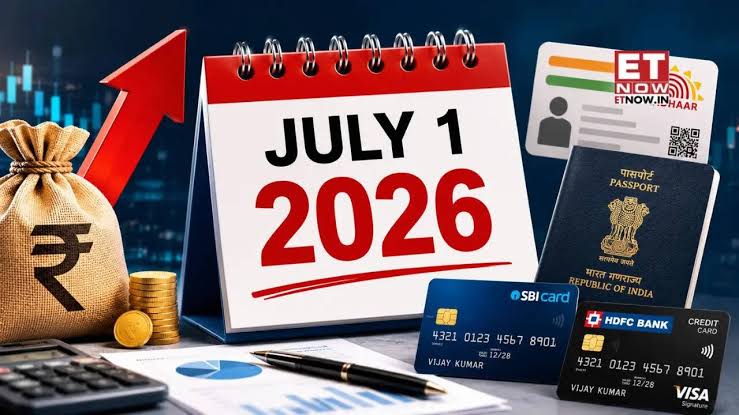
Several July 1 rule changes have come into effect across India, impacting passport applicants, Aadhaar users, EPF subscribers and taxpayers.
The latest updates, announced through official notifications by government authorities, also include changes related to LPG and PNG connections.
Here is a look at the major changes that took effect from July 1.
Passport application fees revised
The Ministry of External Affairs (MEA) has increased passport application fees for the first time in more than a decade.
Under the revised fee structure:
- A standard 36-page passport now costs ₹2,500, up from ₹1,500.
- The Tatkaal fee for a 36-page passport has increased to ₹5,000.
- Charges have also been revised for 60-page passport booklets, passports issued to minors and Police Clearance Certificates (PCC).
The new rates apply to passport services in India and at Indian missions abroad.
Aadhaar email update becomes free
The Unique Identification Authority of India (UIDAI) has waived the fee for updating the email address linked to Aadhaar through its official mobile application.
The facility will remain free from July 1 to December 31, 2026, allowing Aadhaar holders to update their registered email address without paying the earlier prescribed fee.
EPFO online services resume after maintenance
The Employees’ Provident Fund Organisation (EPFO) has completed its scheduled system migration and database consolidation exercise.
Following the maintenance period, EPFO’s online services are scheduled to resume from July 2, restoring access to digital services for millions of EPF subscribers.
Income Tax Return deadline approaches
The deadline for filing Income Tax Returns (ITR) without a late fee remains July 31, 2026.
- ITR-1 is generally meant for salaried individuals with limited additional income, such as bank interest.
- ITR-2 applies to eligible taxpayers with capital gains, multiple house properties or annual income above ₹50 lakh.
Tax professionals recommend filing returns well before the deadline to avoid last-minute technical issues.
LPG and PNG transition rule
A policy related to domestic cooking gas connections may also come into effect.
Consumers who have both Liquefied Petroleum Gas (LPG) and Piped Natural Gas (PNG) connections were expected to transition fully to PNG by June 30. However, no official announcement has confirmed the discontinuation of LPG supplies.
Authorities have also clarified that consumers relocating to areas without PNG coverage may be able to reactivate their surrendered LPG connection.