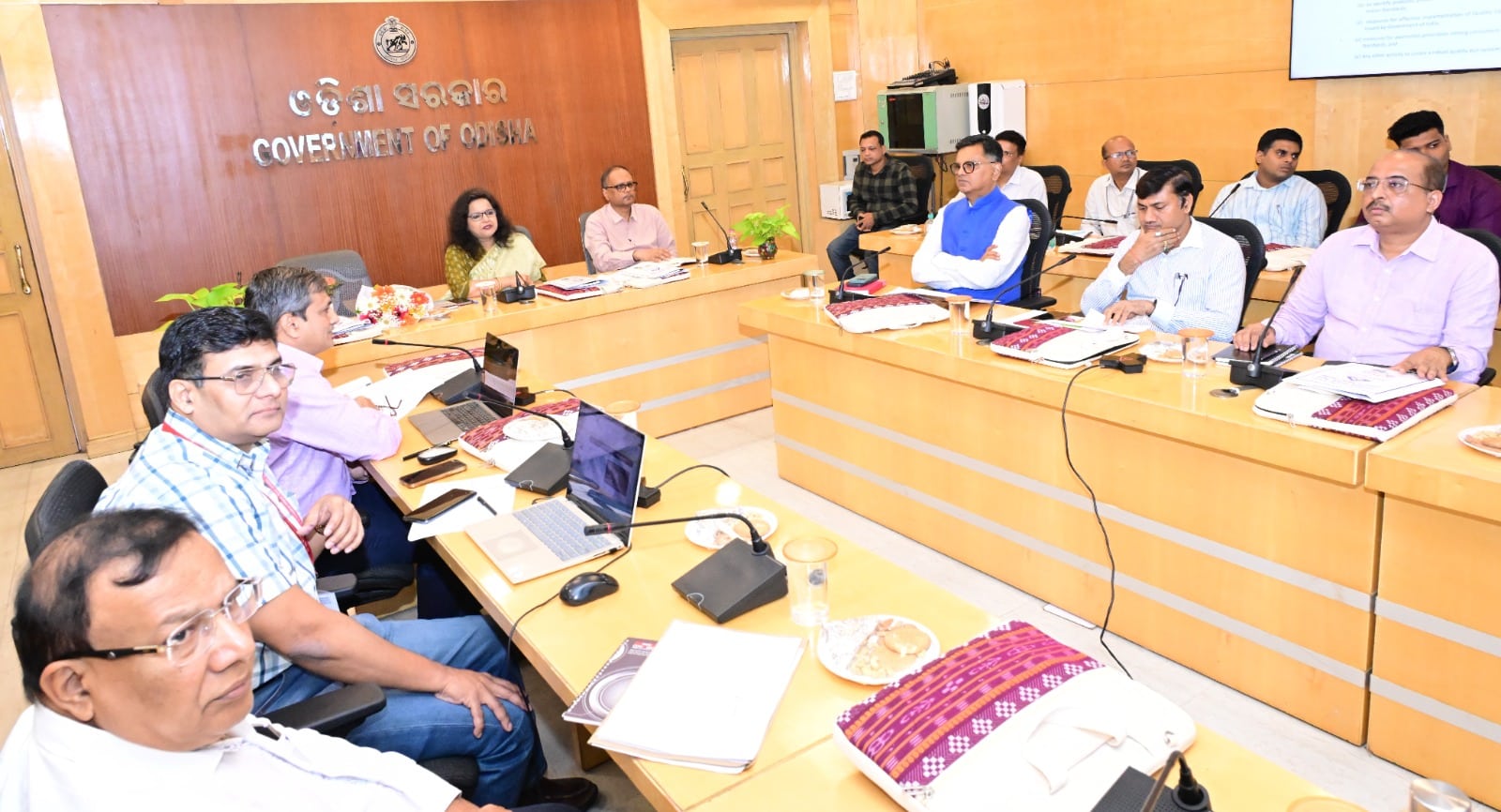
In a significant step towards embedding quality and reliability into Odisha’s governance, industry, and daily life, the 3rd meeting of the State Level Committee (SLC) on Standardization was held today at Lok Seva Bhawan under the chairpersonship of Chief Secretary Anu Garg.
Senior officials, including the Development Commissioner-cum-Additional Chief Secretary, Principal Secretaries of key departments, and representatives from various state organisations, participated in the discussions. A. K. Purohit, Senior Director & Head of BIS Bhubaneswar, and A. Chatterjee from the BIS Laboratory in Kolkata presented key initiatives and collaboration opportunities.
The Committee placed strong emphasis on capacity building. It directed targeted training programmes on Indian Standards for officials from PWD, PHE, WATCO, DISCOMs, Agriculture, Health, Labour, Urban Development, Water Resources, and Women & Child Development departments. Special sessions for PWD engineers and junior engineers, along with an extension to the Rural Development and Panchayati Raj departments, were also recommended. The Food Supplies & Consumer Welfare Department was asked to integrate standardization modules into administrative training programmes.
Public procurement came under sharp focus. Departments were advised to refer to applicable Indian Standards, download them from the BIS website, and ensure their implementation. The Committee also explored the possibility of API-based integration between state government portals and the BIS website for seamless access to standards.
Consumer empowerment received special attention. Wider promotion of the BIS CARE App was directed, enabling citizens to verify HUID and ISI marks, access standards, locate testing laboratories, and lodge complaints. Jewellery shops were specifically advised to display information about the app prominently.
On the infrastructure front, the Committee supported the establishment of a state-of-the-art BIS Office and Laboratory Complex in Odisha on priority. Given the state’s prominent steel and aluminium industries, BIS was directed to prioritise advanced testing facilities for gold, silver, steel, and aluminium. The Committee also reviewed the BIS Laboratory Assistance Scheme for upgrading state government laboratories and Common Facility Centres, and noted the 80% fee rebate and relaxed in-house testing requirements offered to MSMEs.
Concrete action points included a pilot implementation of BIS Standard IS 17482:2020 on Piped Drinking Water Management by WATCO and Rural Water Supply & Sanitation, along with a call for appropriate rules to ensure lift safety compliance with Indian Standards. Strengthening of Standards Clubs in educational institutions and formal recognition of related activities were also endorsed.
Chief Secretary Anu Garg underscored that standardisation is fundamental to quality, safety, reliability and efficiency, particularly in public procurement, infrastructure and essential services. She called for greater awareness among officials, industry, service providers, and consumers, stronger coordination between BIS and state departments, and intensified IEC activities to build a quality-conscious ecosystem. She also directed that the SLC meet at least twice a year to monitor progress.
With these decisions, Odisha has signalled a clear intent to make Indian Standards a living part of governance, industry and consumer protection — laying the foundation for safer products, better infrastructure and greater public trust.