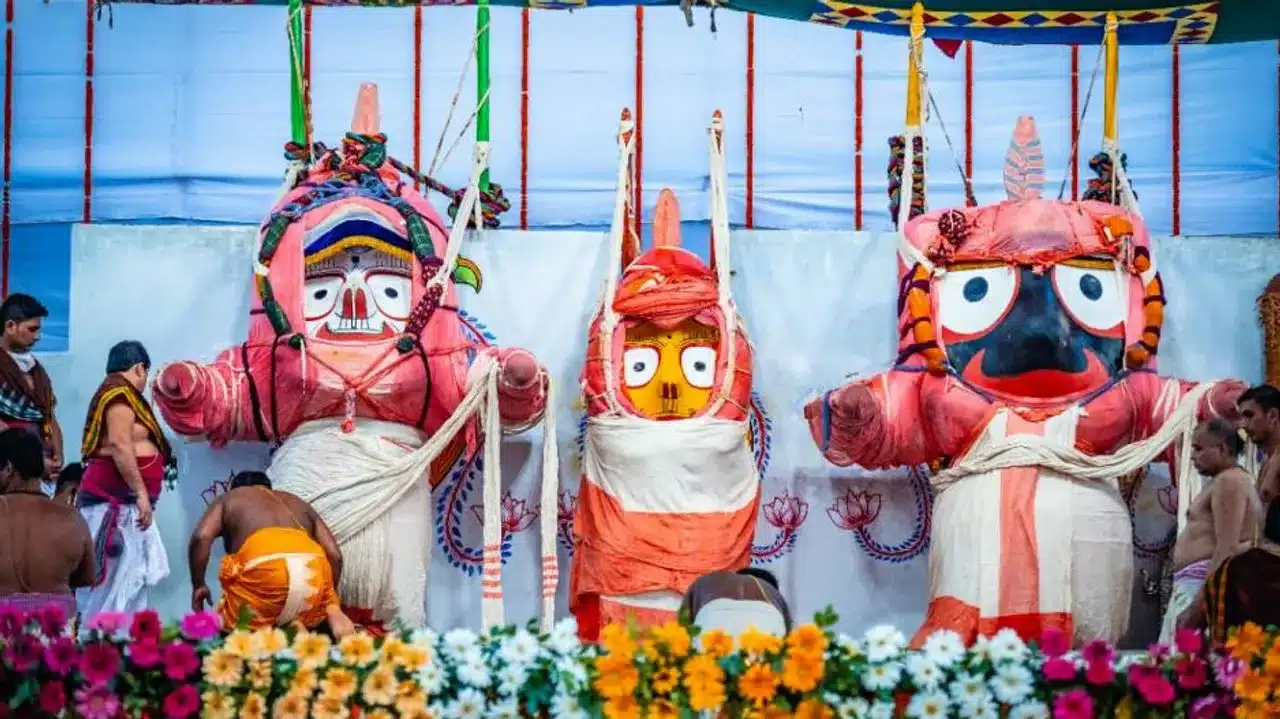
The sacred Snana Yatra 2026 commenced on Monday at the Shree Jagannath Temple in Puri, drawing lakhs of devotees from across Odisha and different parts of India. The annual bathing festival marks the beginning of preparations for the world-famous Rath Yatra.
Held on the full moon day of the Hindu month of Jyestha, Snana Purnima is one of the most significant festivals in the Jagannath tradition. It is also the only occasion during the year when devotees can see Lord Jagannath, Lord Balabhadra and Devi Subhadra together on the Snana Mandap before Rath Yatra.
Holy Trinity Taken to Snana Mandap in Traditional Pahandi
The day began with the traditional Pahandi procession, during which Lord Sudarshan, Lord Balabhadra, Devi Subhadra and Lord Jagannath were ceremonially brought out from the sanctum sanctorum to the Snana Mandap.
The temple premises echoed with chants of “Jai Jagannath,” Vedic hymns, conch shell sounds and traditional percussion instruments as thousands of devotees watched the sacred procession with deep devotion.
By around 7:51 AM, the Holy Trinity had been placed on the Snana Mandap for the grand bathing ceremony.


LIVE Updates from Snana Yatra 2026
- 09:07 AM: Pistaka Aarti performed for the Holy Trinity.
- 08:51 AM: Lord Jagannath seated on the Snana Mandap.
- 08:24 AM: Emotional scenes as devotees chant “Jai Jagannath.”
- 08:05 AM: The holy town resonates with devotional chants.
- 07:51 AM: Lord Balabhadra, Lord Jagannath and Devi Subhadra placed on the Snana Mandap.
- 07:41 AM: Thousands of devotees continue to arrive in Puri.
- 07:40 AM: Ceremonial Pahandi of Lord Jagannath completed.
- 07:39 AM: Pahandi of Devi Subhadra and Lord Balabhadra concludes.
- 07:38 AM: Lord Sudarshan brought out in ceremonial procession.
Deities to Be Bathed with 108 Pots of Sacred Water
The highlight of Snana Yatra is the ceremonial bath of the deities using 108 pitchers of sacred water collected from the temple’s revered Golden Well (Sunakua).
The holy water is infused with sandalwood, medicinal herbs, fragrant flowers and aromatic ingredients as part of an age-old ritual symbolising purification, healing and divine blessings.
Following the ritual bath, priests perform the traditional Pistaka Aarti before preparing the deities for their special attire.
Hati Besha: The Unique Elephant Attire
After the bathing ceremony, Lord Jagannath, Lord Balabhadra and Devi Subhadra are adorned in the famous Hati Besha, also known as Gajanana Besha.
In this distinctive appearance, the deities resemble Lord Ganesha, symbolising wisdom, protection and the removal of obstacles. Thousands of devotees wait eagerly every year to witness this rare and spiritually significant form.
Why Snana Purnima Is Important
Snana Purnima holds immense religious importance because it marks the ceremonial public bathing of the deities before the annual Rath Yatra.
According to temple tradition, the elaborate bathing ceremony causes the deities to fall ill. They are therefore taken to the Anasara Ghara, where they remain away from public view for nearly fifteen days.
During this period, devotees cannot have darshan of the deities.
The Lords return during Netrotsav (Nabajouban Darshan), a day before the commencement of the grand Rath Yatra.