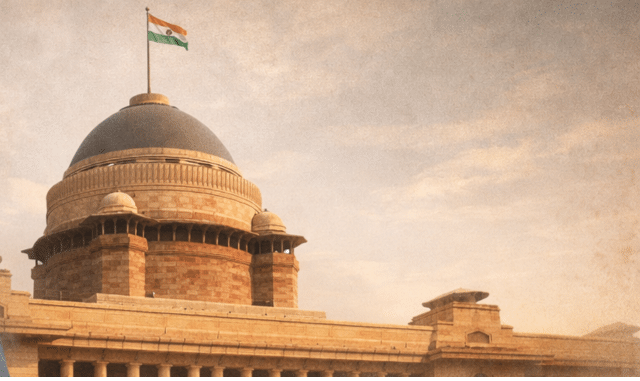
In a strongly worded open letter to President Droupadi Murmu, 81 retired senior civil servants from the All-India and Central Services have urged immediate intervention to stop what they describe as the “wrongful dispossession” of tribal forest lands in Rayagada district, Odisha.
The group, known as the Constitutional Conduct Group (CCG), accuses authorities of bypassing the Forest Rights Act (FRA) and Supreme Court mandates through allegedly fake Gram Sabha resolutions, triggering violent clashes and raising fresh fears of corporate overreach in Fifth Schedule areas.
The letter, dated 19 April 2026, draws a direct parallel with the historic Niyamgiri struggle less than 50 km away, where the Dongria Kondh tribals successfully blocked Vedanta’s bauxite mining plans after all 12 Gram Sabhas rejected the project in 2013 following a landmark Supreme Court intervention. “The whole history of my (tribal) people is one of continuous exploitation and dispossession,” the letter quotes Jaipal Singh Munda, the legendary tribal leader and Constituent Assembly member, warning that the “new chapter of independent India” he envisioned remains a distant dream.
At the centre of the fresh controversy is the Sijimali bauxite mining proposal, again promoted by Vedanta. In December 2025, the Ministry of Environment, Forest and Climate Change (MoEFCC) granted Stage-I forest diversion clearance based on Gram Sabha resolutions passed in December 2023. The CCG claims these resolutions are fraudulent: non-residents allegedly participated, minors and deceased persons were listed as present, and consent was secured through “fraud and manipulation.” Media reports cited in the letter suggest police brought outsiders to the meetings, took photographs and videos, while the mandatory site visit was never conducted.
Locals protested. In February 2025, two Gram Panchayats moved the Odisha High Court, which directed the Centre to address the concerns. Yet construction of a three-kilometre approach road began under heavy armed police presence, leading to clashes in nearby Kantamal village. Over 70 tribals were injured when police allegedly chased villagers trying to protect their community rights.
The signatories – including former Cabinet Secretaries, Chief Secretaries, DGs of Police, and Secretaries to the Government of India – argue that the State Government ignored both the Niyamgiri precedent and the 1997 Samatha judgment, which prohibits the transfer of tribal or forest land to private entities without due consultation and benefit-sharing. They also point to a clear violation of Article 39 of the Constitution, which mandates the State to promote social and economic justice.
“We are distressed by the fact that despite knowing that the Forest Rights Act was applicable… the State Government chose not to follow the precedent of the Niyamgiri judgement,” the letter states. It criticises the lack of judicial oversight at Gram Sabha meetings and questions why landmark Supreme Court rulings on tribal rights are not part of routine administrative training under Mission Karmayogi.
The CCG has made specific demands:
- Immediate suspension of the Stage-I forest diversion clearance pending a detailed enquiry into the authenticity of the 2023 Gram Sabha resolutions.
- Halt to all physical work, including the approach road.
- Review of criminal cases against protesting tribals by the National Commission for Scheduled Tribes.
- Full consolidation of individual and community rights under the FRA into revenue records.
The letter is copied to the Chairman of the National Commission for Scheduled Tribes for necessary action.
The full list of 81 signatories includes distinguished names such as Anita Agnihotri (former Secretary, Social Justice), Wajahat Habibullah (former Chief Information Commissioner), Julio Ribeiro (former DGP Punjab), Aruna Roy, and N.C. Saxena (former Secretary, Planning Commission), among others.
As tribal communities in Odisha once again find themselves confronting bulldozers and batons in the name of development, the retired civil servants’ impassioned appeal underscores a deeper constitutional question: can the Republic truly honour its promise of equality and justice while repeating the very patterns of dispossession it once vowed to end? The ball now lies in Rashtrapati Bhavan.