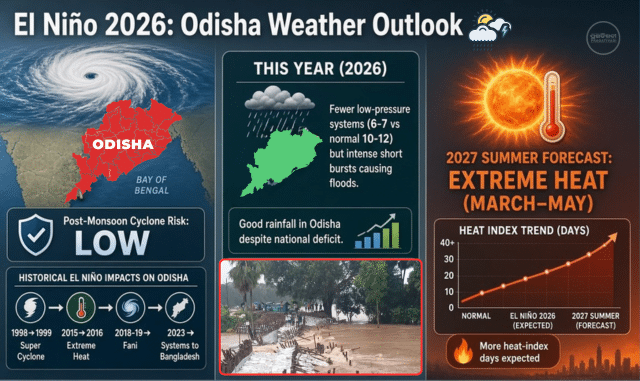
With a strong El Niño now firmly active in the Pacific Ocean, Odisha is likely to see fewer cyclones and near-normal or below-normal rainfall after the monsoon withdraws this year. However, the real challenge may arrive next summer: intense to extreme heat from March to May 2027, with a rise in heat-index days, according to senior IMD scientist Dr. Umasankar Das.
Speaking to Pragativadi, Dr. Das noted that historical patterns offer a clear warning. “Looking at previous El Niño years, the bigger problems usually surface not in the El Niño year itself but in the following year,” he said. He cited several examples: the devastating 1999 Super Cyclone struck Odisha in November after the 1998 El Niño; the severe heatwave of 2016 followed the strong 2015 El Niño; and Cyclone Fani made landfall in May 2019 after the 2018–19 event. In 2023, multiple systems formed but steered toward Bangladesh, sparing Odisha, West Bengal, Andhra Pradesh, and Telangana from any major impact.
This year is following a familiar El Niño script in some ways and rewriting it in others. Nationwide rainfall is typically suppressed during El Niño, yet Odisha has again received good rains — a regional anomaly observed in past El Niño seasons. July and August normally see 10–12 low-pressure systems; this season has produced only six or seven. Paradoxically, those fewer systems dumped intense rainfall in short bursts, triggering floods across parts of the state.
“Nothing definitive can be said yet about post-monsoon cyclones,” Dr. Das cautioned. “We can assess the risk only after a low-pressure area forms and its intensity is measured. IMD continues to issue forecasts and warnings 10 days in advance.” He added that the current El Niño, while strong and still intensifying, has not yet reached “super El Niño” status like 2015. In that year, cyclone formation over the Bay of Bengal after monsoon withdrawal was subdued, and the lone system (Komen) caused limited impact with no landfall on the Odisha coast — followed by abnormally high temperatures in 2016.
IMD data consistently shows that El Niño years tend to suppress both the number and intensity of post-monsoon cyclones in the Bay of Bengal, while La Niña years produce more. With a strengthening El Niño already underway and further intensification possible, scientists are keeping a close watch on the evolving weather pattern through the remainder of 2026 and into next year’s summer.
For now, Odisha’s residents can take cautious comfort in the reduced cyclone outlook this post-monsoon season. But the message from the weather experts is clear: prepare for a hotter, more uncomfortable 2027.