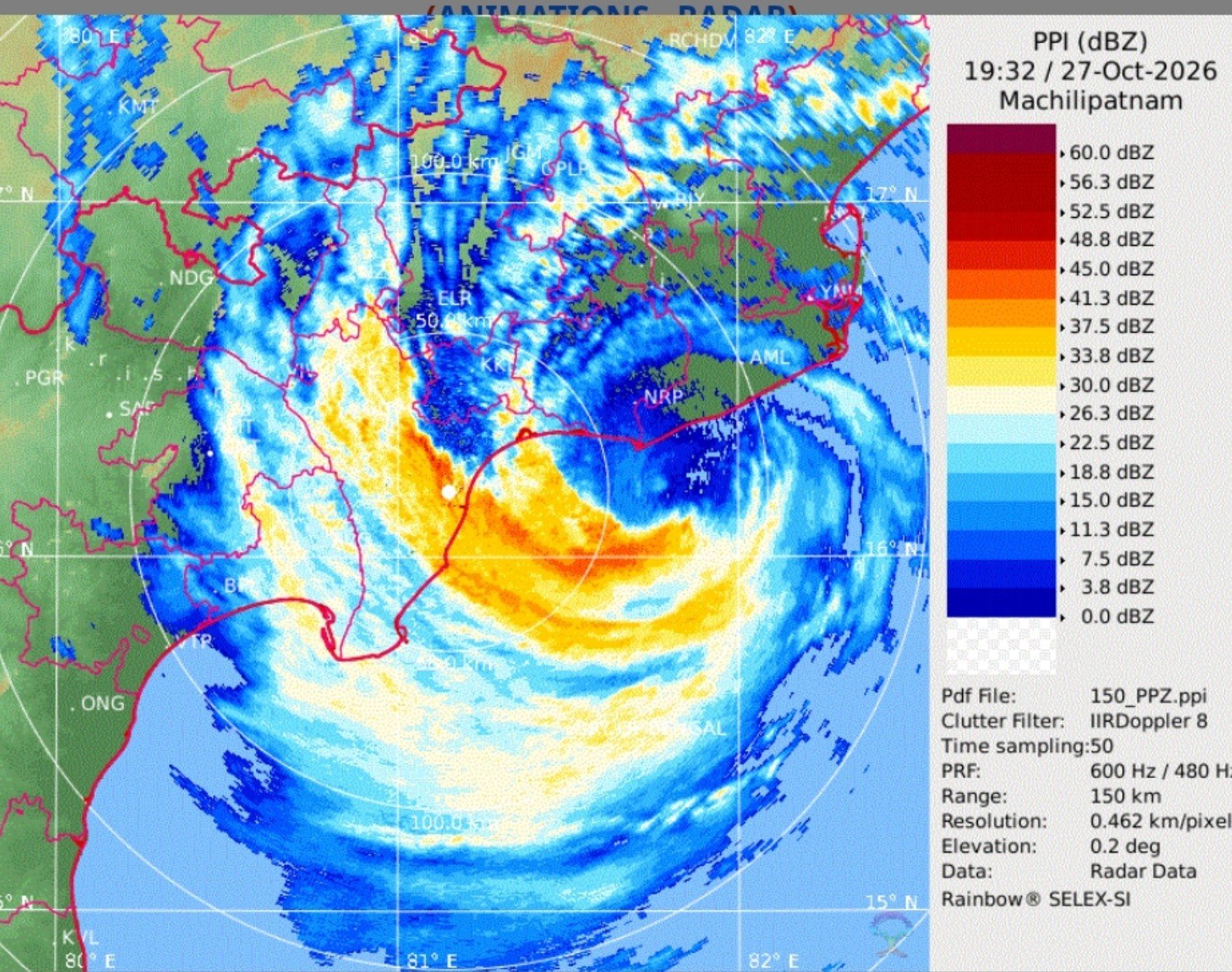
Very Severe Cyclonic Storm Arnab has commenced its landfall process along the Andhra Pradesh coast near Yanam, close to Kakinada, in the early hours of Wednesday.
The India Meteorological Department (IMD) reported that the system’s outer spiral bands have already interacted with the land surface, with the core expected to cross between 2 a.m. and 4 a.m. IST.
According to the latest IMD updates, the storm was positioned just off the coast late Tuesday night, roughly 50–70 km from key coastal points including Narsapur and Kakinada. It is moving northwestwards and is forecast to cross the Andhra Pradesh and Yanam (Puducherry) coasts between Bapatla and Visakhapatnam, close to south of Yanam, as a very severe cyclonic storm. Maximum sustained winds are expected at 125–135 kmph, with gusts reaching up to 150 kmph.
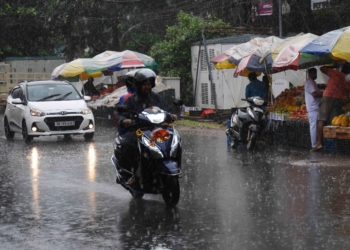
Heavy to extremely heavy rainfall has already battered northern districts of Andhra Pradesh, causing widespread disruption. One death was reported on Tuesday when a 65-year-old man came into contact with snapped live electrical wires in Mangalapalem. Authorities have set up hundreds of cyclone shelters and evacuated tens of thousands of people — more than 84,000 in Andhra Pradesh alone — from low-lying and vulnerable areas.
The cyclone is also expected to bring impacts further inland, including heavy rain in parts of Odisha such as Malkangiri district, along with possible effects in neighbouring regions. Storm surge of 1–2 metres above astronomical tide is possible near Kakinada and Yanam, raising the risk of coastal inundation.
Andhra Pradesh Chief Minister N. Chandrababu Naidu and state disaster management officials have confirmed that National Disaster Response Force (NDRF) and State Disaster Response Force (SDRF) teams are deployed, trains have been cancelled on affected routes, schools remain closed in high-risk districts, and fishing operations have been suspended. Residents in coastal and low-lying areas have been advised to stay indoors, avoid unnecessary travel, and follow official instructions until the system weakens after moving inland.
IMD continues to monitor the situation closely with Doppler weather radar support from Visakhapatnam. The storm is expected to weaken rapidly once fully inland, though heavy rainfall may persist for several hours in the affected districts. Authorities urge the public to remain vigilant and rely on official updates.