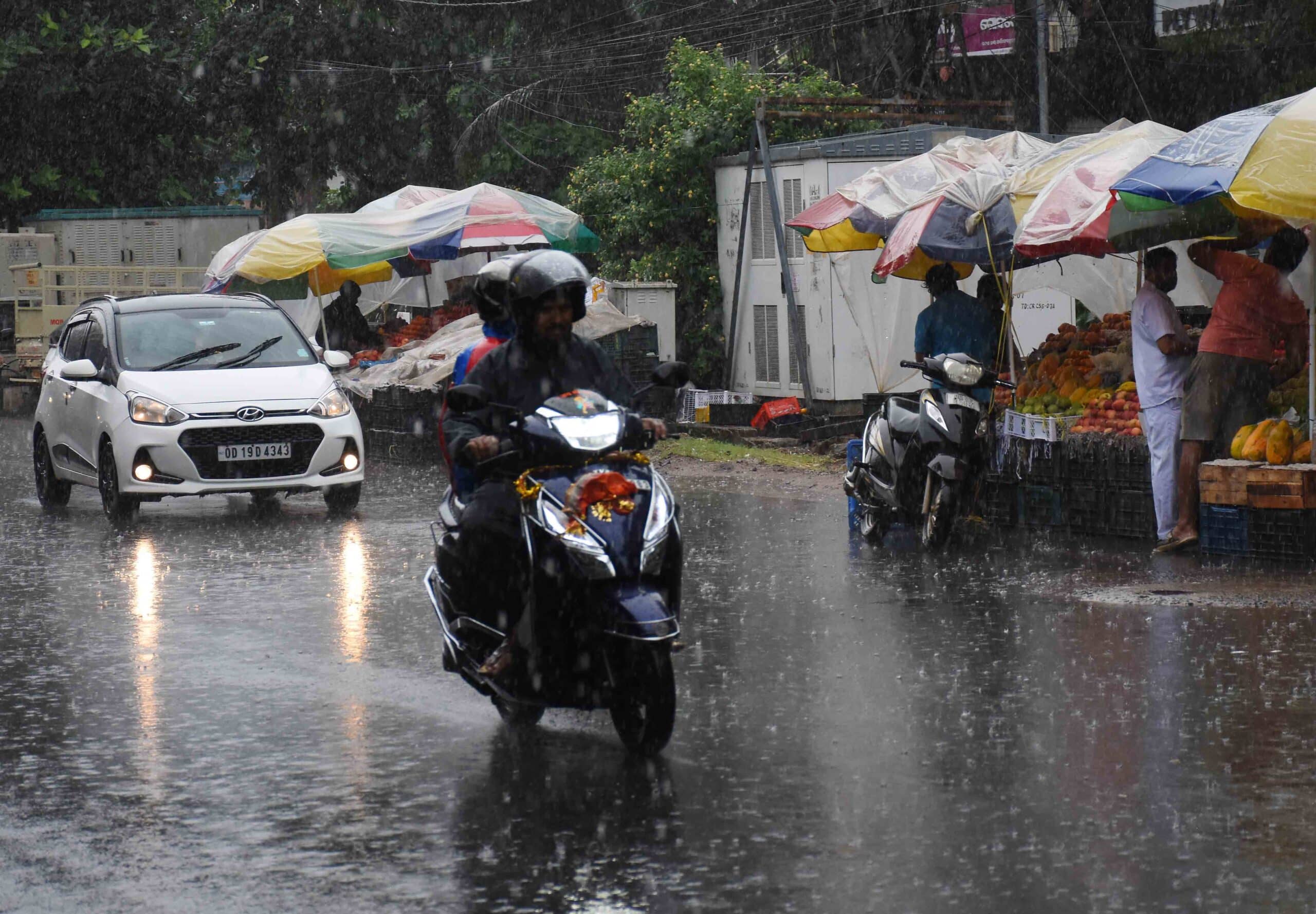
Incessant and heavy rainfall triggered by the cyclonic circulation of Cyclone Arnab has swept across Odisha, disrupting normal life and prompting severe weather warnings.
Over the past 24 hours, both coastal and interior districts have witnessed continuous downpours, with South Odisha bearing the brunt of the extreme weather.
The India Meteorological Department (IMD) has issued a ‘Red Warning’ for five southern districts—Ganjam, Gajapati, Koraput, Rayagada, and Malkangiri—predicting extremely heavy rainfall. Additionally, an ‘Orange Warning’ has been sounded for nine adjoining districts, while the remaining 16 districts are under a ‘Yellow Warning’ for heavy showers.
Jagatsinghpur recorded the highest daytime rainfall of over 50 mm, while Paralakhemundi saw upwards of 40 mm. Major cities also recorded significant precipitation over the last 24 hours, including Puri (78.3 mm), Chhatrapur (61.4 mm), Gopalpur (50 mm), Baripada (45.2 mm), Daringbadi (34 mm), and Paradip (33 mm). In the capital city of Bhubaneswar, 24.2 mm of rain was recorded by 5:30 PM, which escalated to over 30 mm by late evening.
According to Dr. Sanjeeb Dwivedi, Scientist at the Regional Meteorological Centre, a detailed assessment of the rainfall in coastal districts is currently underway, and comprehensive data will be released on Wednesday.
The widespread rain and overcast conditions have caused a sharp drop in temperatures, with cities like Bhubaneswar, Puri, and Gopalpur recording maximum daytime temperatures hovering between 25°C and 26°C.
Manorama Mohanty, Director of the Regional Meteorological Centre, stated that Cyclone Arnab’s impact will persist over Odisha for the next two days. “South Odisha is expected to experience intense rainfall coupled with surface winds reaching speeds of 50 to 60 kmph on Wednesday,” she noted. Fishermen have been strictly advised not to venture into the deep sea due to the turbulent conditions.
Weather conditions are expected to improve after October 30, following which the state will likely experience a further dip in temperatures, marking a shift toward cooler winter weather. The IMD continues to monitor the situation closely, advising residents in vulnerable coastal and southern districts to remain highly vigilant.