Denouncing the Centre’s MMDR (Mines and Minerals Development and Regulation) Amendment Act as a “black law,” the Biju Janata Dal (BJD) announced a full-scale agitation demanding its immediate repeal.
The party will host a massive public demonstration at Lower PMG in Bhubaneswar on September 28, with BJD President and former Chief Minister Naveen Patnaik leading the protest.
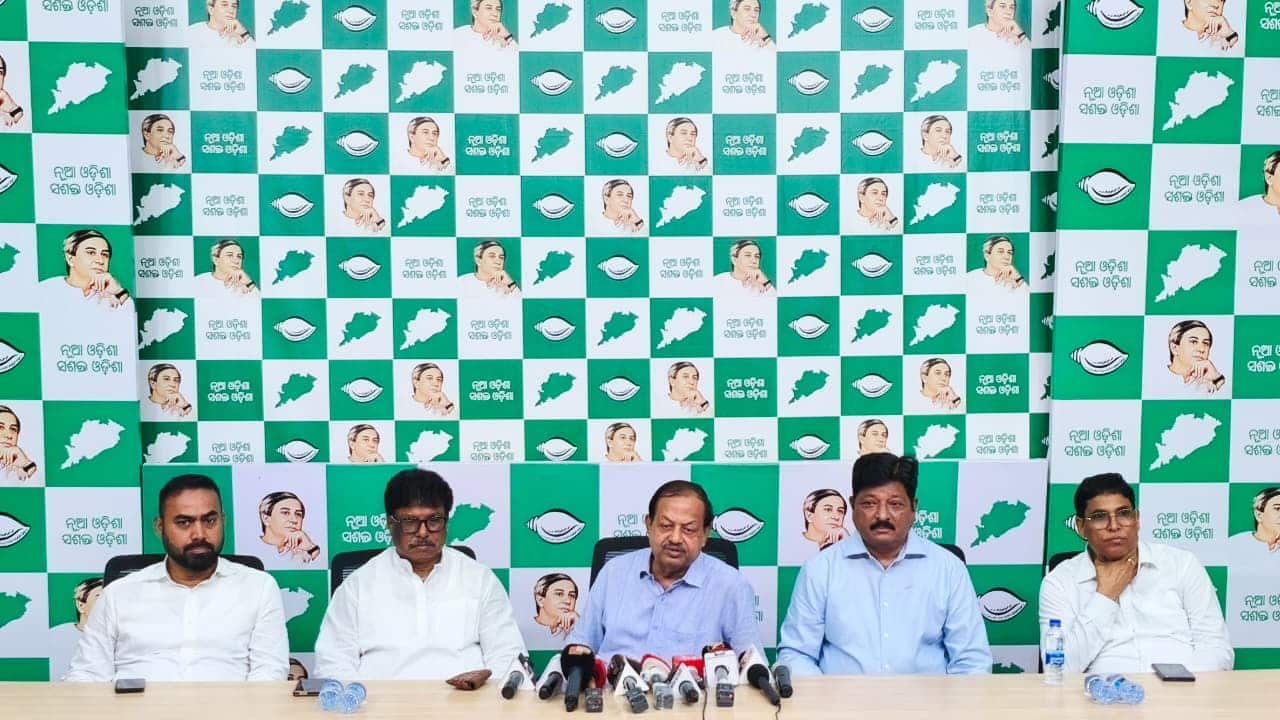
Addressing a press conference at Shankha Bhawan on Thursday, senior BJD leaders outlined the damaging consequences of the amended legislation for Odisha’s economic independence and indigenous populations.
A Direct Blow to Federalism and State Revenue
Speaking to reporters, BJD Senior Vice-President Debi Prasad Mishra stated that the amendment strips state governments of their constitutional rights over mines and mineral-rich lands. Calling it a direct assault on the nation’s federal structure, Mishra highlighted that Odisha—holding nearly 44 per cent of India’s mineral reserves—stands to suffer the heaviest financial losses. He criticised local BJP leaders for attempting to justify the amendment despite its clear detrimental impact on the state.
Vice-President Pratap Jena further explained the legal and financial ramifications. In 2004, under Naveen Patnaik’s leadership, Odisha enacted a law enabling the state government to levy taxes on mining activities. After a prolonged legal battle, a 9-judge Constitution Bench of the Supreme Court upheld state rights on July 25, 2024, granting Odisha the opportunity to recover over Rs 1 lakh crore in past dues and generate roughly Rs 12,000 crore annually in fresh mining revenues. Jena asserted that the Centre’s new amendment deliberately and effectively nullified this Supreme Court victory.
Political Inaction and Tribal Impact
Senior party leader Dr Arun Kumar Sahoo hit out at the state’s political representation, stating that 20 BJP Lok Sabha MPs and 5 Rajya Sabha MPs from Odisha remained silent as the bill passed through Parliament, while the state government surrendered to central dictates. Sahu confirmed that after raising strong objections inside the Odisha Legislative Assembly, the BJD is taking its battle to the streets with statewide blockades and economic demonstrations.
Adding a social dimension to the controversy, PAC member Sudam Marndi warned that the legislation will severely impact tribal livelihoods. Pointing out that most mineral-rich areas are inhabited by indigenous communities whose culture is intrinsically tied to land, water, and forests, Marndi cautioned that unilateral legislative changes threaten to displace and marginalise tribal families.
Senior General Secretary Pritiranjan Gharai concluded the press meet by reaffirming the party’s resolve. Urging the public to join the rally on September 28, Gharai appealed to the people of Odisha to stand united against the law to safeguard the state’s financial autonomy and indigenous heritage.