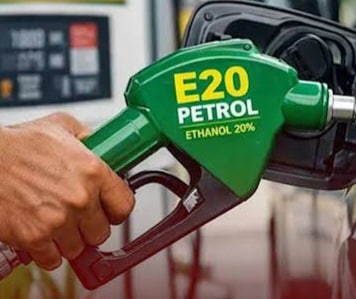
In a significant move to promote cleaner fuels and strengthen India’s energy security, the Central Government has extended excise duty exemptions to petrol blended with higher percentages of ethanol.
According to an official notification issued on June 10, petrol blended with 22%, 25%, 27%, and 30% ethanol will now attract zero central excise duty, provided the fuel conforms to Bureau of Indian Standards (BIS) specifications.
Major Boost for India’s Green Fuel Mission
The decision is expected to accelerate India’s ethanol blending programme, which aims to reduce dependence on imported crude oil, lower carbon emissions, and support domestic agricultural production.
The notification states that fuel blends meeting BIS standards will enjoy a nil excise duty rate, making higher ethanol blends more attractive for producers and consumers alike.
The move aligns with the government’s broader objective of expanding the use of cleaner and more sustainable transportation fuels across the country.
What Does the New Rule Mean?
The excise duty exemption will apply to petrol blended with:
- 22% Ethanol
- 25% Ethanol
- 27% Ethanol
- 30% Ethanol
Industry experts believe the measure will encourage fuel companies to increase ethanol blending while helping India move closer to its long-term renewable energy goals.
Strengthening Energy Security
The latest decision comes at a time when global energy markets continue to face uncertainty due to geopolitical tensions and supply disruptions.
Earlier this year, the government had reduced central excise duty on petrol and diesel by ₹10 per litre to shield consumers from rising international oil prices.
The Centre had also imposed export duties on diesel and aviation turbine fuel (ATF) to ensure adequate domestic fuel availability during the ongoing West Asia crisis.
Government’s Focus on Consumer Protection
The government has consistently maintained that protecting consumers from volatile global energy prices remains a key priority.
In March, Union Finance Minister Nirmala Sitharaman stated that the reduction in excise duty on petrol and diesel was aimed at protecting citizens from rising fuel costs caused by international market fluctuations.
The latest excise exemption for higher ethanol blends continues that approach while simultaneously supporting cleaner fuel adoption.
Why Ethanol Blending Matters
Ethanol blending offers several benefits:
Reduced Crude Oil Imports
India imports a large portion of its crude oil requirements. Greater ethanol usage can help reduce import dependence.
Lower Carbon Emissions
Ethanol-blended fuels burn cleaner than conventional petrol, contributing to lower greenhouse gas emissions.
Support for Farmers
Higher ethanol production creates additional demand for agricultural feedstocks such as sugarcane and maize, boosting rural incomes.
Improved Energy Independence
Expanding domestic fuel alternatives strengthens India’s long-term energy security.
A Step Towards Sustainable Mobility
The government’s latest decision reinforces its commitment to cleaner energy and sustainable transportation.
With excise duty exemptions now available for higher ethanol blends, India is expected to witness faster adoption of alternative fuels, supporting both economic growth and environmental sustainability.
As the country continues its transition towards greener energy solutions, ethanol-blended petrol is likely to play an increasingly important role in India’s future fuel ecosystem.