
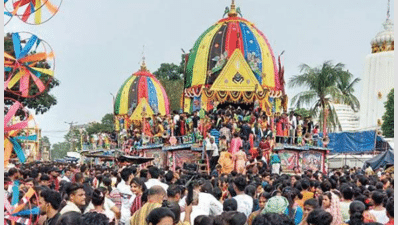
The historic Baripada Rath Yatra 2026, celebrated in Odisha’s Mayurbhanj district, witnessed thousands of devotees gathering on Friday as the annual chariot festival unfolded with deep religious fervour and age-old traditions.
Known as Odisha’s Second Srikshetra after Puri, Baripada’s Rath Yatra is renowned for its distinctive customs, including the exclusive participation of women in pulling the chariot of Goddess Subhadra.
Chariot Pulling Begins Amid Devotion
After the traditional Pahandi ritual on Thursday, the ceremonial pulling of the three chariots commenced on Friday afternoon in the presence of a large gathering of devotees.
Following long-standing traditions, Lord Balabhadra’s Taladhwaja chariot was the first to move. Once it reached near the Mausima Temple, devotees began pulling Goddess Subhadra’s Darpadalana chariot, which proceeded part of the way towards its destination.
Women Continue a Centuries-Old Tradition
One of the defining highlights of the Baripada Rath Yatra is the exclusive participation of women devotees in pulling the ropes of Goddess Subhadra’s chariot.
The unique custom, preserved for generations, drew admiration from devotees and visitors alike, adding to the spiritual significance of the festival.
The tradition symbolises devotion, respect and the important role of women in preserving Odisha’s rich cultural and religious heritage.
Thousands Join the Festival
Pleasant weather encouraged a massive turnout, with devotees from different parts of Odisha gathering to witness the grand procession.
The atmosphere echoed with devotional chants, traditional music and prayers as the chariots moved through the town amid celebrations.
Authorities had made elaborate arrangements for crowd management, traffic regulation and public safety to ensure the smooth conduct of the festival.
Baripada Rath Yatra Holds Special Significance
The Baripada Rath Yatra is regarded as one of Odisha’s largest and most revered chariot festivals after the Puri Rath Yatra.
Its centuries-old traditions, vibrant cultural heritage and unique rituals continue to attract devotees and visitors every year, making it a major spiritual and cultural event in eastern India.