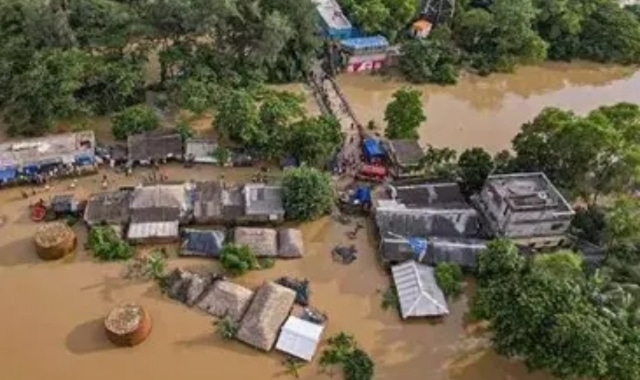
Massive swathes of north Baleshwar face a worsening disaster as the Subarnarekha and Jalaka rivers continue to swell above critical danger thresholds, unleashing the region’s fourth flood wave of the season.
Heavy rains combined with large-scale water releases from Jharkhand have inundated 154 villages across 38 panchayats, cutting off entire communities from basic relief.
The crisis intensified after authorities opened the floodgates of the Galudiha Dam in neighbouring Jharkhand, routing massive inflows downstream into an already saturated river system. Compounding the situation, high coastal tides in the Bay of Bengal are preventing floodwaters from draining out to sea, causing water to pool and expand across low-lying agricultural lands and residential zones.
Subarnarekha and Jalaka Surpass Danger Lines
Gauge readings confirm a dangerous upward trend along both primary river basins:
-
Subarnarekha River: Against a danger mark of 9.45 meters, levels climbed to 10.16 meters early in the morning before swelling further to 10.18 meters.
-
Jalaka River: At Mathani, where the danger line stands at 6.50 meters, water levels surged to 6.78 meters following incessant torrential downpours in its upper catchment areas.
Downpours across the upper catchments in Mayurbhanj district—including Rasgovindpur, Suliapada, Morada, and Chitrada—continue to pour high volumes into the Jalaka system, offering no immediate respite to local residents.
Panchayats Marooned as Roads Submerge
The rising waters have isolated vast populations across four major blocks in Baleshwar district:
-
Bhograi Block: 15 panchayats marooned; key coastal villages face complete isolation.
-
Baliapal Block: 9 panchayats affected. Villages including Asti, Bishnupur, Madhupura, and Jamukunda are completely cut off. At Choudhurikuda village, 3 feet of fast-moving floodwater is flowing over the main connecting road.
-
Basta Block: 10 panchayats impacted as localised heavy downpours accelerate water accumulation.
-
Sadar Block: 5 panchayats affected by overflow from nearby tributaries.
Local authorities are monitoring the water levels closely as emergency teams assess transportation links and prepare relief operations for the marooned populations.