With the Monsoon Session of the Odisha Legislative Assembly beginning on Tuesday, the Biju Janata Dal has set a confrontational agenda: protect the state’s mineral revenue, defend what it calls the federal bargain, and demand that schoolchildren finally get error-free textbooks.
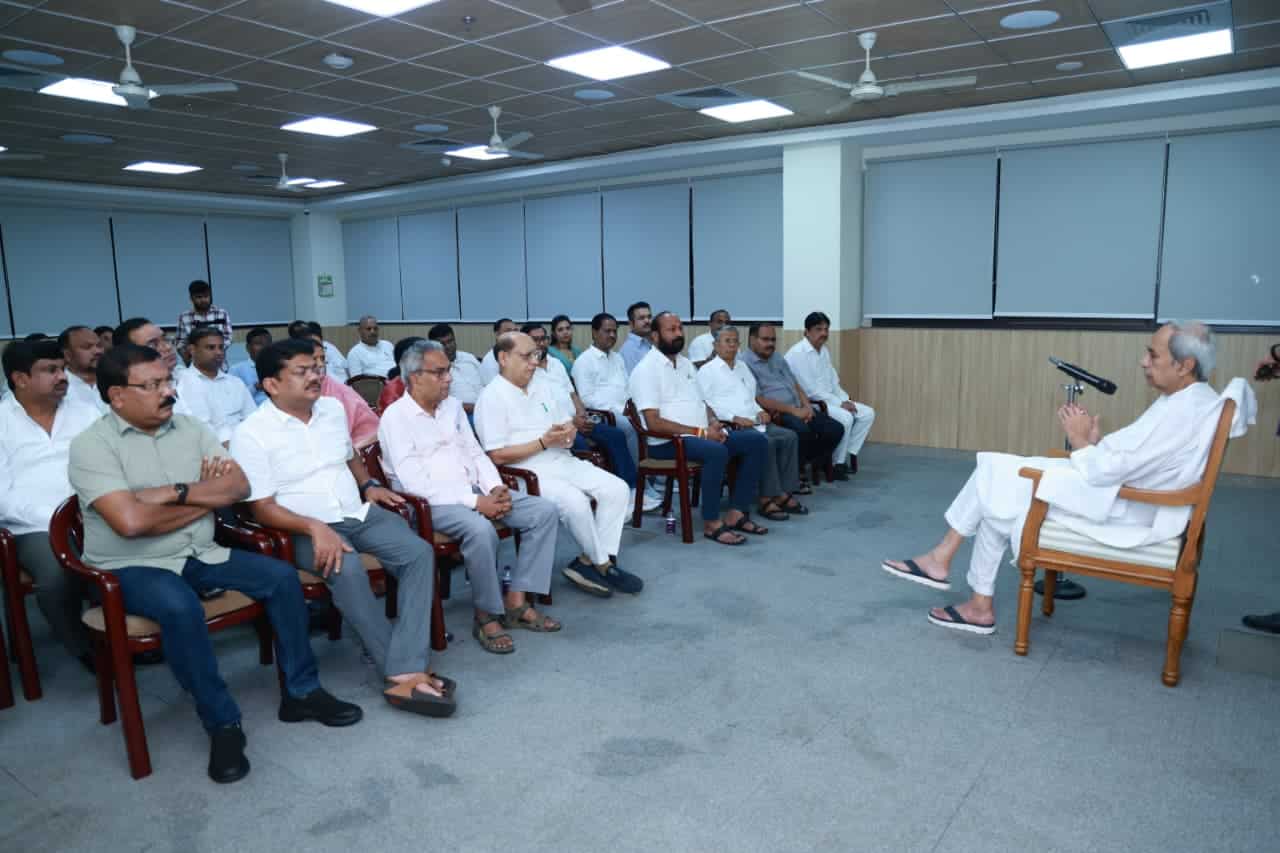
The party’s legislature group met at Sankha Bhawan on Monday under BJD President Naveen Patnaik. After the meeting, Deputy Leader in Assembly Prasanna Acharya, Chief Whip Pramila Mallik and MLA Niranjan Pujari told reporters that issues affecting Odisha’s four-and-a-half crore people would be taken to the floor of the House.
The sharpest demand was political and constitutional. Acharya said Parliament passed the Mines and Minerals (Development and Regulation) Amendment Act without proper discussion, and that the change would deny Odisha revenue it became entitled to after a Supreme Court ruling on states’ power to tax mineral rights and mineral-bearing land. In BJD’s telling, that is not a technical tweak. It is an “attack on the federal structure” and a blow to the autonomy the Constitution gives the states.
The party wants the BJP government in Odisha to move a resolution seeking withdrawal of the amendment. BJD, Acharya said, will support that resolution. The state government, he added, is not willing to do so — which is why the issue must be forced into a full Assembly debate.

The charge sits on a larger fight that has run since mid-August. Parliament cleared the MMDR Amendment Bill on August 12–13. The law restricts states from imposing taxes, cesses or similar levies on mineral rights and mineral-bearing lands except under conditions set by the Centre. BJD has argued that Odisha, among India’s richest mineral states, stands to lose both a large pool of arrears linked to the 2024 Supreme Court verdict and thousands of crores in annual mineral-related revenue. The Centre and the state BJP have rejected that reading, saying royalty, auction premiums and most mining payments still flow to the states and that the amendment only ends a maze of extra levies.
That argument will now move from letters and press conferences into the House. BJD has already submitted a motion seeking a detailed discussion on losses under the amended law. Speaker Surama Padhy convened an all-party meeting on Monday and said she would consider the demand. Parliamentary Affairs Minister Mukesh Mahaling said the government is open to discussing issues of state interest, including MMDR, in the form the Speaker allows. The session runs from September 22 to October 3.
The second issue is smaller in rupees and larger in classrooms. Widespread errors were found in new textbooks for Classes I to VIII. The books have been corrected on paper, BJD said, but the revised copies have still not reached students — even as examinations approach. The party called that delay another failure the government must answer in the Assembly.
The two issues are not the same, but BJD is tying them to one political claim: the ruling BJP is not fighting hard enough for Odisha. Mining revenue, in this framing, pays for schools, hospitals and roads. Faulty and delayed textbooks are the everyday proof that administration is slipping. Whether that framing holds will be tested from Tuesday, when the House sits and the Opposition tries to make mineral rights and school books the session’s first fight.