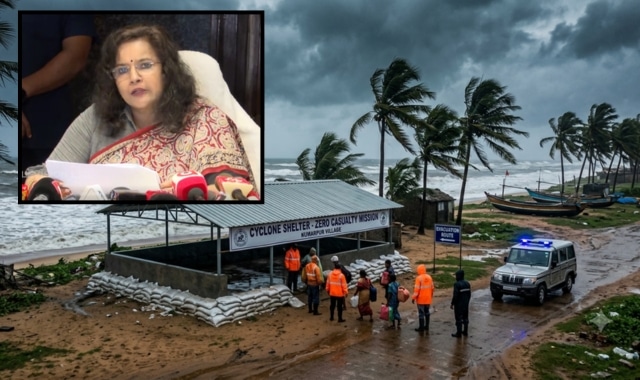
The Odisha state administration has put its disaster management machinery on high alert following forecasts of a potential storm system—provisionally named Cyclone Arnab—developing in the Bay of Bengal.
Chief Secretary Anu Garg chaired a high-level review meeting on Monday with top officials, Special Relief Commissioner (SRC) representatives, and department secretaries to evaluate state preparedness and enforce proactive safety measures.
The weather system, which originated as a low-pressure area over the Andaman coast on Sunday, intensified into a depression on Monday. According to meteorologists, the system is expected to concentrate into a deep depression by Tuesday and could potentially upgrade into a compact cyclonic storm before approaching land between North Andhra Pradesh and South Odisha.
Key Takeaways from Official Advisory & Review Meeting
-
System Path & Timeline: The India Meteorological Department (IMD) noted that the system is tracking northwestward. Clarification on whether it reaches full cyclonic strength and its exact landfall location will be confirmed by Wednesday.
-
Impact Window: IMD DG Dr Mrutyunjay Mohapatra indicated that the system is likely to cross the coast between the night of September 23 and the morning of September 24.
-
Torrential Downpours: Southern and coastal districts will experience heavy rainfall beginning Tuesday, intensifying into extremely heavy downpours between September 23 and 25. The heavy rain belt is expected to shift toward interior Odisha by September 25.
-
Flood & Landslide Risks: Authorities warned of potential urban waterlogging, localised flash floods in hilly regions, and rising water levels in southern Odisha rivers.
-
Fishermen Warning: Fishermen currently at sea have been instructed to return to shore immediately, with a total ban imposed on venturing into the Bay of Bengal until further notice.
Chief Secretary Anu Garg emphasised a “Zero Casualty” objective, ordering the readiness of temporary cyclone shelters, immediate evacuation plans for vulnerable populations in low-lying areas, and the pre-positioning of cooked food supplies.