In a decisive move to safeguard historical records, eliminate administrative complexities, and protect the rights of genuine landless beneficiaries, the Revenue and Disaster Management Department of Odisha has officially implemented Standard Operating Procedure (SOP)-2026.
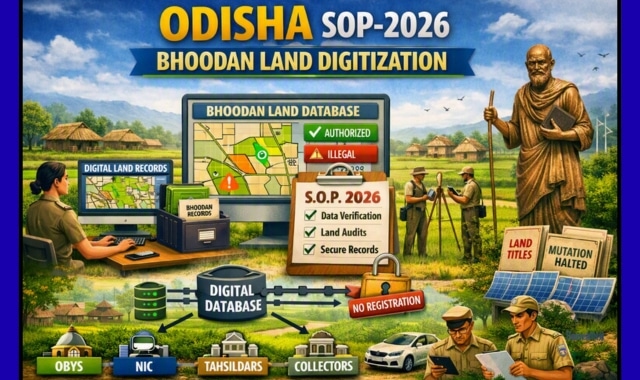
The initiative aims to build a comprehensive, authenticated, and searchable state-wide digital database for all Bhoodan and Gramdan lands.
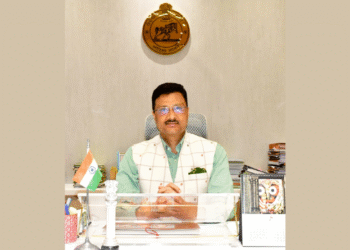
Additional Chief Secretary of the Revenue Department, Dr Arabinda Kumar Padhee, has issued formal directives to all Revenue Divisional Commissioners (RDCs), the Secretary of the Board of Revenue, and district collectors to execute the time-bound mission.
Addressing Historical Gaps and Irregularities
Rooted in Acharya Vinoba Bhave’s Bhoodan movement—inspired by Mahatma Gandhi’s ideals—the initiative was originally designed to voluntarily distribute land to landless families. While a significant portion of land was successfully allocated by the Odisha Bhoodan Yajna Samiti, substantial tracts remain undistributed. Furthermore, a lack of proper mutation in the Record of Rights (RoR) and the absence of a unified database have historically left many beneficiaries grappling with legal and administrative hurdles.
Despite legal restrictions on transferring Bhoodan lands, instances of unauthorised commercial occupation and illegal transfers have recently come to light. SOP-2026 seeks to rectify these discrepancies through rigorous record reconciliation, ensuring that unutilized lands are properly identified and reserved strictly for eligible landless families under schemes like Vasundhara.
Temporary Ban on Registrations and Structured Responsibilities
As a precautionary measure to prevent further unauthorised transactions, the state government has temporarily prohibited all registration and mutation processes related to Bhoodan lands until the digital database is fully finalised.
To ensure seamless execution, responsibilities have been clearly delegated across administrative tiers:
-
Odisha Bhoodan Yajna Samiti (OBYS): Tasked with the digitisation of primary historical and legal records held in secure custody.
-
National Informatics Centre (NIC): Responsible for developing a specialised online portal integrated with the Land Records Management System (LRMS) and Bhulekh.
-
Tahsildars: Functioning as primary executing officers, they will reconcile registers to create a dedicated Bhoodan Parcel Register.
-
Sub-Collectors & Collectors: Will directly supervise progress at sub-divisional and district levels, with RDCs reviewing the mission’s headway at least once a month.
Through this synchronised administrative framework, the Odisha government aims to bring total transparency, secure historical accountability, and protect public trust in land distribution.