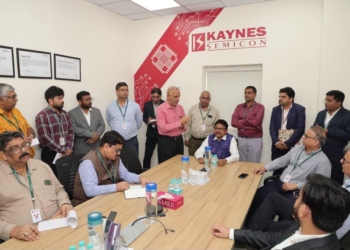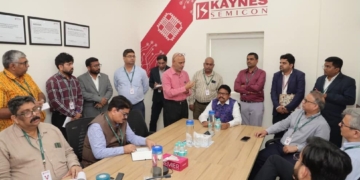
The Housing & Urban Development (H&UD) Department, Government of Odisha, held its 14th Dashboard Review Meeting for FY 2026–27 yesterday under the chairpersonship of Usha Padhee, Additional Chief Secretary, H&UD Department.
The reviewed financial progress, implementation of flagship urban programmes, infrastructure projects, urban reforms and emerging priorities across the State.
The meeting reviewed key focus areas including Urban Conclave 2026, urban flooding, Local Self Government Day 2026, Big Ticket Projects, Urban Challenge Fund, reform initiatives and district-level monitoring. The ACS Padhee emphasised the need for close monitoring of every action point, timely resolution of bottlenecks and accelerated execution to ensure that planned investments translate into visible outcomes for citizens.
The Department’s total budget for 2026–27 stands at ₹10,726.87 crore. Officers were advised to accelerate expenditure across key sectors, ensure effective fund utilisation and avoid surrender of funds at the end of the financial year.
Significant progress was noted in the sanitation and waste-management sector. Under Swachha Odisha, expenditure has reached 62.5 per cent of the budget provision, with Solid Waste Management recording 65.9 per cent and Liquid Waste Management 56.4 per cent. The meeting stressed further progress in legacy waste remediation, Compressed Bio-Gas (CBG) plants and strengthening of Micro Composting Centres (MCCs) and Material Recovery Facilities (MRFs). The Department has also directed continued monitoring of urban sanitation activities through the Dashboard mechanism.
Water supply and urban drainage were accorded high priority. The Department reviewed progress under SUJALA and 24×7 Drink-from-Tap initiatives being implemented through WATCO and PHEO. In view of the increasing importance of urban flood management, Detailed Project Reports for storm-water drainage in 50 ULBs are being pursued on priority. District-level coordination is also being strengthened to address localised water-supply and drainage issues in a timely manner.
Urban infrastructure and connectivity projects were also reviewed. Six priority Comprehensive Development Plan (CDP) road corridors have been taken up for preparation of DPRs, including important connectivity corridors linking Sainik School Square–VSS Nagar, the New Bhubaneswar Railway Station corridor, Pokhariput–Ananta Vihar and other strategic locations. The Department is also pursuing Ring Road and other major infrastructure projects with emphasis on coordinated planning and time-bound execution.
The meeting further emphasised reforms in town planning and urban governance. Development Authorities and ULBs are being encouraged to streamline Town Planning schemes through standardised procedures and clear implementation roadmaps. Building-plan clearances in rural areas are also being moved online, while model plans for urban infrastructure are being developed to promote standardisation and improve the quality of urban development.
Urban mobility and affordable housing remained important components of the review. Progress under CRUT, including ITMS and proposed mini-bus operations, was reviewed. The Department also reviewed the expansion of Ama Bus and PM e-Bus Sewa, while Affordable Housing Projects in Cuttack, Berhampur and Rourkela are being pursued for faster implementation, including through PPP mode.
The Dashboard also reviewed flagship initiatives including SAHAJOG, aimed at achieving saturation of scheme linkages for around 4.2 lakh EWS urban households, the Urban Challenge Fund, BCPPER, affordable housing initiatives and other Big Ticket Projects. The Urban Challenge Fund proposals for Sambalpur and Rourkela are being progressed for submission to the Ministry of Housing and Urban Affairs.
With the upcoming Collectors’ Conference and Urban Conclave 2026, the Department has placed strong emphasis on inter-departmental coordination, field-level monitoring and outcome-based implementation. The Technical Assistance Support Unit and concerned vertical heads have been entrusted with close monitoring of action points and ensuring adherence to prescribed timelines.
………