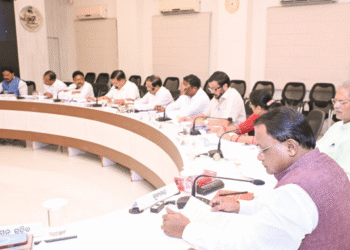

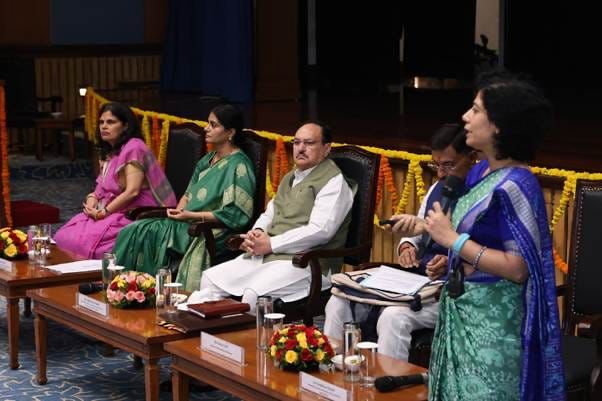
Union Health Minister J.P. Nadda has called for stronger parliamentary and grassroots efforts to accelerate India’s fight against tuberculosis (TB), as he interacted with Members of Parliament from Odisha and Jharkhand during the ongoing Monsoon Session.
The meeting, held under the theme “Parliamentarians Championing a TB Mukt Bharat”, brought together MPs from both states across party lines. Union Minister of State for Health and Family Welfare Anupriya Patel and Union Minister of State for Defence Sanjay Seth also attended the interaction.
The focus was on improving early detection, expanding awareness, strengthening monitoring and ensuring that TB services reach people in vulnerable communities.
Over 7 lakh TB cases detected during 100-day campaign
The meeting reviewed the progress of the recently concluded 100-Day TB Mukt Bharat Abhiyaan.
The second phase of the campaign was launched on March 24, 2026, and covered nearly 1.58 lakh high-risk villages and urban wards across India. The campaign concluded in July.
According to the Ministry of Health and Family Welfare, more than 2.2 crore vulnerable people were screened during the campaign. Over 7 lakh new TB cases were detected, including 1.97 lakh asymptomatic cases that may otherwise have remained undiagnosed.
The figures underline the importance of proactive screening, particularly among communities facing a higher risk of TB.
Odisha, Jharkhand report thousands of TB cases
Odisha and Jharkhand remain important focus states because several factors can increase the risk of TB, including mining and industrial activities, occupational dust exposure, migration, malnutrition, urban settlements and certain comorbidities.
During the 100-Day campaign:
- Jharkhand notified 16,754 TB patients, including 4,574 asymptomatic cases.
- Odisha notified 15,268 TB patients, including 3,514 asymptomatic cases.
Both states used targeted approaches to take screening and healthcare closer to communities. These included Ayushman Arogya Shivirs in urban settlements, construction sites, migrant clusters and mining areas.
Nadda asks MPs to strengthen district-level oversight
Nadda urged parliamentarians to take an active role in their constituencies by working with district administrations and healthcare facilities.
He called for regular monitoring of the availability and quality of TB services, along with greater support for early diagnosis and treatment.
The Health Minister also stressed the importance of public participation and social mobilisation, saying that TB elimination must become a sustained Jan Andolan.
MPs from Odisha and Jharkhand pledged to strengthen awareness and stigma-reduction campaigns. They also committed to promoting Ni-kshay Shivirs for early detection and supporting closer monitoring of TB services at district and block levels.
Focus on patient support and stigma reduction
The participating parliamentarians also discussed the need to support people affected by TB beyond medical treatment.
Their commitments included mobilising communities and organisations to provide nutritional, psychosocial and livelihood support to people affected by the disease.
The approach reflects a broader focus on patient-centred TB care, where early diagnosis is combined with treatment support and efforts to reduce stigma.
India expands technology-led TB detection
India has also expanded the use of technology to improve TB diagnosis and case finding.
According to the Health Ministry, molecular testing capacity has grown from a few hundred machines a decade ago to more than 9,000 machines. Nearly 3,000 AI-enabled handheld X-ray units are now being used in the field to support active case finding.
The government said these technologies are helping health teams identify TB cases among populations that may face difficulties accessing conventional healthcare services.
India records progress in TB elimination
India recorded a 21% decline in TB incidence between 2015 and 2024, according to the WHO Global TB Report 2025. The government also cited a 92% treatment success rate.
Nadda said continued focus on early detection, patient-centred treatment and community participation would be essential to maintaining the progress.
The meeting was part of a series of consultations between the Union Health Minister and MPs from different states. The government aims to strengthen collective responsibility among parliamentarians, state administrations, district officials, healthcare workers and communities in the drive towards a TB Mukt Bharat.