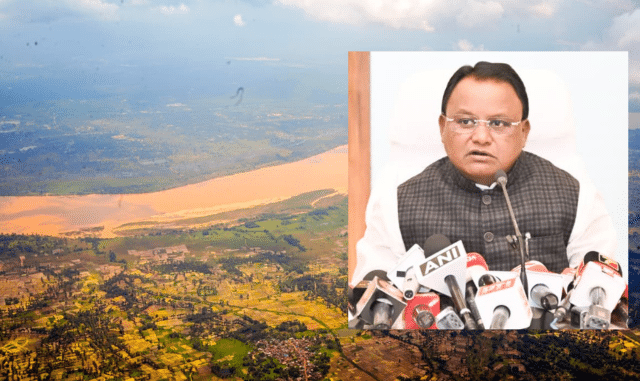
In a decisive show of solidarity with flood-ravaged communities, Odisha Chief Minister Mohan Charan Majhi on Sunday announced an initial assistance package of Rs 110 crore for those affected by the ongoing floods.
The Chief Minister directed officials to ensure the funds reach eligible families without delay based on preliminary assessments, while promising comprehensive support after the final damage survey.
The announcement came after Majhi personally surveyed the inundated areas from the air and assigned ministers to closely monitor relief and rescue operations across the hardest-hit districts.
“The state government is standing rock-solid with every affected family,” the official statement from the Chief Minister’s Office emphasised, underlining that flood response, rescue, relief and rehabilitation remain the administration’s highest priority on a war-footing basis.
Earlier, the government had already released Rs 26 crore as advance funds for immediate relief and rescue work. The new package will cover house damage, crop loss and livestock deaths under the State Disaster Response Fund (SDRF) norms.
Key Compensation Details
- Fully damaged houses: Rs 1.20 lakh
- Partially damaged pucca houses: Rs 6,500
- Partially damaged kutcha houses: Rs 4,000
- Collapsed huts: Rs 8,000
- Cattle sheds: Rs 3,000
For small and marginal farmers:
- Non-irrigated land: Rs 8,500 per hectare
- Irrigated land: Rs 17,000 per hectare
- Perennial crops: Rs 22,500 per hectare
Families of the six people who lost their lives will receive Rs 24 lakh each as ex-gratia. Livestock compensation ranges from Rs 37,500 for milch animals (cows and buffaloes) to Rs 4,000 for goats and sheep, and Rs 32,000 for draught animals.
Gratuitous relief will continue for all eligible households until normalcy is restored. Infrastructure repairs for roads, bridges and other damaged assets will be funded after the final assessment.
Scale of the Disaster
The floods have impacted 22 districts, affecting 85 blocks, 15 urban areas, 656 gram panchayats and 1,458 villages. Nearly 8.63 lakh people have been affected, of whom 2.67 lakh were safely evacuated in advance. Currently, 529 relief camps and 31 animal camps are operational.
Rescue operations are being carried out by 20 ODRAF teams, 7 NDRF teams and 172 fire service units—totalling 199 specialised teams. Essential supplies already distributed include rice, flattened rice (chuda), jaggery, polythene sheets and over 1,816 metric tonnes of cattle feed.
Balasore, Bhadrak and Jajpur remain the most severely affected districts, where relief, rescue and rehabilitation continue around the clock. Senior officials are conducting 24-hour reviews to ensure food, clean drinking water, healthcare, veterinary services and other essentials reach every affected family.
The Chief Minister’s Office reiterated that the administration will not rest until every flood-hit household receives the support it needs and life returns to normal across the state.