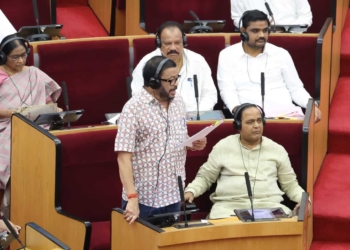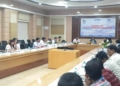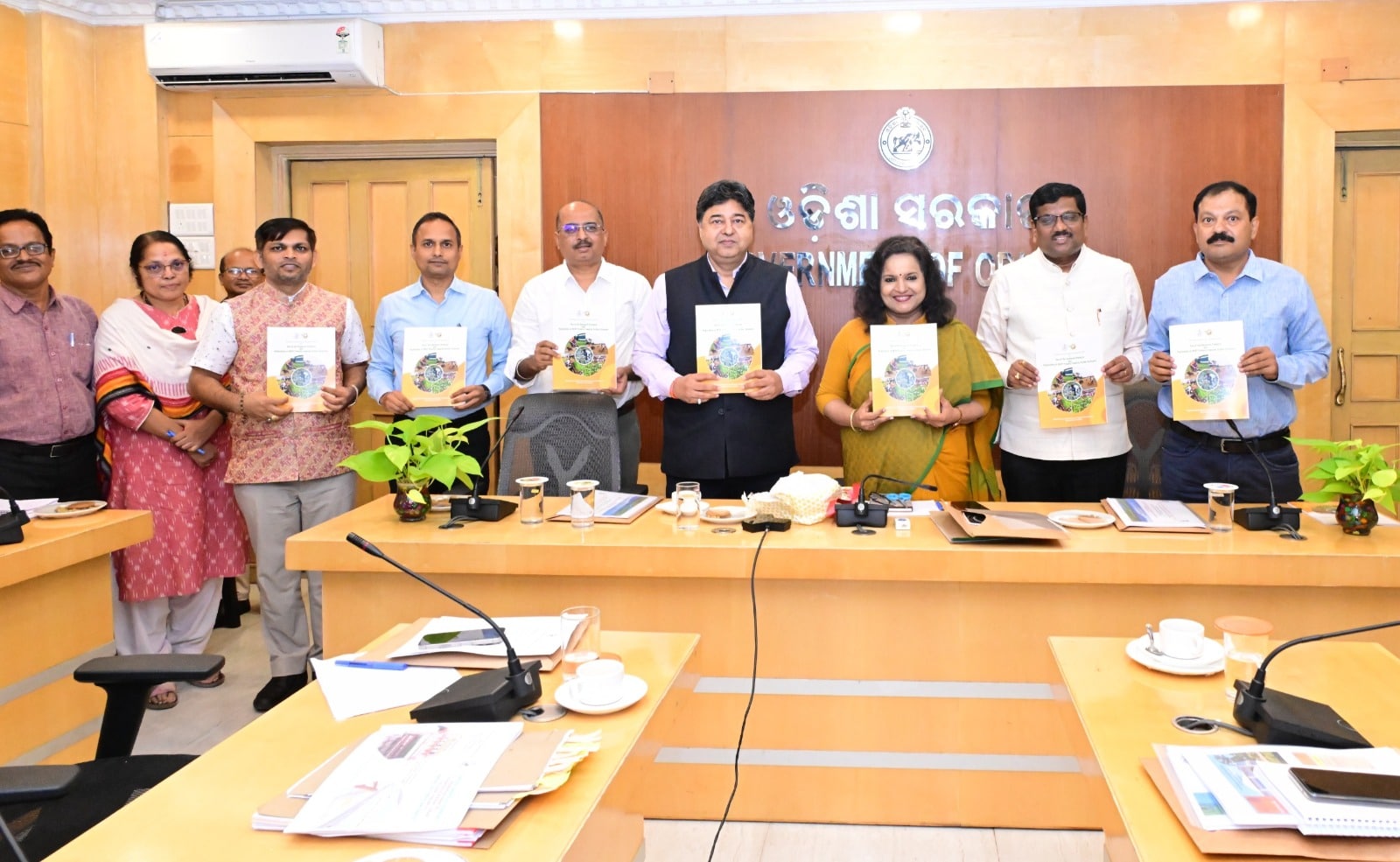
In a significant boost to Odisha’s farming sector, the 39th State Level Sanctioning Committee (SLSC) meeting under the Pradhan Mantri Rashtriya Krishi Vikas Yojana (PM-RKVY) was chaired by Chief Secretary Anu Garg at Lok Seva Bhawan.
Senior officials deliberated on the revised Annual Action Plan for 2026–27 worth ₹1,037.19 crore, with strong emphasis on raising farmer incomes, boosting productivity, and building climate resilience.
The meeting reviewed multiple state-central schemes under the unified PM-RKVY umbrella, focusing on four broad categories: self-reliance and food security, climate-resilient practices, technology and extension services, and national priority projects. Sixteen integrated schemes will be implemented to deliver tangible results on the ground.
Spotlight on ‘Kapas Kanti’ Cotton Mission
A major highlight was the launch of the new ‘Kapas Kanti’ mission with an annual plan of ₹15.01 crore. The initiative will promote modern farming techniques, integrated crop management, farmer training, and higher productivity across eight districts, aiming to significantly increase cotton output in the state.
Key Project Approvals & Innovations
Out of 15 previously proposed projects under PM-RKVY-DPR, 12 have been forwarded for central approval. Four new innovative projects were also discussed, including:
- Clean energy production from agricultural waste
- Zero Drudgery Value Chain Model to reduce physical labour for women farmers and raise their incomes
- Honey beekeeping initiatives
- Integrated tuber and root crop-based farming systems
Officials also reviewed progress on the Pradhan Mantri Krishi Sinchayee Yojana’s watershed development component and the ‘Reward Odisha’ programme, which focuses on restoring watersheds for climate-resilient agriculture.
On the occasion, a Standard Operating Procedure (SOP) booklet on “Research Outcome Utilisation and Scaling of PM-RKVY Projects” was formally released to ensure wider adoption of proven technologies.
Chief Secretary’s Directives
Chief Secy Garg stressed timely, outcome-based implementation of all projects. She called for better convergence between departments, wider reach of benefits to farmers, and priority actions on:
- Micro-irrigation expansion using mega lift and large irrigation systems
- Three-year roadmap for productivity enhancement in agriculture and allied sectors
- Branding of Koraput coffee
- Promotion of natural and organic farming
- Mission-mode approach for pulses and oilseeds
Agriculture Secretary-cum-Commissioner Sachin Ramchandra Yadav presented a detailed overview of the scheme’s progress and future roadmap. Senior officers from Finance, Agriculture, Soil Conservation, Horticulture, and other departments, along with OUAT Vice-Chancellor, participated in the meeting.
This comprehensive push is expected to strengthen food security, empower small and marginal farmers — especially women — and make Odisha’s agriculture more sustainable and profitable in the face of climate challenges.