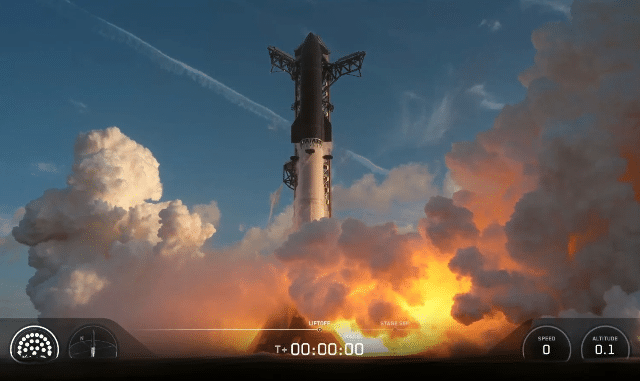
SpaceX achieved a monumental milestone in aerospace history on Monday as its next-generation Starship rocket successfully reached Earth’s orbit for the very first time.
The breakthrough flight demonstrated the resilience of the mega-rocket system, pushing past early technical hiccups to accomplish its primary mission objectives.
The spacecraft lifted off from Starbase in Texas, soaring into the skies. During its ascent, the flight faced a momentary hurdle when an engine shut down unexpectedly.
However, the spacecraft’s robust redundancy systems allowed it to power through the anomaly.
Liftoff of Starship! pic.twitter.com/40D8bXSkr2
— SpaceX (@SpaceX) September 28, 2026
Following stage separation and a successful boostback burn by the Super Heavy booster, the Starship upper stage coasted into space before executing a precise orbital insertion burn.
Having cleared this historic hurdle, the spacecraft is set to continue its multi-hour mission around the planet, which includes payload deployment and testing key reusability features like heatshield upgrades.
Reaching orbit is a major turning point for SpaceX, moving beyond past suborbital test flights. This successful insertion brings Elon Musk closer to his goal of a fully reusable transport system for commercial satellites, lunar trips, and future crewed Mars missions.