

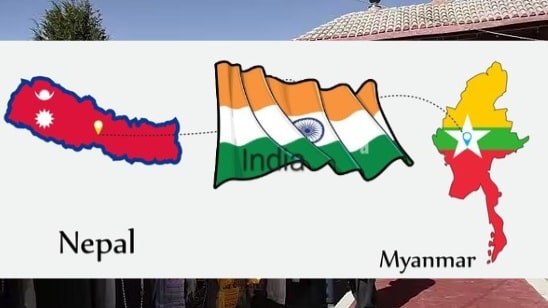
India has stepped up its diplomatic outreach to neighbouring countries, signalling a renewed focus on regional engagement as geopolitical competition intensifies across South Asia.
Recent interactions involving leaders from Nepal and Myanmar reflect New Delhi’s efforts to strengthen partnerships, improve connectivity, and enhance regional stability under its neighbourhood-first approach.
Stronger Focus on Regional Relationships
Prime Minister Narendra Modi has consistently emphasised the importance of maintaining close ties with neighbouring nations. According to diplomatic observers, the government believes that India’s global ambitions are closely linked to strong and stable relationships across the subcontinent.
The latest engagement with leaders from Nepal and Myanmar highlights India’s commitment to fostering cooperation in infrastructure, trade, connectivity and people-to-people exchanges.
Nepal, in particular, remains a key partner for India. Political leaders from Kathmandu have recently advocated greater cross-border connectivity, improved air links and expanded infrastructure cooperation between the two countries.
Nepal Remains a Strategic Partner
India and Nepal share deep historical, cultural and economic ties. New Delhi has repeatedly expressed its willingness to support Nepal’s development through investment, connectivity projects and economic integration.
Experts believe stronger economic cooperation can help both countries benefit from increased trade, tourism and infrastructure development while maintaining regional stability.
The renewed diplomatic engagement also comes after years of political tensions triggered by border disputes and competing geopolitical influences in the Himalayan region.
Myanmar Engagement Gains Importance
India has also intensified engagement with Myanmar, recognising its strategic importance for the security and development of India’s northeastern states.
Myanmar serves as a crucial gateway for regional connectivity initiatives and plays a significant role in India’s efforts to improve trade routes linking South Asia with Southeast Asia.
Security cooperation remains a major priority as both countries work together to address cross-border challenges and maintain stability along shared borders.
Balancing Regional Challenges
India’s regional strategy is unfolding amid increasing competition with China and continuing concerns over cross-border terrorism originating from Pakistan.
New Delhi has maintained that relations with China will depend on peace and stability along the Line of Actual Control (LAC). At the same time, India continues to insist that meaningful engagement with Pakistan requires an end to cross-border terrorism.
Diplomatic analysts say these challenges make stronger ties with neighbouring countries even more important for India’s long-term strategic interests.
Importance of South Asian Connectivity
India’s neighbourhood-first policy increasingly focuses on infrastructure development, economic partnerships and regional connectivity.
Countries such as Bhutan, Sri Lanka, Maldives, Bangladesh and Nepal remain central to New Delhi’s broader vision of regional integration.
Officials believe improved transportation links, energy cooperation and trade corridors can create shared economic opportunities while strengthening regional resilience.