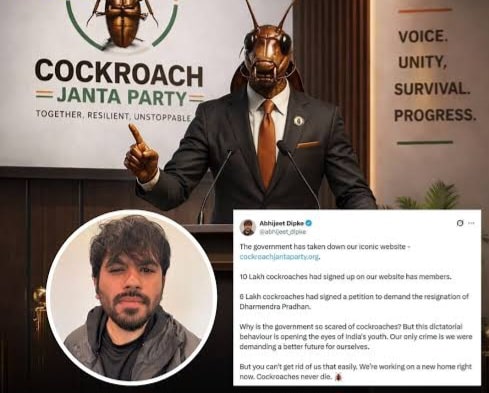
The online movement surrounding the Cockroach Janta Party (CJP) has intensified after its official website was reportedly taken down amid growing political attention and viral social media engagement.
CJP founder Abhijeet Dipke alleged that the website, social media accounts and digital platforms linked to the movement were targeted as the party continued gaining massive support online.
The development comes days after the youth-led digital campaign exploded across social media platforms following controversy surrounding remarks linked to Chief Justice of India Surya Kant.
Cockroach Janta Party Website Goes Offline
On Saturday, Dipke claimed that the party’s official website, cockroachjantaparty.org, had been removed in what he described as a crackdown on digital dissent.
According to Dipke, the website had become a central hub for supporters of the movement. He claimed that nearly 10 lakh users had registered as members, while around 6 lakh people had signed an online petition demanding the resignation of Union Education Minister Dharmendra Pradhan over the alleged NEET-UG 2026 paper leak controversy.
In a strongly worded post on social media, Dipke questioned why authorities were “afraid of cockroaches” and accused the system of silencing young voices demanding accountability and a better future.
He further stated that the movement would continue despite the takedowns, saying, “Cockroaches never die.”
Social Media Accounts Also Affected
Apart from the website issue, Dipke alleged that the party’s official X account had been withheld, its backup Instagram page removed and both his personal Instagram account and the party’s account hacked.
Despite these disruptions, the movement continues to gain visibility online. As of Saturday afternoon, the Cockroach Janta Party reportedly crossed 22 million followers on Instagram, significantly surpassing the follower count of several major political parties in India.
The rapid rise of the movement has turned it into one of the most talked-about online trends among Gen Z users and young voters.
How The Cockroach Janta Party Started
The movement began shortly after controversial remarks made during a court hearing involving Chief Justice of India Surya Kant.
During proceedings related to granting “senior” designation to lawyers, the CJI reportedly referred to certain individuals as “cockroaches” and “parasites” while criticising those entering the legal profession with alleged fake degrees and questionable credentials.
The remarks quickly triggered widespread reactions online, especially among students and young professionals already frustrated over issues like unemployment, examination paper leaks and rising pressure in the education sector.
The CJI later clarified that his comments were misquoted and said they were directed only at individuals using “fake and bogus degrees” to enter the legal profession.
However, the phrase had already sparked a meme-driven online campaign that evolved into the Cockroach Janta Party movement.
Youth Movement Turns Political
What initially started as satire soon transformed into a broader digital protest movement focusing on youth concerns, including unemployment, education reforms and transparency in competitive examinations.
Several political leaders and activists later interacted with or acknowledged the movement online. Leaders from parties such as the Trinamool Congress and Samajwadi Party, along with activists and lawyers, publicly engaged with the campaign.
The blocking of the party’s social media accounts also drew criticism from digital rights groups. The Internet Freedom Foundation described the action as an attempt to suppress free speech and online expression.
As the controversy grows, the Cockroach Janta Party continues to dominate online conversations, with supporters calling it a symbol of youth frustration and digital resistance in India.