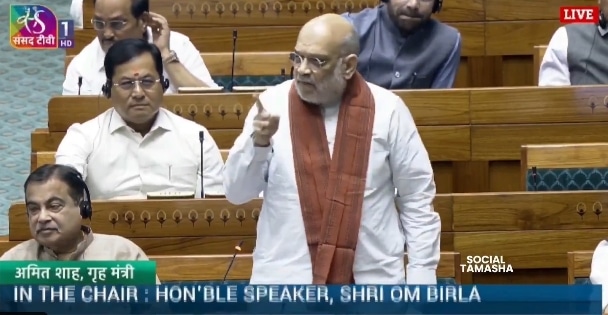
Union Home Minister Amit Shah told Parliament that reservation based on religion violates the Constitution, firmly rejecting Samajwadi Party demands for a separate quota for Muslim women under the women’s reservation law.
His remarks came during a special session debating women’s representation, delimitation, and census-related bills.
Shah emphasised that while caste enumeration will be part of the 2027 Census, religion cannot serve as the basis for reservation policies. He directly countered Samajwadi Party MPs Dharmendra Yadav and Akhilesh Yadav, who pressed for sub-quotas for OBC, backward class, and Muslim women. Shah reiterated that the Constitution allows reservation only under specific caste and community criteria, not religion.
Opposition leaders argued that without sub-quotas, large sections of women may remain underrepresented. They tied their demand to the need for a caste census, warning that linking women’s reservation to delimitation could reduce minority and regional representation.
The debate unfolded during a three-day special session, with the government seeking to implement 33% reservation for women from the 2029 elections. The plan includes expanding Lok Sabha seats and redrawing constituencies. Opposition parties supported women’s reservation in principle but opposed its connection to delimitation.
Shah’s rejection of religion-based quotas aligns with long-standing constitutional interpretations. Historically, similar demands for minority sub-quotas have faced legal and political hurdles. The current standoff highlights the tension between constitutional principles and inclusive representation, shaping political narratives ahead of future elections.