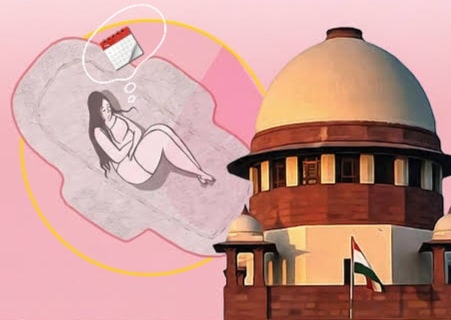
The Supreme Court of India on Friday observed that making menstrual leave mandatory at workplaces could negatively impact women’s employment opportunities.
The court said that although providing period leave voluntarily would be a positive step, making it compulsory through law might discourage employers from hiring women.
Court’s Key Observations
A bench led by Surya Kant, the Chief Justice of India (CJI), along with Joymalya Bagchi, made the remarks while hearing a petition seeking menstrual leave for women employees and female students across India.
The court noted that if menstrual leave becomes mandatory:
-
Employers might hesitate to hire women
-
Women could face discrimination in jobs
-
Career opportunities in the government sector, judiciary, and private companies might be affected
The bench said voluntary policies by companies would be “excellent,” but legal enforcement could create unintended consequences for women in the workplace.
Petition Seeking Period Leave Policy
The petition was filed by Shailendra Mani Tripathi, requesting that menstrual leave be made available for women employees and students nationwide.
However, the court declined to entertain the plea and suggested that the appropriate government authorities could examine the issue and consult stakeholders before framing any policy.
Court’s Concern About Workplace Perception
The bench also expressed concern that pushing for mandatory menstrual leave laws could reinforce the idea that women are “inferior” or less capable during menstruation.
According to the court, such narratives might unintentionally strengthen gender stereotypes rather than empower women.
Existing Policies in Some Places
While India does not have a nationwide policy for menstrual leave, some initiatives already exist:
-
Kerala has introduced menstrual leave provisions for female students in certain institutions
-
Some private companies have voluntarily implemented period leave policies for women employees
The Supreme Court suggested that policymakers examine such examples before introducing broader regulations.