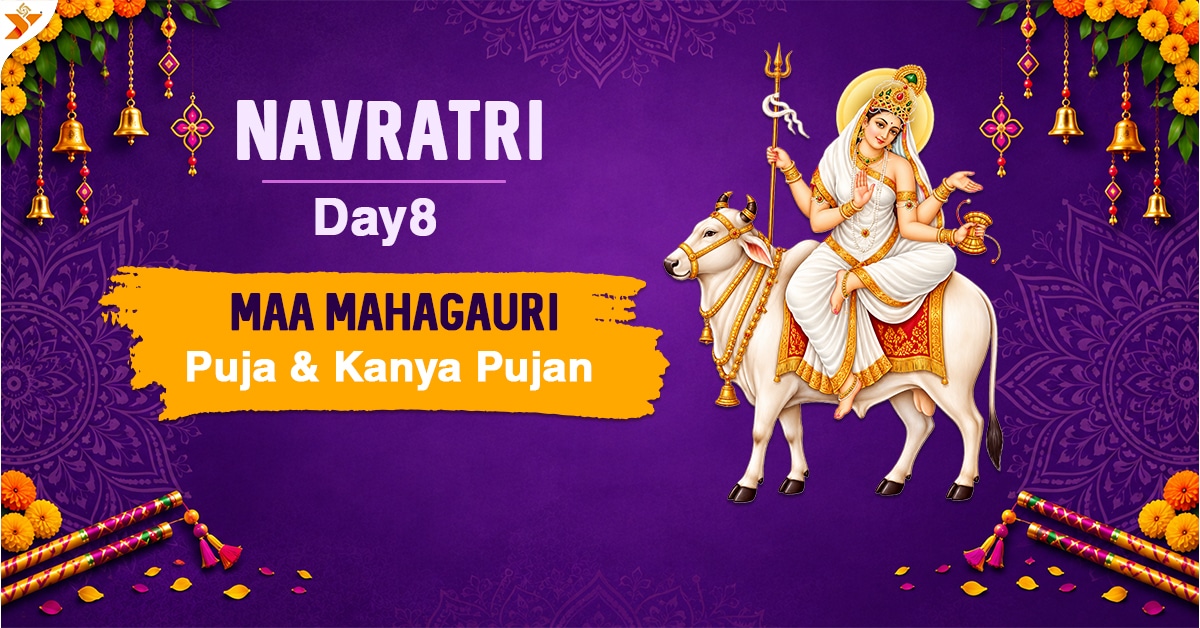
The eighth day of Navratri is dedicated to the worship of Maa Mahagauri, the eighth form of Goddess Durga. Revered as a symbol of purity, serenity, and unwavering inner strength, her form offers a profound message: remaining committed to one’s purpose even when the journey is difficult.
The Symbolism of Maa Mahagauri
- Appearance: Commonly depicted wearing pristine white garments and seated on a white bull, she is generally shown with four arms—holding a trident (trishul) and a drum (damaru), while her other hands display mudras of blessing (abhaya) and protection.
- The Elements: Her white attire symbolizes purity and peace, while the bull represents strength and steadfastness. Together, these attributes reflect the perfect balance between inner calm and the fierce determination required to overcome life’s obstacles.
- Day 8 Color (2026): Purple is the designated color for Navratri Day 8 (Sunday, October 18, 2026). Associated with spiritual awareness, dignity, and inner strength, wearing purple during worship allows devotees to immerse themselves in the festive tradition.
Maa Mahagauri Puja Vidhi
A simple step-by-step guide to performing the Puja on Ashtami:
- Cleanse and Prepare: Wake up early, take a bath, clean the puja area, and set up the goddess’s picture or idol.
- Arrange the Altar: Set out customary puja items and continue the worship of the kalash established on the first day of Navratri, if applicable.
- Light a Lamp: Illuminate a ghee diya and light incense before the goddess, keeping proper fire-safety precautions in mind.
- Offerings: Present fresh flowers, rice grains (akshat), kumkum, and sandalwood paste following your family tradition.
- Bhog (Prasad): Offer a clean coconut or coconut-based sweets as the traditional offering for peace, prosperity, and family well-being.
- Chant Mantras: Recite Maa Mahagauri’s mantras with concentration and devotion.
- Perform Aarti: Conclude the worship with an aarti and prayers for peace and happiness, followed by distributing the prasad to family members.
Mantras for Day 8
1. Primary Mantra
- Sanskrit: ॐ देवी महागौर्यै नमः॥
- Transliteration: Om Devi Mahagauryai Namah.
- Meaning: I bow to Goddess Mahagauri, the divine form associated with purity, serenity and spiritual illumination. (Devotees typically chant this 11, 21, or 108 times).
2. Dhyana Mantra
-
- Sanskrit: श्वेते वृषे समारूढा श्वेताम्बरधरा शुचिः। महागौरी शुभं दद्यान्महादेवप्रमोददा॥
श्वेते वृषे समारूढा श्वेताम्बरधरा शुचिः।
महागौरी शुभं दद्यान्महादेवप्रमोददा॥
-
-
- Transliteration: Shwete Vrishabhe Samarudha Shwetambaradhara Shuchih, Mahagauri Shubham Dadyan Mahadeva Pramodada.
-
Shwete Vrishabhe Samarudha Shwetambaradhara Shuchih,
Mahagauri Shubham Dadyan Mahadeva Pramodada.
-
-
-
- Meaning: May Maa Mahagauri, who rides a white bull and wears white garments, bless her devotees with auspiciousness and well-being.
-
-
Durga Ashtami and Kanya Pujan
Kanya Pujan (or Kanjak) is a sacred ritual observed during Durga Ashtami or Maha Navami.
-
-
-
- The Ritual: Involves washing young girls’ feet, offering prayers, serving traditional food (puri, chana, and halwa), and presenting gifts according to family customs. Some households also honor a young boy representing Bhairav.
- Timing for 2026: Because the Ashtami tithi extends from October 18 into October 19, 2026, families should check their local Panchang to determine the ideal shubh muhurat for their specific household traditions.
-
-