Achieving the ambitious vision of a Viksit Bharat (Developed India) by 2047 requires a modern, ambitious, and highly robust statistical framework.
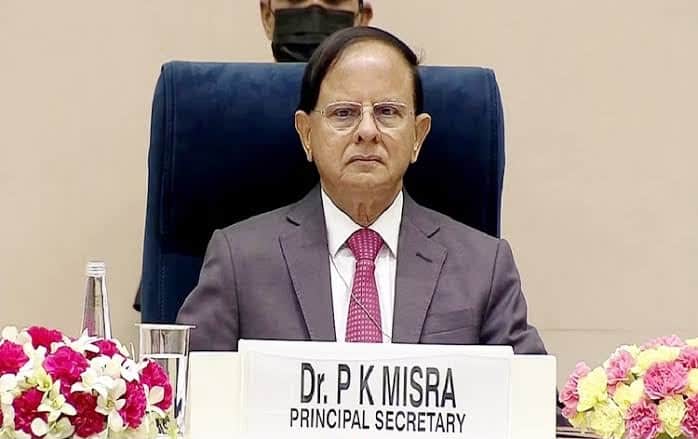
This critical insight was shared by Dr P.K. Mishra, Principal Secretary to the Prime Minister, while delivering the keynote address at the Conference of State Secretaries of Planning, Finance, and IT in New Delhi, organised by the Ministry of Statistics and Programme Implementation (MoSPI).
Emphasising that statistics, data, technology, planning, and governance are deeply interconnected, Dr Mishra underscored that the quality of a nation’s data directly dictates the quality of its decisions and development outcomes.
Statistics as a Strategic National Asset
Dr Mishra noted that statistics should no longer be viewed merely as an administrative requirement, but rather as a strategic national asset. Highlighting a fundamental governance principle, he stated, “What gets measured, gets managed; what gets managed, gets changed.” A strong statistical ecosystem empowers the government to track growth across states and districts, evaluate policy impacts, identify gaps, and ensure optimal utilisation of public resources.
Modernising Economic Measurement
To keep pace with a rapidly digitising and formalising economy, Dr Mishra stressed the urgent need to modernise economic measurement techniques. He pointed to major milestones such as:
-
Launching a new National Accounts Series with 2022-23 as the base year.
-
Introducing revised Consumer Price Index (CPI) and Index of Industrial Production (IIF/IIP) series to reflect contemporary economic realities.
Harnessing Technology with Caution
While acknowledging the transformative potential of Artificial Intelligence (AI), Machine Learning (ML), geospatial systems, and satellite imagery, Dr Mishra issued an important caveat. He warned that technological advancements must always be anchored in data quality, transparency, privacy, security, and accountability.
-
“Speed cannot come at the expense of data accuracy, nor can data be over-utilised at the expense of citizen privacy,” he cautioned.
Cooperative Federalism and Granular Data
The Principal Secretary described statistics as a vital instrument of cooperative federalism, enabling both the Centre and states to benchmark performance, identify best practices, and bridge regional divides. As India marches toward 2047, national averages will no longer suffice. Granular, micro-level data at the state, district, and local tiers will be indispensable for pinpointing development deficits and driving targeted interventions.
Concluding his address, Dr Mishra called for a unified national effort involving MoSPI, state statistical offices, finance and planning departments, NITI Aayog, and academic institutions. He envisioned a future-ready statistical infrastructure that is reliable, transparent, technology-driven, and perfectly aligned with the aspirations of a transforming India.