Navratri begins with the worship of Maa Shailputri, the first manifestation of Goddess Durga among the Navadurga, the nine forms of the Goddess worshipped during the nine-day festival.
The name Shailputri comes from two Sanskrit words — Shaila, meaning mountain, and Putri, meaning daughter. Maa Shailputri is therefore revered as the daughter of the Himalayas. She is associated with strength, purity, nature and stability.
The first day of Navratri is considered a time for new beginnings and spiritual grounding. Devotees seek Maa Shailputri’s blessings for courage, emotional balance, prosperity and strength to begin the nine-day period of devotion.
Maa Shailputri and the Muladhara Chakra
In several spiritual traditions, Maa Shailputri is associated with the Muladhara, or root chakra.
The root chakra is linked with stability, grounding and a sense of security. Devotees who follow this spiritual practice may meditate on the Muladhara while praying to Maa Shailputri as part of their Navratri observance.
Maa Shailputri’s Iconography
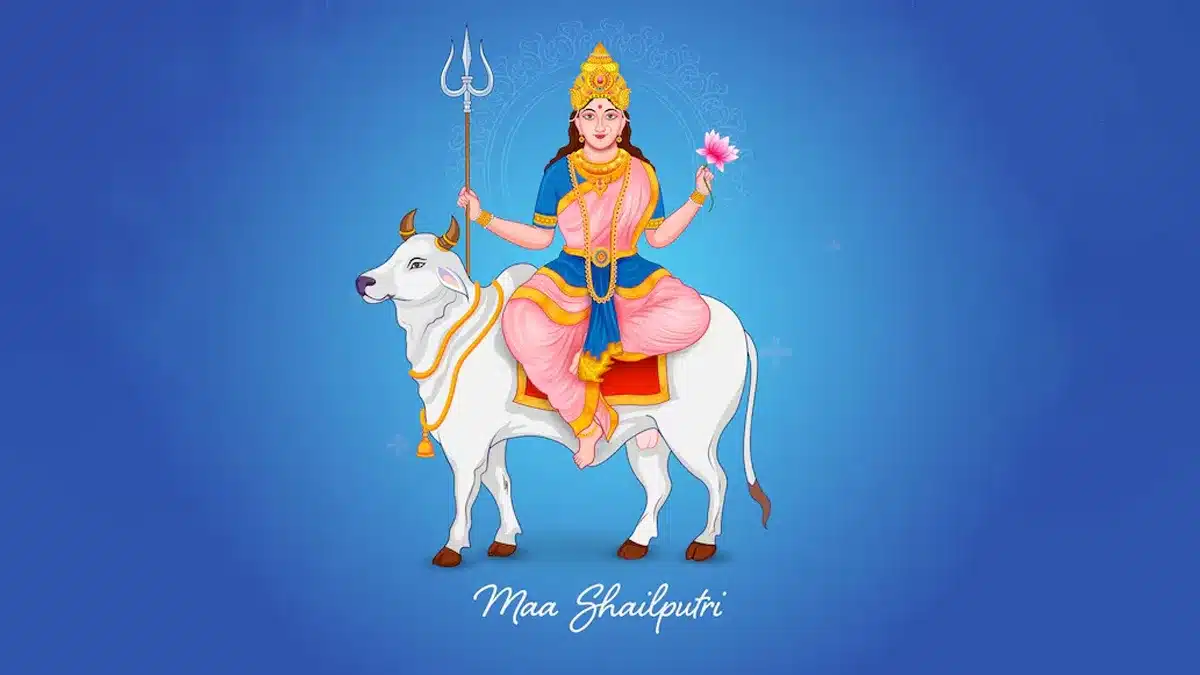
Maa Shailputri is traditionally depicted riding Nandi, the bull associated with Lord Shiva. She is shown carrying a trident in one hand and a lotus in the other.
The imagery is associated with strength, purity and spiritual determination. Her connection with Lord Shiva also reflects her identity within the broader traditions surrounding Goddess Parvati.
Navratri Day 1 Rituals
The first day of Navratri traditionally begins with Ghatasthapana, also known as Kalash Sthapana, subject to the prescribed auspicious timing for the region.
During the ritual, devotees establish a sacred kalash as a symbol of divine presence and prosperity. Depending on regional traditions, the setup may include water, mango leaves, a coconut and other ritual items.
Devotees then offer prayers to Maa Shailputri and perform aarti while seeking blessings for health, peace and prosperity.
Bhog for Maa Shailputri
Pure cow ghee is traditionally associated with offerings to Maa Shailputri. Devotees may also offer flowers, fruits and sweets according to family and regional traditions.
As Navratri fasting practices vary widely, devotees generally follow the food and offering customs prescribed by their family tradition or local religious practice.
Navratri Day 1 Colour
Navratri colours vary according to regional calendars and different traditions. For 2026, some commonly circulated Navratri colour calendars associate the first day with orange, symbolising energy, warmth and enthusiasm.
Devotees who follow a different regional calendar may observe another colour.
Maa Shailputri Mantra
Devotees traditionally recite the following mantra while worshipping Maa Shailputri:
“Vande Vanchhit Labhaya, Chandrardha Krita Shekharam |
Vrisharudham Shooldharam Shailputrim Yashasvinim ||”
Chanting the mantra is considered a way of seeking the Goddess’s blessings for strength, fulfilment and spiritual well-being.
Why Day 1 of Navratri Is Significant
Maa Shailputri represents the beginning of the Navratri spiritual journey. Her association with mountains reflects steadfastness and strength, while her connection with nature symbolises purity and balance.
For devotees, the first day is therefore not only an occasion for worship but also an opportunity to set intentions for the days ahead — with faith, discipline and a grounded mind.