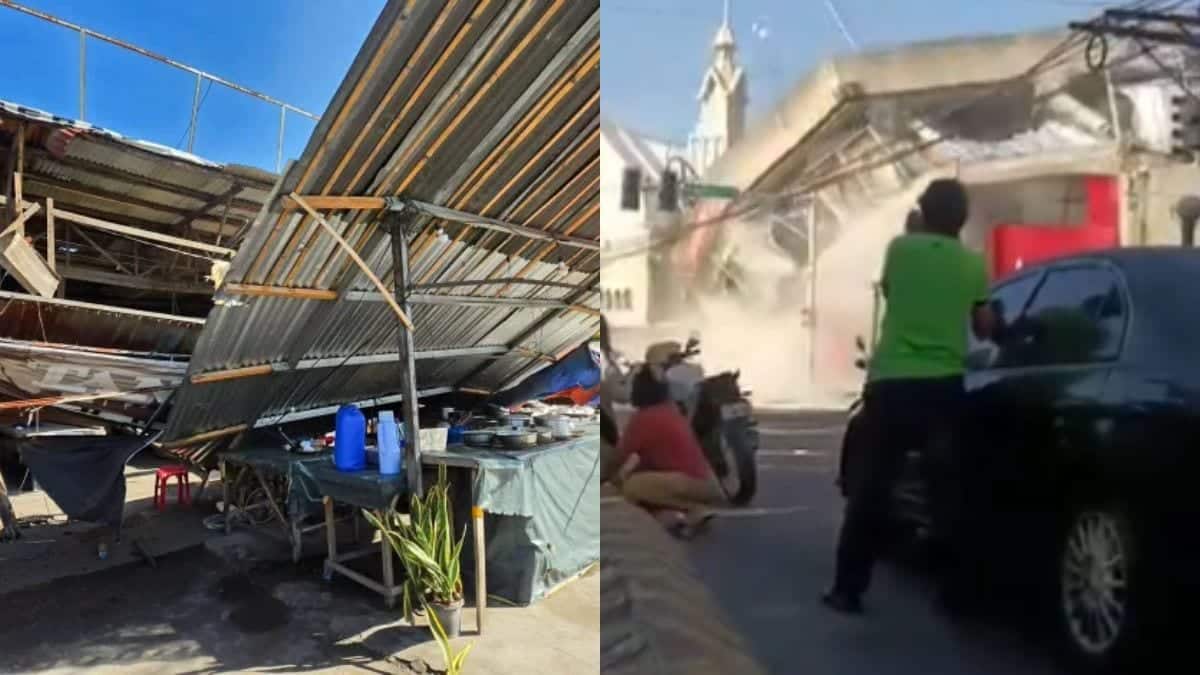
A devastating 7.8-magnitude earthquake struck the southern Philippines on Monday, triggering tsunami warnings across several countries, collapsing buildings and leaving at least three people dead, according to local authorities.
The powerful quake hit near General Santos City in Mindanao, one of the country’s largest urban centres, causing panic among residents and widespread structural damage. Emergency teams have been deployed as rescue and assessment operations continue.
Multiple Casualties Reported
Authorities confirmed that at least three people have lost their lives, while four others were injured following the powerful tremor. Officials cautioned that casualty figures may rise as rescue workers reach severely affected areas.
Agripino Dacera, the disaster management chief of General Santos City, said verification of fatalities and damage assessments is still underway.
Second Earthquake Strikes Hours Later
The situation worsened when a second earthquake measuring 6.1 magnitude struck approximately two hours after the initial quake.
The back-to-back tremors intensified fears of further damage and complicated emergency response efforts across the affected regions.
Tsunami Warning Issued Across Asia-Pacific
The massive earthquake triggered tsunami alerts across parts of Southeast Asia and the Pacific.
Authorities in the Philippines immediately ordered coastal evacuations after tsunami waves measuring up to three feet were detected along parts of the country’s coastline.
The Philippine Institute of Volcanology and Seismology (PHIVOLCS) confirmed that tsunami activity was recorded at multiple monitoring stations, with the highest wave reaching 1.4 metres.
President Marcos Orders Immediate Evacuations
Philippine President Ferdinand Marcos Jr. suspended school classes across affected areas of Mindanao and urged residents living near coastlines to move to safer locations.
“Move to higher ground now. Do not wait. Your life is more important than anything left behind,” the President said while addressing the nation.
Local authorities activated emergency protocols as thousands of residents were relocated from vulnerable coastal communities.
Indonesia, Japan Issue Alerts
The earthquake’s impact extended beyond the Philippines.
Indonesia issued tsunami warnings for parts of Sulawesi, Kalimantan and the Sangihe Islands, warning that waves as high as three metres could strike coastal regions.
Japanese authorities also issued tsunami advisories covering large stretches of the country’s Pacific coastline, warning residents of possible waves reaching up to one metre.
Malaysia joined the list of nations issuing precautionary warnings, while officials reported no immediate tsunami threat to Thailand or the United States west coast.
Dramatic Scenes of Destruction
Videos circulating online show significant structural damage in several areas.
One of the most striking visuals showed a shopping complex containing a popular fast-food outlet reduced to rubble in General Santos City.
Another video captured the collapse of a school building that officials confirmed was unoccupied at the time, preventing further casualties.
Several roads, commercial establishments and residential structures reportedly suffered varying degrees of damage as emergency crews continued inspections.
Rescue Operations Underway
Emergency responders remain on high alert as aftershocks continue to shake parts of Mindanao.
Authorities are focusing on search-and-rescue operations, restoring communication networks and assessing damage to critical infrastructure.
Residents have been advised to avoid damaged buildings, stay updated through official channels and follow evacuation instructions issued by local authorities.
Seismically Active Region
The Philippines sits along the Pacific Ring of Fire, one of the world’s most active seismic zones. The country experiences thousands of earthquakes annually, though only a small percentage cause significant destruction.
The latest 7.8-magnitude earthquake is among the strongest to hit the region in recent years and has once again highlighted the vulnerability of coastal communities to both seismic activity and tsunami threats.
Officials continue to monitor aftershocks and tsunami activity while rescue efforts remain ongoing.