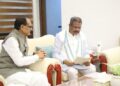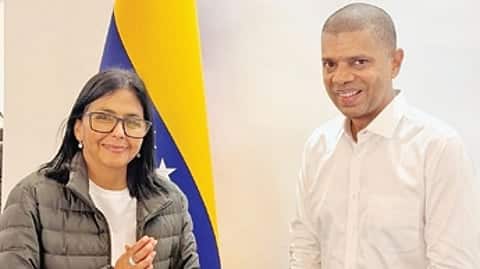
When devastating twin earthquakes struck Venezuela last month, the country turned to an unlikely source for guidance—Odisha’s globally acclaimed disaster management model. That is why former Odisha bureaucrat and Biju Janata Dal (BJD) leader VK Pandian, popularly known as the “Cyclone Man”, travelled to the South American nation this week.
Pandian visited earthquake-hit regions and met interim President Delcy Rodriguez, sharing Odisha’s decades of experience in disaster preparedness, rescue operations and post-disaster rehabilitation.
Why was VK Pandian invited to Venezuela?
The visit comes after twin earthquakes measuring 7.2 and 7.5 magnitude hit Venezuela on June 24, causing widespread devastation. According to official figures, at least 3,889 people have died, nearly 17,000 have been injured, and around 18,000 residents have been displaced.
As the country works to rebuild, Venezuelan authorities sought insights from disaster management systems that have successfully reduced casualties during natural calamities. Odisha’s model, developed over the past decade, is widely regarded as one of the world’s most effective approaches to disaster preparedness.
Pandian, who played a key role in shaping that model, shared India’s and Odisha’s expertise on rescue, relief, rehabilitation and long-term disaster mitigation.
What did VK Pandian say?
Sharing details of his visit on social media, Pandian said he toured the earthquake-affected areas and interacted with rescue teams and local residents.
He said he later met interim President Delcy Rodriguez to exchange ideas on immediate response measures as well as long-term strategies for disaster resilience.
The discussions included strengthening early warning systems, improving emergency response coordination, building resilient infrastructure and enhancing community participation in disaster preparedness.
Why is VK Pandian known as the ‘Cyclone Man’?
Pandian earned the nickname after helping transform Odisha into a global benchmark for disaster management during his tenure as the private secretary to former Chief Minister Naveen Patnaik.
Since 2013, Odisha has implemented scientific forecasting, large-scale evacuations, decentralised disaster response, cyclone shelters and extensive community awareness programmes. These initiatives have significantly reduced casualties during several severe cyclones, earning international recognition for the state’s “zero casualty” approach.
Experts have often cited Odisha’s disaster preparedness model as one of the most successful examples of climate resilience and emergency management.
Odisha’s expertise finds global recognition
Pandian’s visit underscores how Odisha’s disaster management experience is now being recognised beyond India. As countries increasingly face earthquakes, cyclones, floods and other climate-related disasters, Odisha’s community-driven preparedness model is emerging as an example of effective disaster risk reduction.
The exchange between India and Venezuela also highlights growing international cooperation in disaster management, where practical experience and proven strategies are becoming as valuable as financial assistance during recovery efforts.