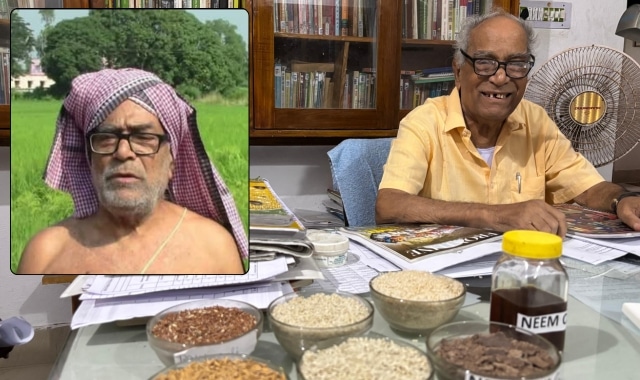
Renowned agricultural scientist and passionate advocate of natural farming, Natabar Sarangi, has passed away. The news has left farmers, environmentalists, and admirers across Odisha and beyond in profound grief.
Dr Arabinda Kumar Padhee, Additional Chief Secretary to Govt, Dept of Agriculture & Farmers’ Empowerment, expressed deep sorrow: “I am deeply pained and devastated to share the sad news that Natabar Sarangi Sir, the visionary behind the Amruta Anna project, has passed away. I will remember him with deep respect and gratitude for life. Om Shanti.”
Popularly known as “Natabar Mausaa,” Sarangi transformed natural farming into a movement through the Rajendra Desi Chasa Gabesana Kendra (Rajendra Indigenous Farming Research Centre) at Nariso, near Niali in Cuttack district. A retired school teacher by profession, he dedicated his life to realising the dream of his late elder son, Rajendra Sarangi, by promoting traditional desi farming practices on a massive scale.
Sarangi’s most significant contribution was the conservation and distribution of thousands of indigenous paddy varieties. He meticulously preserved these traditional seeds and made them accessible to farmers, reviving climate-resilient desi rice strains that had nearly vanished due to chemical-intensive agriculture. His efforts earned national recognition—his work is featured in the Class 8 textbook of Telangana as an inspiring example of sustainable farming.
One of his landmark achievements was the Amruta Anna project, through which his organisation signed an agreement with the Shree Jagannath Temple Administration in Puri to supply organically grown desi rice for the temple’s Mahaprasad. For this purpose, around 200 acres of farmland in the Niali region were brought under dedicated natural cultivation.
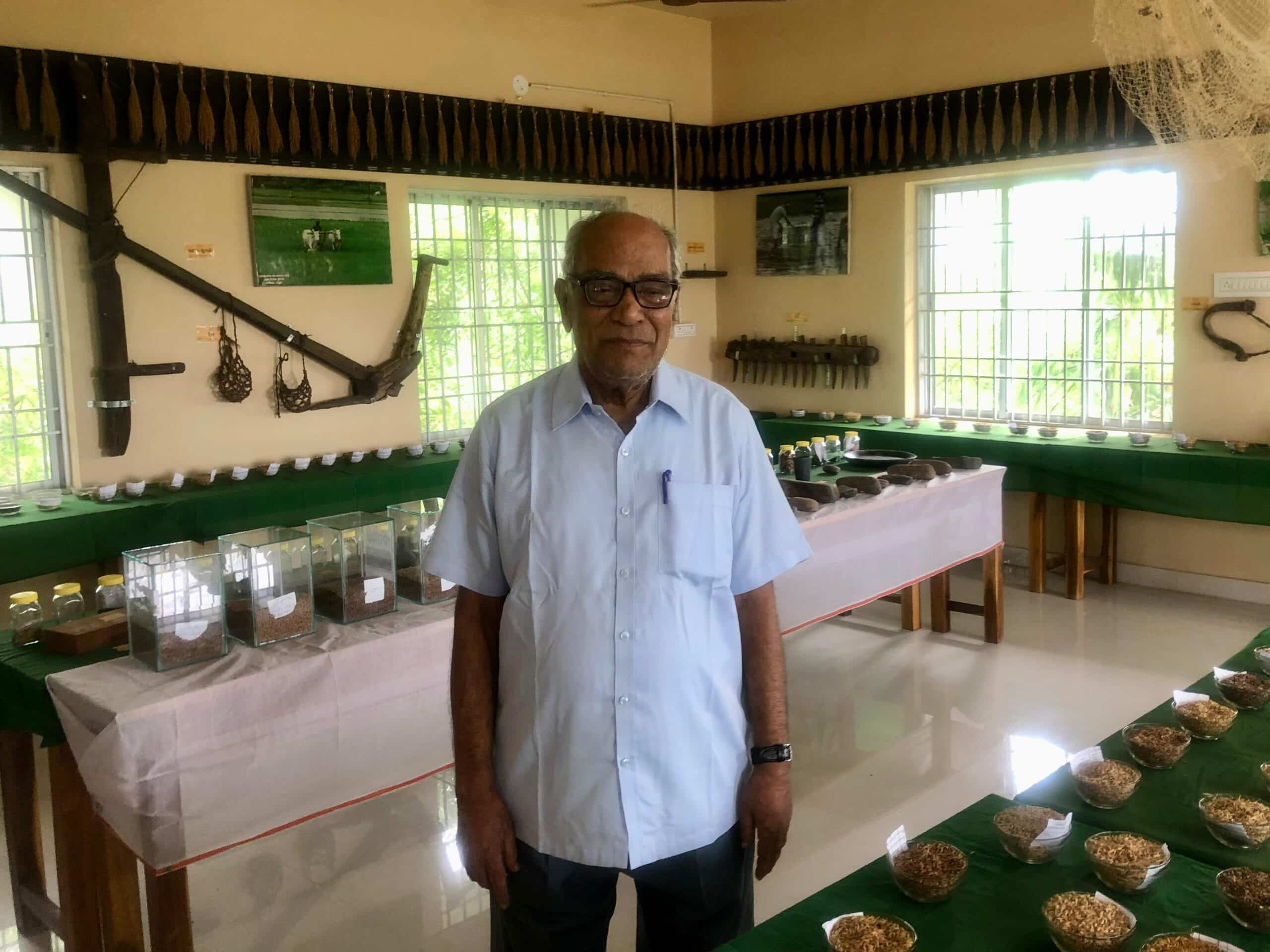
Sarangi received numerous accolades, including the Manmohan Choudhury Memorial Award and the Rabiray Green Centenary Award, in recognition of his lifelong commitment to ecological agriculture.
As per reports, in a final act of selfless service, Sarangi donated his body to SCB Medical College and Hospital in Cuttack for medical research and education.
Tributes continue to pour in from the Gandhian and Sarvodaya community, farmers’ organisations, and environmental activists, all acknowledging the irreparable loss his demise represents—not just personally, but for Odisha’s sustainable agriculture movement.
Natabar Sarangi’s legacy as a quiet revolutionary who brought ancient wisdom back to modern fields will endure for generations.