
In a significant setback for Pakistan, the United Arab Emirates (UAE) has reportedly abandoned its proposal to operate Islamabad International Airport, a plan that had been under discussion since August 2025, according to Pakistani media reports.
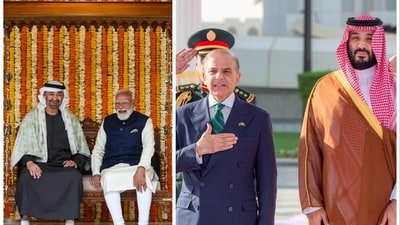
The development comes shortly after UAE President Sheikh Mohamed bin Zayed Al Nahyan’s three-hour stopover in New Delhi, a visit that has drawn attention for its possible ripple effects on South Asia’s evolving geopolitical landscape.
Islamabad Airport Plan Dropped
Pakistan’s daily The Express Tribune, citing official sources, reported that the UAE has stepped back from the proposal after failing to identify a suitable local partner to whom airport operations could be outsourced, despite earlier expressions of interest.
While the report does not explicitly attribute the decision to political considerations, the timing of the withdrawal has triggered speculation amid shifting regional alliances.
Regional Dynamics and Gulf Relations
Analysts note that the decision coincides with growing strains between the UAE and Saudi Arabia, once close Gulf allies, who are now publicly backing rival factions in Yemen. These developments are unfolding even as Pakistan deepens its defence cooperation with Saudi Arabia.
In September 2025, Pakistan and Saudi Arabia signed a defence agreement under which an attack on one would be considered an act of aggression against both.
Meanwhile, the UAE has moved in a different strategic direction by strengthening defence and security ties with India.
India-UAE Defence Partnership Gains Momentum
Earlier this month, Prime Minister Narendra Modi and UAE President Mohamed bin Zayed welcomed the signing of a Letter of Intent aimed at concluding a Strategic Defence Partnership during the UAE leader’s visit to New Delhi.
The joint statement issued after the meeting described the India-UAE Comprehensive Strategic Partnership as having entered a more ambitious and multidimensional phase, encompassing defence, technology, energy, and regional security cooperation.
Saudi Arabia, by contrast, has increasingly relied on Pakistan’s military expertise, underscoring the diverging strategic trajectories among key regional players.
Strained Pakistan-UAE Relations
Historically, the UAE was among Pakistan’s largest trading partners and a major source of remittances, employing thousands of Pakistani workers across sectors. The two countries also cooperated in defence, energy, and investment initiatives.
However, bilateral relations have faced challenges in recent years due to safety concerns, licensing disputes, ageing infrastructure, and governance issues. Reports have highlighted heavy losses at Pakistan’s state-owned enterprises due to political interference and mismanagement, leading to distress privatisations, including Pakistan International Airlines (PIA) last year.
Despite the UAE’s global experience in managing airports in challenging environments, including Afghanistan, its withdrawal from the Islamabad Airport project is being viewed as a significant loss of confidence.
Strengthening India-UAE Ties
In contrast, ties between India and the UAE have continued to strengthen. Following the UAE President’s recent visit to Delhi, 900 Indian prisoners were released, a move widely interpreted as a gesture of goodwill.
During the visit, both leaders reviewed the full spectrum of bilateral cooperation and agreed to advance towards a full-fledged Strategic Defence Partnership, marking a major step in long-term geopolitical and geo-economic alignment.