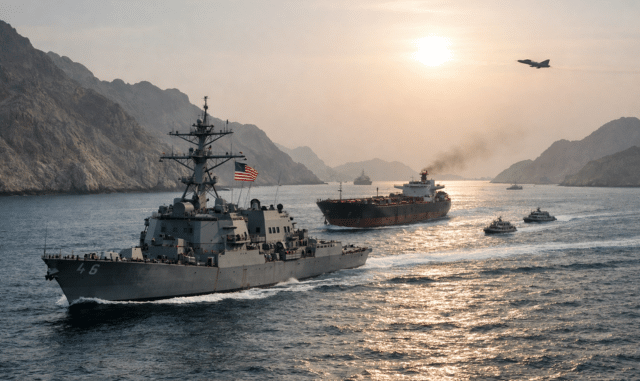
In a dramatic escalation of tensions, President Donald Trump announced that the United States Navy will begin blockading ships attempting to enter or leave the Strait of Hormuz.
The move follows the collapse of nearly 20 hours of ceasefire negotiations between Washington and Tehran in Islamabad, where Iran refused to limit its nuclear program.
Trump declared that “Iran will never have a nuclear weapon,” stressing that the nuclear issue outweighed all other points of discussion. He accused Tehran of deploying naval mines and imposing “illegal tolls” on vessels, framing the blockade as a defensive measure to protect international shipping.
The Strait of Hormuz is one of the world’s most critical maritime chokepoints, handling roughly 20 per cent of global energy flows. Any disruption threatens to destabilise oil markets and ripple across economies worldwide. Analysts warn that prolonged restrictions could trigger price spikes and intensify geopolitical instability.
Pakistan played host to the failed talks, with Trump praising Field Marshal Asim Munir and Prime Minister Shehbaz Sharif for their mediation efforts. Despite progress on secondary issues, the nuclear impasse proved insurmountable.
Iranian officials expressed frustration, claiming the US failed to build trust despite Tehran’s “constructive proposals.” Parliamentary Speaker Mohammad Baqer Qalibaf argued that Washington must decide whether it truly seeks to earn Iran’s confidence.
Trump, however, insisted that Iran’s military capabilities are already degraded and warned of “overwhelming retaliation” if US or commercial vessels are attacked. The announcement signals a hardening of Washington’s stance and raises fears of a wider confrontation in the Gulf.
As the blockade begins, global markets and regional powers brace for fallout. The failure of diplomacy underscores the fragility of peace efforts and the high stakes surrounding nuclear negotiations in the Middle East.