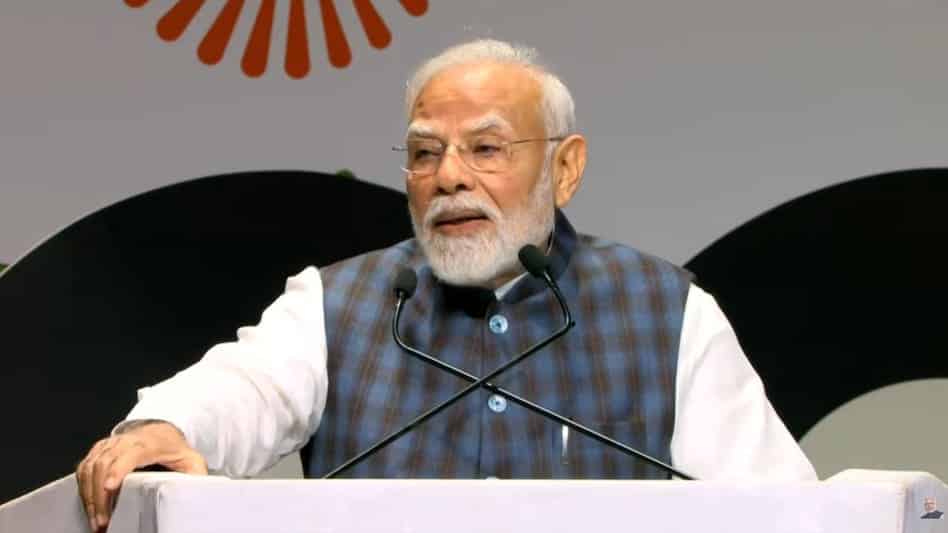
Prime Minister Narendra Modi on Thursday, November 19, 2026, challenged corporate India to evaluate whether landmark corporate and personal tax reductions have translated into higher employment and better salaries for workers, urging industry leaders to shoulder greater responsibility for job creation and long-term national growth.
Addressing the Federation of Indian Chambers of Commerce and Industry’s (FICCI) Annual General Meeting and Annual Convention at Bharat Mandapam in New Delhi, the Prime Minister pointed to the government’s sweeping fiscal concessions—including slashing the base corporate tax rate for existing domestic firms from 30 per cent to 22 per cent (an effective rate of 25.17 per cent) in September 2019, introducing a 15 per cent base rate for new domestic manufacturing units, and making individual annual incomes up to ₹12 lakh tax-free—and asked whether businesses had matched these steps with expanded hiring and wage hikes.
PM Modi Invites Reform Suggestions, Pushes ‘India First’ Investments
Encouraging industry captains to engage candidly with the government, Modi invited concrete suggestions to accelerate India’s economic expansion and urged businesses to invest heavily in agriculture and allied sectors to strengthen domestic self-reliance.
Calling on companies to place ‘India First’ at the core of every investment decision over the next 20 years, the Prime Minister said aligning corporate strategy with national priorities would unlock durable global opportunities for Indian enterprises.
“Without hesitation or reservation, please write to me openly about what still needs to be improved.”
— Prime Minister Narendra Modi (at FICCI AGM, New Delhi)
50 Crore Lifted Out of Poverty, Says PM; Calls for Respecting Wealth Creators
Citing recent World Bank findings, Modi noted that 50 crore people in India have moved out of poverty over the past 12 to 13 years alongside faster tax refunds and rising household purchasing power. He added that a nation advances rapidly only when it respects its farmers, small entrepreneurs, industries, wealth creators, and taxpayers rather than subjecting them to constant criticism.