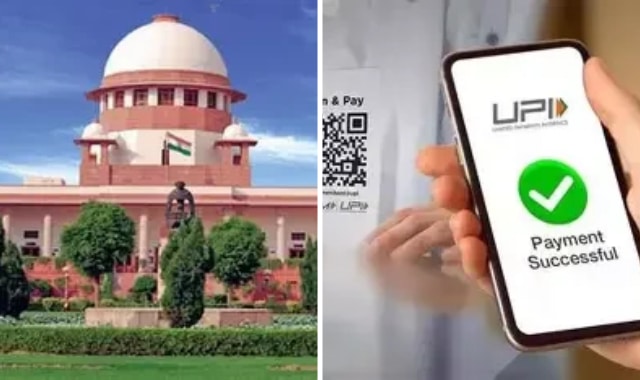
The Supreme Court of India has refused to grant an interim stay on the Central government’s contentious decision to impose a Merchant Discount Rate (MDR) on specified UPI transactions exceeding Rs 2,000.
While declining an immediate halt to the framework, the top court has sought formal responses from the central government, the Reserve Bank of India (RBI), the National Payments Corporation of India (NPCI), and the UPI Steering Committee within four weeks.
The challenge targets the new policy framework slated to introduce a 0.4% MDR on certain person-to-merchant (P2M) UPI payments above the Rs 2,000 threshold. During the hearing, the bench raised pertinent queries regarding the nature of the levy, prompting extensive legal and technical evaluations.
Defending the mechanism, the government has repeatedly maintained that ordinary citizens and consumers will remain untouched by the policy. Officials emphasise that roughly 96 per cent of all P2M transactions—alongside all person-to-person (P2P) transfers—will stay entirely free and unaffected. Furthermore, the government and the NPCI have clarified that the MDR is a merchant-side processing fee meant to support the digital payment ecosystem, and banks have been strictly advised to prevent merchants from passing these charges onto everyday consumers.
With the Supreme Court issuing notices and demanding comprehensive counter-affidavits within a month, all eyes remain fixed on the upcoming legal submissions and how the digital payments landscape adapts to the evolving guidelines.