

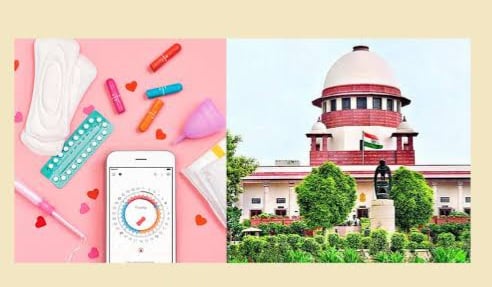
In a landmark judgment, the Supreme Court on Friday ruled that the right to menstrual hygiene is a fundamental constitutional right, forming an integral part of the right to life and the right to privacy under Article 21 of the Constitution of India.
The court held that access to safe, dignified and hygienic menstrual care is not a matter of welfare or discretion, but a constitutional entitlement that the state is duty-bound to ensure for all girls and women.
Binding Directions Issued to States and Schools
The verdict was delivered by a bench comprising Justice JB Pardiwala and Justice R Mahadevan while hearing a petition seeking free sanitary pads and adequate sanitation facilities for schoolgirls across the country.
The Supreme Court issued mandatory and enforceable directions to all States, Union Territories and educational institutions—both government and private—emphasising that dignity, health, equality and privacy cannot be compromised.
Free Sanitary Pads and Toilets Made Mandatory
As part of the ruling, the apex court directed that:
-
Biodegradable sanitary napkins must be provided free of cost to all girl students in schools
-
Separate toilets for boys and girls must be available in every school
-
Disability-friendly toilets must be ensured to promote inclusive access
The court warned that private schools could face derecognition if they fail to comply with these directions. Governments, the bench said, would be held strictly accountable for implementation and monitoring.
Judgment Triggered by Period-Shaming Incident
The ruling traces its origin to proceedings initiated in November 2025, when the Supreme Court took suo motu cognisance of a shocking incident at Maharshi Dayanand University in Haryana. In that case, women sanitation workers were allegedly asked to send photographs of their used sanitary pads to “prove” menstruation—an act that sparked nationwide outrage and debate on menstrual dignity.
Menstrual Dignity Linked to Education and Health
Justice Pardiwala observed that the progress of a society is reflected in how it treats and protects its most vulnerable members. He noted that the judgment was not meant only for legal institutions, but also for classrooms where girls often hesitate to speak up due to stigma.
The court underlined that lack of menstrual hygiene facilities directly affects girls’ health, education, attendance, privacy and equality, reinforcing the need for systemic change.