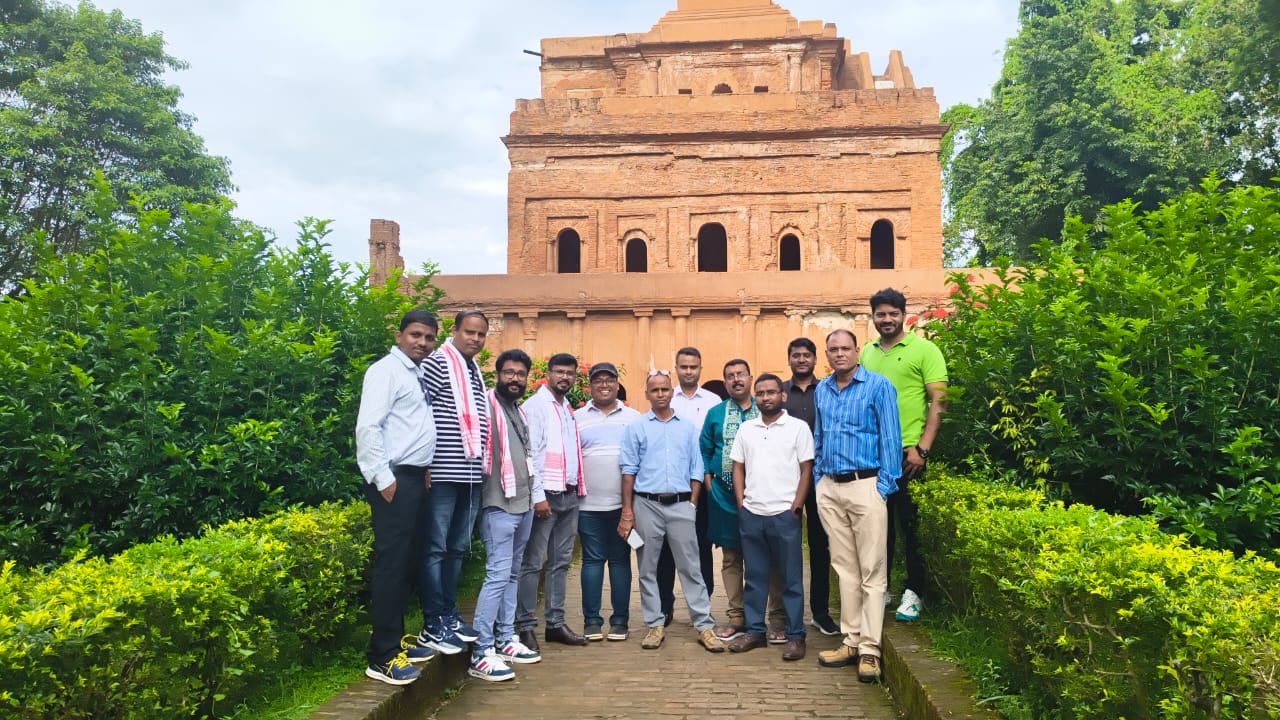
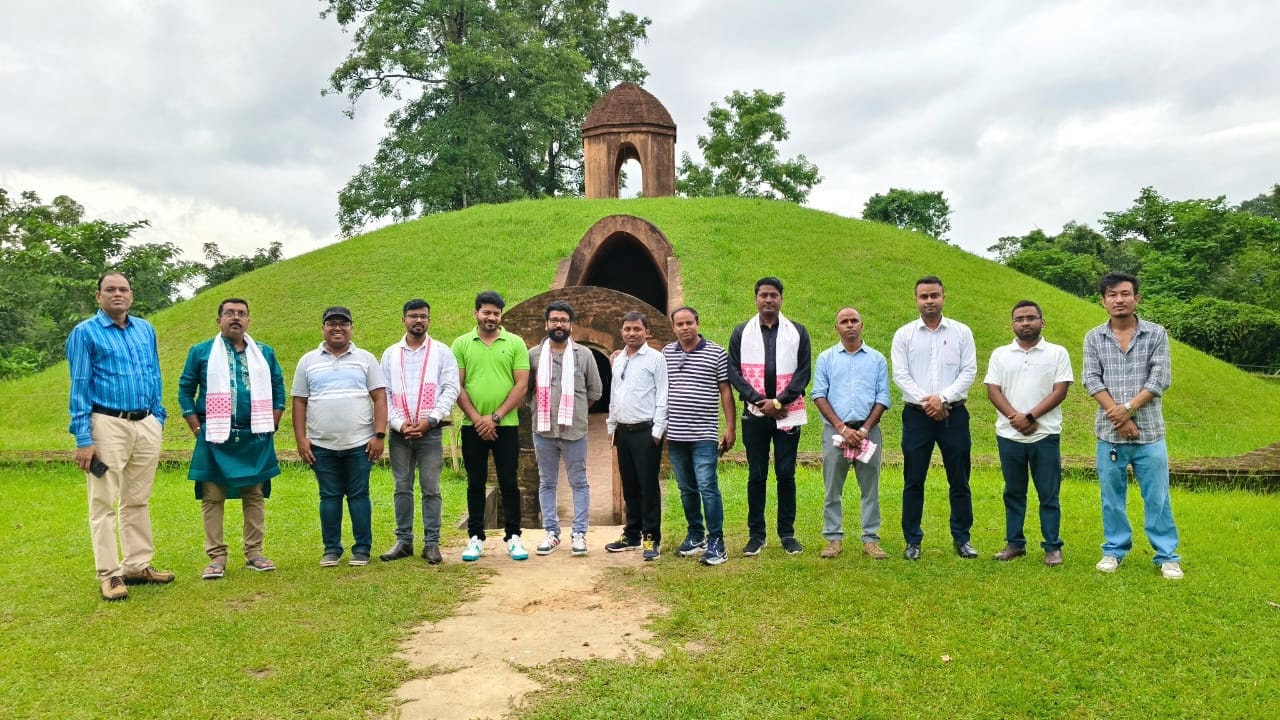
For six centuries the Tai-Ahom kings ruled the Brahmaputra Valley. When they died, they did not vanish into ash and river. They were laid in vaulted crypts, covered with earthen barrows, and crowned with octagonal pavilions that still punctuate the foothills of the Patkai. On Wednesday, a senior media delegation from Odisha stood on that sacred ground.
Led by the Press Information Bureau, Bhubaneswar, as part of an interstate media exposure tour to Assam, the journalists visited the newly inscribed UNESCO World Heritage Site — the Moidams of the Ahom Dynasty at Charaideo — and the monument complexes of historic Sivasagar. The visit was designed as firsthand immersion: not a brochure tour, but a walk through Northeast India’s monumental heritage and the conservation system steered by the Archaeological Survey of India with the Government of Assam.
The shining city above the hills
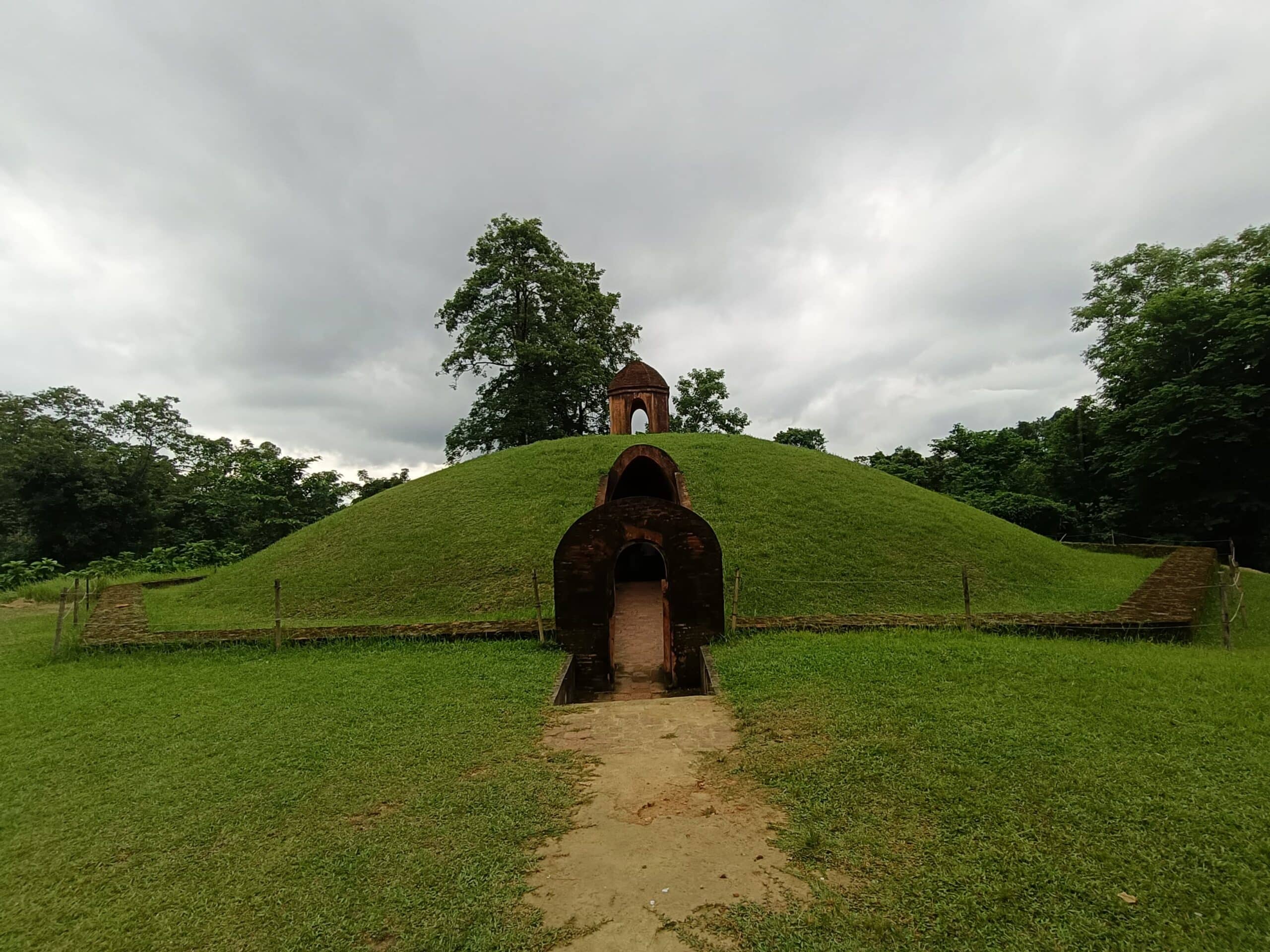
Charaideo — Che-Rai-Doi, “a dazzling city above the mountains” — was established in 1253 CE by Chao Lung Siu-ka-pha, founder of the Tai-Ahom dynasty. Even after the capital moved, this ridge remained the spiritual heart of the kingdom: the place where royal souls were believed to pass into the afterlife. Inscribed as India’s 43rd UNESCO World Heritage property and the first cultural site from the Northeast, the Charaideo Moidams embody an exceptional earthen tumulus burial tradition.
ASI officials led the delegation through the necropolis. Each moidam, they explained, is a layered cosmology made physical: a subterranean vaulted crypt for royal remains; a hemispherical earthen mound above it; and, at the summit, a *chow-chali* — an octagonal pavilion. Ninety royal mounds of varying scale survive within the property, the most complete concentration of a tradition also known in parts of Southeast Asia, but nowhere assembled with this density and continuity.
Journalists heard how the architecture changed with faith and time. Early vaults were largely of wood; later royal tombs used brick, stone and lime mortar. After the Ahoms adopted Hindu practices, ashes rather than bodies were sometimes placed in the mounds. The *Changrung Phukan*, the Ahom architectural treatise, still records the organic mortar recipes used to bind these structures — knowledge now paired with modern science.
Where the dynasty ruled
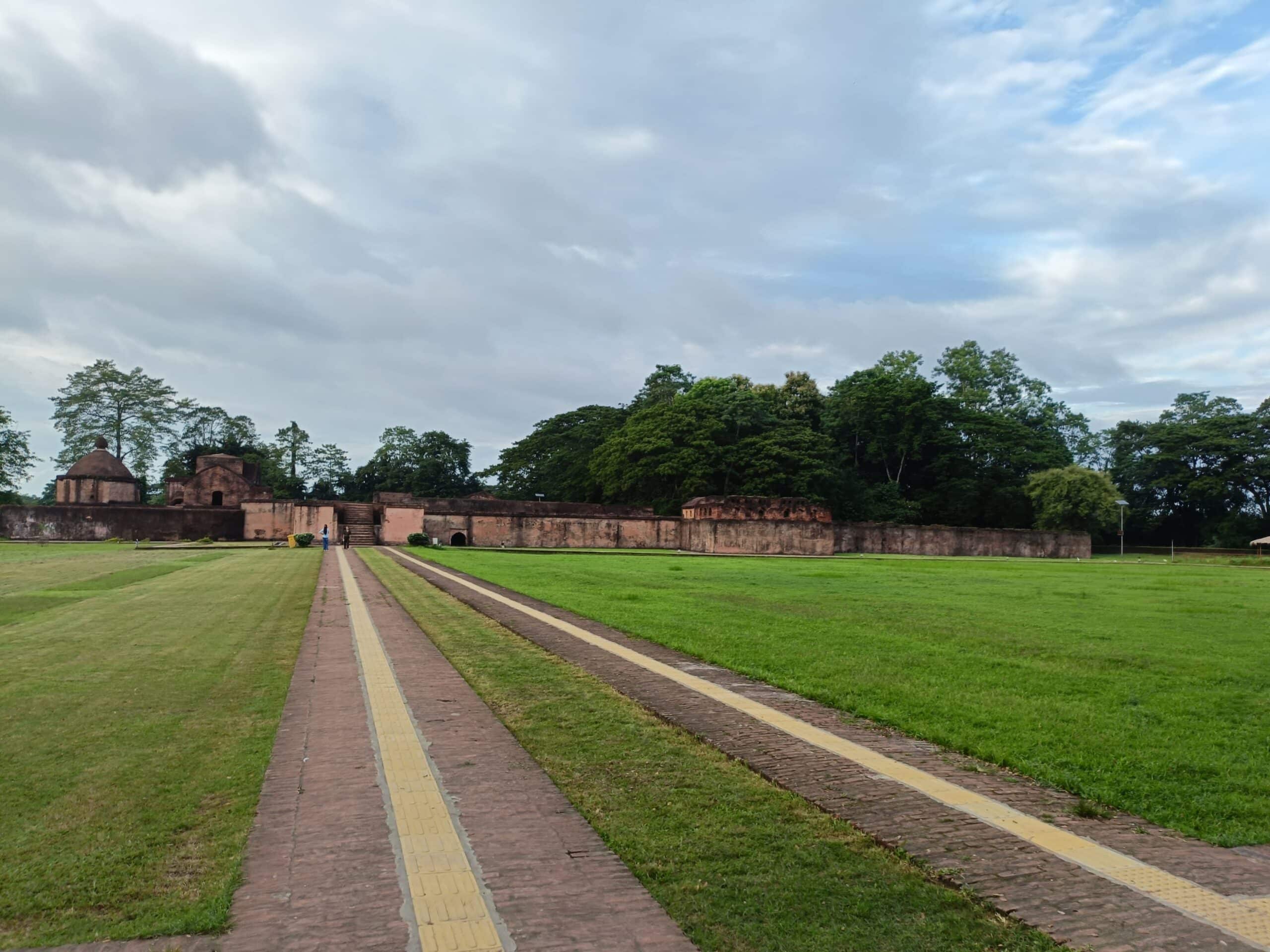
Then, the team travelled to Rongpur — today’s Sivasagar — the political capital from which the Ahoms governed. At Talatal Ghar they studied a palace built as much for war as for court: subterranean barracks and a maze of escape tunnels that turn architecture into strategy.
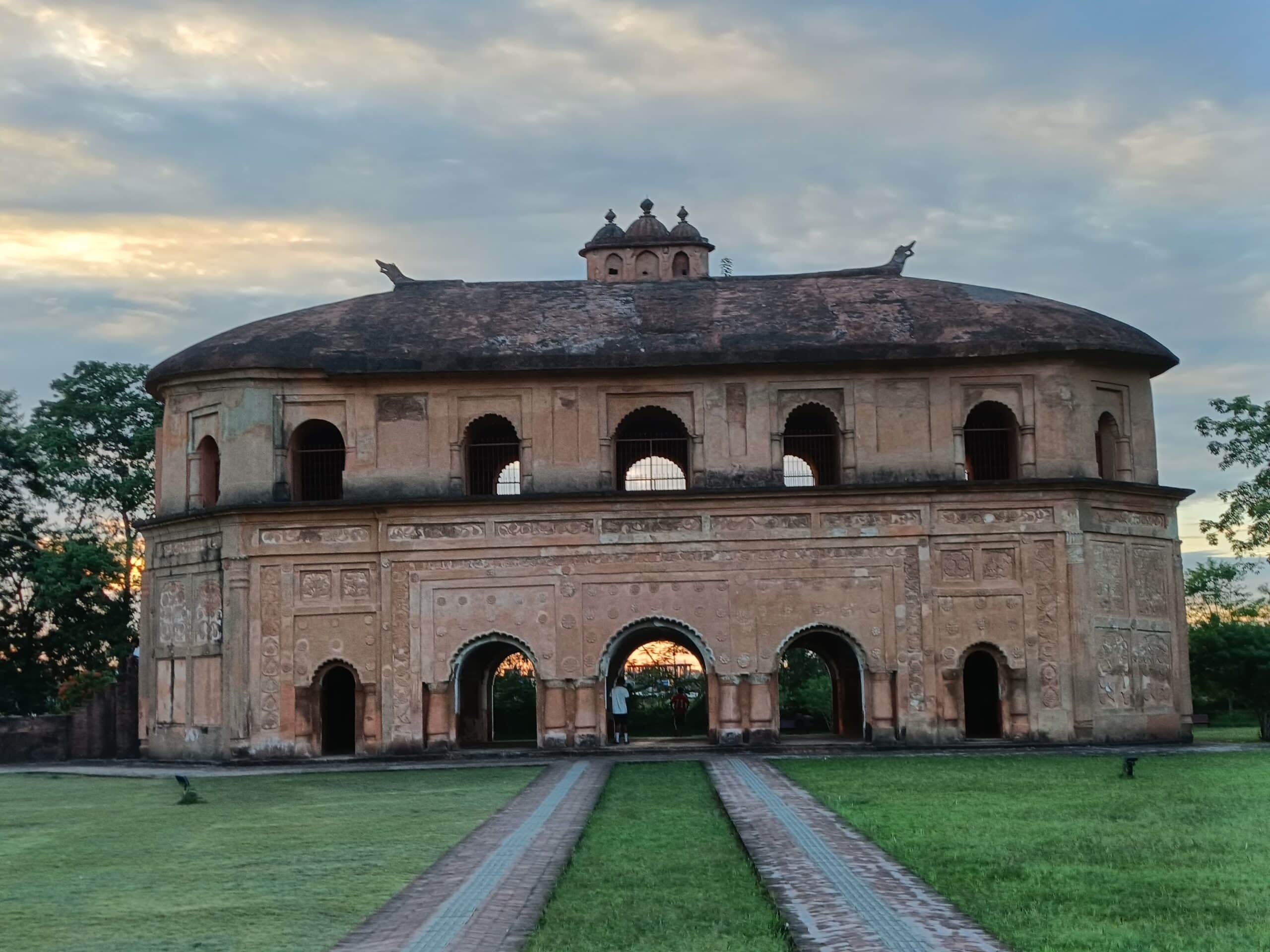
At Rang Ghar, often called Asia’s earliest surviving secular sports amphitheatre, the two-storied, boat-shaped pavilion still reads as a stage for royal games and festivals. The tour closed at the sacred cluster of Siva Dol, Vishnu Dol and Devi Dol. Siva Dol’s soaring historic spire remains one of the loftiest temple towers in the country — a stone exclamation after the quiet geometry of the mounds.
Science beneath the sacred
Conservation, officials stressed, is not nostalgia. Teams described biocidal cleansing of organic growth, geotechnical stabilization of earthen masses, and perimeter drainage to keep monsoon water from unmaking what six centuries of rain have not yet erased. The organic mortars documented in Ahom texts now sit beside laboratory protocols. Memory, here, is a maintenance schedule.
For the Odisha journalists, the day was a lesson in civilizational adjacency. Odisha’s own temples and forts speak a different architectural language; Assam’s mounds speak of ancestors, earth and afterlife. Together they argue that India’s heritage is not a single skyline but a conversation across valleys.
As the delegation left Charaideo, the mounds receded into green slopes — unshowy, almost shy, until one remembers that kings sleep underneath. Stones, mounds, and memory: three materials, one story, now shared across state lines.