

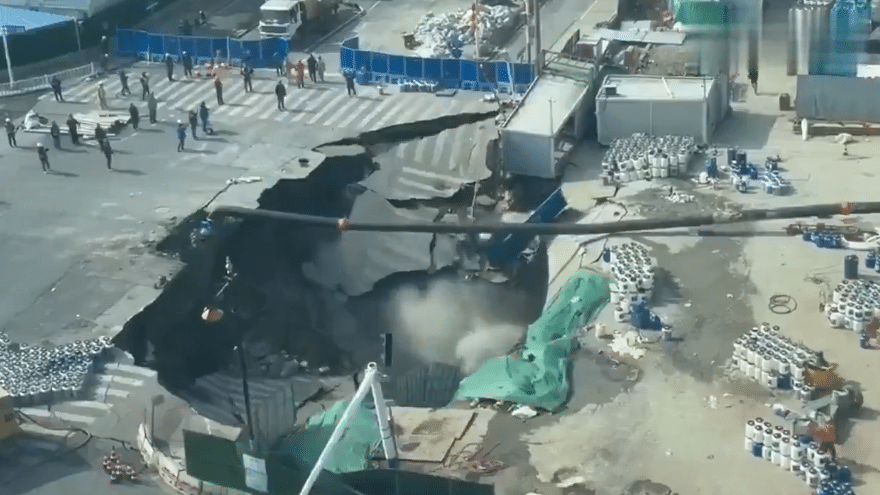
Shanghai witnessed a terrifying infrastructure failure this week when a massive sinkhole suddenly opened on Qixin Road in Minhang District, swallowing a wide section of tarmac in seconds.
CCTV footage showed the ground buckling without warning, cracks racing through nearby buildings, and vehicles swerving at the last moment to avoid disaster.
The collapse occurred on February 11, a day after crews flagged a water leak in the area. By Thursday morning, the minor issue escalated into a 10–20 metre wide crater plunging deep into the earth. Street lamps swayed as asphalt folded inward, debris tumbling into the void.
Fortunately, no fatalities were reported, though the close calls and structural damage rattled residents. Experts noted that Shanghai’s soft alluvial soil, combined with years of groundwater pumping and rapid construction, makes the city prone to subsidence. Underground voids from pipe bursts and ageing infrastructure are often behind such incidents.
Data shows that 72 per cent of sinkholes in China since 2017 stem from human-related factors such as utility failures and poor construction. In January 2024, a sewage pipe blowout caused a similar collapse in Minhang, though on a smaller scale.
Emergency crews from the China Railway Tunnel Bureau rushed to stabilise the site, erecting barriers and deploying pumps. Engineers suspect a burst water main beneath the road triggered the collapse.
For residents, the incident serves as a stark reminder of hidden risks beneath fast-growing urban centres, where gleaming towers often mask fragile ground conditions.