Indian equity markets witnessed a sharp gap-down opening on Monday as escalating tensions in West Asia rattled global investor sentiment.
The BSE Sensex plunged 1,100 points at the opening bell, while the Nifty 50 declined 330 points.
During pre-open trade, the Sensex had fallen 3.4% or 2,743 points to 78,543.73, while the Nifty 50 slipped 2.06% or 519.40 points to 24,659.25, reflecting intense early selling pressure.
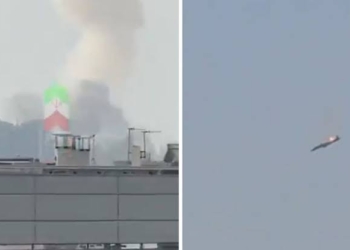
The slide followed weak global cues after joint US-Israel strikes on Iran heightened fears of a prolonged regional conflict.
Broader Markets and Sectoral Indices Under Pressure
Broader indices mirrored the weakness:
-
Nifty Midcap 100 opened significantly lower
-
Nifty Smallcap 100 also declined
Among sectoral indices, Nifty Realty emerged as the worst performer. Shares of Godrej Properties, Signature Global, and Lodha Developers fell sharply at the open.
Other lagging sectors included Nifty Media and Nifty Oil & Gas.
Top losers in early trade included:
-
InterGlobe Aviation
-
Rajesh Exports
-
Birla Corporation
-
Future Lifestyle Fashions
On the gaining side, select defence and metal stocks showed resilience, including:
-
Bharat Dynamics Limited
-
Multi Commodity Exchange of India
-
Mishra Dhatu Nigam
Rupee Weakens, Oil Prices Surge
The Indian rupee depreciated sharply, opening at 91.26 against the US dollar compared to Friday’s close of 90.98.
Meanwhile, oil prices spiked amid concerns over potential supply disruptions from the Middle East — a key global energy hub. Brent crude and US crude futures jumped significantly in early trade, adding to inflation worries worldwide.
Global Markets Reel from Iran Escalation
Global equities also faced heavy selling pressure:
-
US stock futures declined nearly 1% overnight.
-
Japan’s Nikkei 225 and South Korea’s Kospi fell up to 2–3% in early trade.
-
Hong Kong’s Hang Seng Index opened lower.
Trading was suspended on the Abu Dhabi Securities Exchange and the Dubai Financial Market for Monday and Tuesday amid heightened volatility.
US President Donald Trump signalled that military operations could continue for “four to five weeks,” intensifying fears of prolonged geopolitical instability.
Volatility Likely to Persist
Market analysts expect elevated volatility in the near term as investors reassess risks related to:
-
Oil supply disruptions
-
Inflationary pressures
-
Foreign institutional investor outflows
-
Currency depreciation
Safe-haven assets and select defence and commodity stocks may see relative strength if geopolitical tensions persist.
For now, Dalal Street remains highly sensitive to developments in West Asia, with investor sentiment closely tied to global cues.