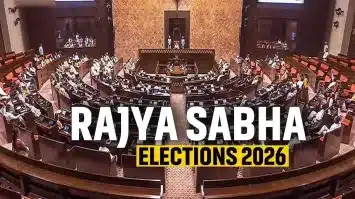
Voting is being held today for 37 seats in the Rajya Sabha, the Upper House of India’s Parliament, across 10 states. The biennial elections were announced by the Election Commission of India, with polling from 9 am to 4 pm and counting beginning at 5 pm the same day.
These elections are being conducted because the terms of several sitting members from states such as Bihar, Tamil Nadu, West Bengal, Chhattisgarh, Assam, Haryana, Maharashtra, Odisha, Himachal Pradesh, and Telangana are ending in April.
26 Seats Already Decided, Voting for 11 Seats
Out of the 37 seats, 26 candidates have already been elected unopposed, leaving 11 seats to be decided through voting today.
The key contests are in:
-
Bihar – 5 seats
-
Odisha – 4 seats
-
Haryana – 2 seats
These states have become the main battleground between the ruling National Democratic Alliance and the opposition INDIA alliance.
NDA Eyes Stronger Position in the Upper House
The Bharatiya Janata Party-led NDA already has more than 130 members in the Rajya Sabha, including nominated members.
With its strong presence in several state assemblies such as Maharashtra, Assam, Chhattisgarh, and Haryana, the alliance is expected to gain around 4–6 additional seats, potentially pushing its strength above 135 seats.
This could make it easier for the government to pass legislation and constitutional amendments in Parliament.
Opposition Faces Potential Setbacks
The opposition INDIA bloc, which currently holds a significant number of the seats up for election, risks losing 3–5 seats due to changing political alignments and legislative numbers in several states.
However, regional parties such as the Dravida Munnetra Kazhagam in Tamil Nadu and the Biju Janata Dal in Odisha are expected to maintain their existing representation.
Prominent Leaders Already Elected Unopposed
Several prominent political figures have already secured Rajya Sabha seats without contest, including:
-
Sharad Pawar – veteran leader from Maharashtra
-
Abhishek Manu Singhvi – senior leader of the Indian National Congress
-
Tiruchi Siva of the DMK
-
Vinod Tawde of the BJP
Nitish Kumar’s Move to Rajya Sabha
One of the most significant developments in this election is the decision of Nitish Kumar, long-time Chief Minister of Bihar, to enter the Rajya Sabha.
The 75-year-old leader filed his nomination in the presence of Amit Shah and other senior leaders, saying he intends to continue contributing to Bihar’s development while serving in Parliament.
Other NDA candidates include Upendra Kushwaha and Nitin Nabin.
Parties Move MLAs to Prevent Cross-Voting
Ahead of voting, several parties have shifted their MLAs to resorts or safe locations amid concerns over cross-voting and alleged horse-trading.
The Election Commission has also instructed legislators to use violet-coloured sketch pens provided by the Returning Officer to mark their vote on the ballot paper to ensure secrecy and prevent invalid votes.
How Rajya Sabha Elections Work
The Rajya Sabha is a permanent chamber of Parliament and cannot be dissolved. Members serve six-year terms, and about one-third retire every two years, which triggers periodic elections to fill the vacancies.
These biennial elections help maintain continuity in the Upper House while reflecting the changing political balance in state legislatures.