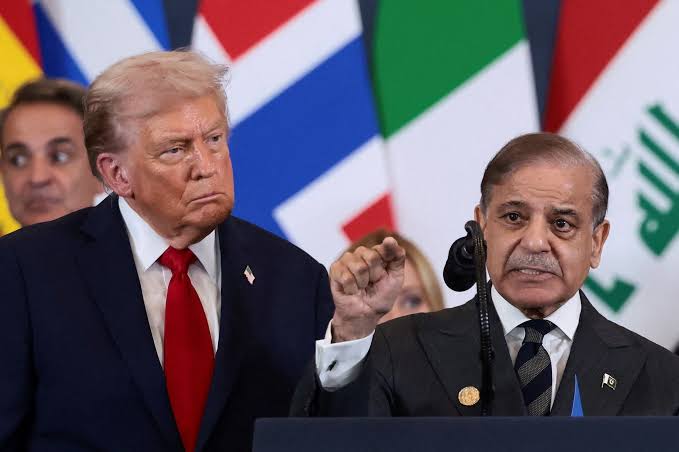
Pakistan has firmly rejected calls to join the Abraham Accords, with Defence Minister Khawaja Muhammad Asif saying such a move would go against the country’s “fundamental ideologies.”
The remarks came after reports that US President Donald Trump urged several countries, including Pakistan, to formally recognise Israel as part of a broader diplomatic initiative linked to easing tensions involving Iran.
‘Not Acceptable to Us’
Speaking to Pakistani broadcaster Samaa TV, Asif said Islamabad has a clear and unchanged position on the issue.
“Personally, I don’t think we should join any such accord that clashes with our fundamental ideologies,” Asif said during the interview.
When asked whether the US administration had approached Pakistan regarding the proposal, the minister replied:
“We have a very clear stance that this is not acceptable to us.”
He also questioned the possibility of engagement with Israel, saying Pakistan could not trust a country “whose word cannot be trusted even for a single day.”
Pakistan Reaffirms Longstanding Israel Policy
Pakistan has never officially recognised Israel since its creation in 1948.
Islamabad has consistently maintained that recognition of Israel would only be possible after the establishment of an independent Palestinian state under a two-state solution framework.
Asif highlighted that Pakistan remains one of the few countries whose passports do not permit travel to Israel.
The country’s position traces back to founder Muhammad Ali Jinnah, who opposed the partition plan for Palestine in the late 1940s.
What Are the Abraham Accords?
The Abraham Accords were launched in 2020 during Trump’s earlier presidency to normalise relations between Israel and several Arab nations.
Countries including:
- United Arab Emirates
- Bahrain
- Morocco
- Sudan
agreed to establish diplomatic and economic ties with Israel under the US-backed framework.
The initiative was widely presented as a major diplomatic breakthrough in the Middle East.
Trump Pushes Wider Recognition of Israel
Trump recently renewed calls for more countries to join the accords, arguing that broader participation could bring long-term peace and stability to the region.
According to reports, Trump held discussions with leaders from:
- Saudi Arabia
- Turkey
- Qatar
- Jordan
- Egypt
- Pakistan
while pushing for wider regional recognition of Israel.
In a post on Truth Social, Trump described participation in the Abraham Accords as “mandatory” for most countries involved in the broader peace process.
Pakistan Previously Denied Joining Accords
Pakistan’s Foreign Minister Ishaq Dar had earlier dismissed speculation that Islamabad was considering joining the accords.
“We are not ready to recognise Israel until the two-state solution to the Palestine conflict is accepted,” Dar had said earlier this year.
Pakistan’s Foreign Office has repeatedly clarified that participation in regional peace forums or diplomatic initiatives does not signal any change in its official policy toward Israel.
Regional Reactions Likely to Continue
Trump’s renewed push for expanding the Abraham Accords is expected to remain controversial across several Muslim-majority countries where public opinion strongly supports the Palestinian cause.
For Pakistan, analysts believe any move toward recognising Israel would face significant political, religious and public opposition domestically.
As tensions continue in the Middle East, Pakistan’s latest remarks indicate that Islamabad is unlikely to alter its decades-old policy anytime soon.