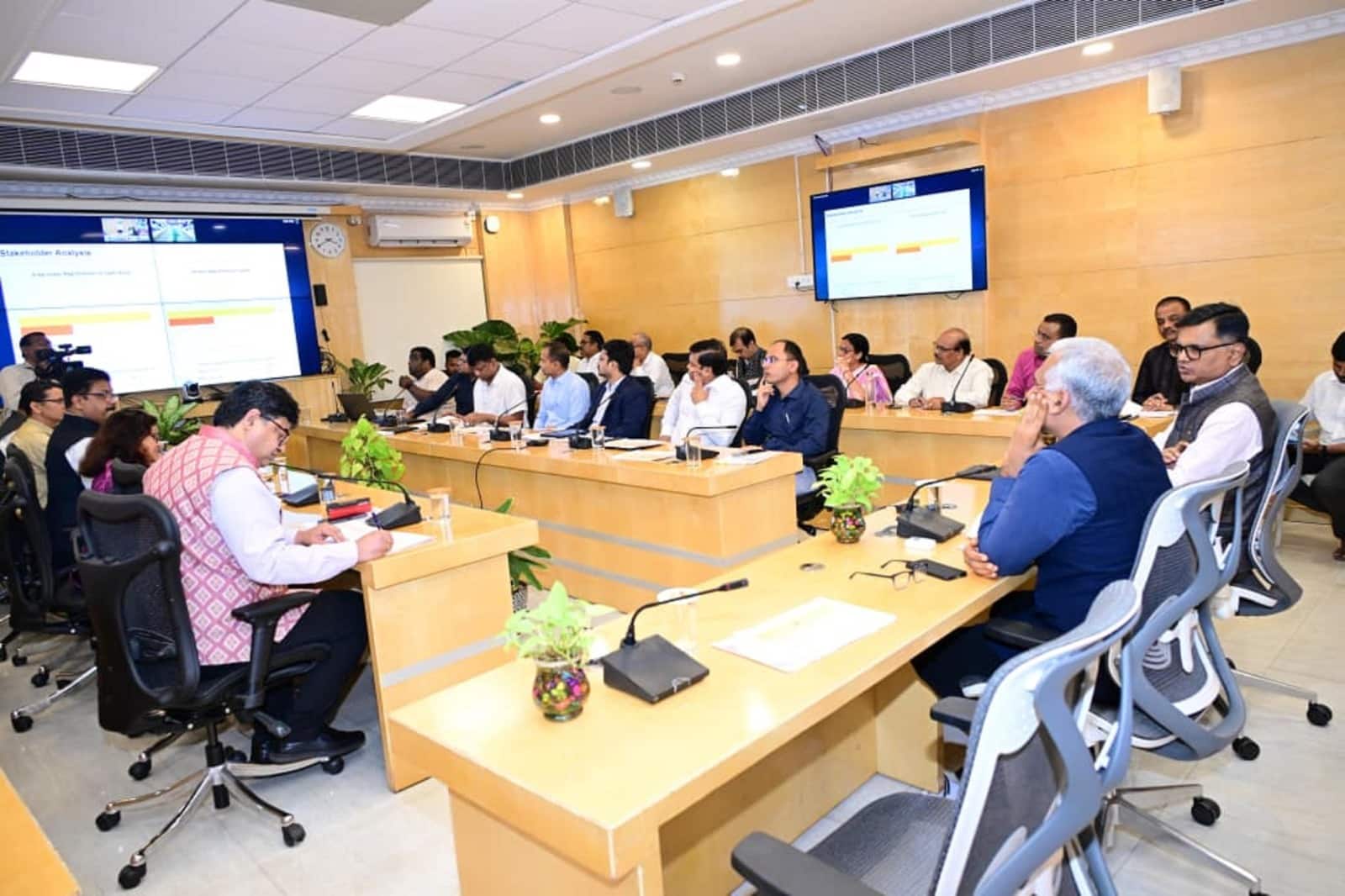
In a bid to ensure smooth and orderly paddy procurement for the 2025-26 Kharif marketing season, Odisha’s Chief Secretary Manoj Ahuja chaired a high-level committee meeting on November 21 at the Lok Seva Bhawan conference hall.
The meeting focused on coordinating efforts among relevant departments and district collectors to streamline the process, emphasising the need for systematic operations to benefit genuine farmers.
Key officials in attendance included Principal Secretary of Food Supplies and Consumer Welfare Sanjay Kumar Singh, Principal Secretary of Finance Sanjeev Kumar Mishra, Commissioner-cum-Secretary of Cooperation Rajesh Prabhakar Patil, Managing Director of Odisha State Civil Supplies Corporation K. Sudarshan Chakravarthy, Director of Agriculture Shubham Saxena, and representatives from the Food Corporation of India (FCI), along with other senior officials. All district collectors participated virtually.
During the session, Ahuja issued directives and advice to make the procurement efficient. He stressed the importance of prioritizing small, marginal, and sharecropper farmers, ensuring timely payments within 48 hours of procurement at the minimum support price (MSP). For common variety paddy, the MSP, inclusive of input assistance, stands at Rs 3,100 per quintal, adhering to quality standards set by the Government of India.
Reviewing past performance, the meeting noted that in the 2024-25 Kharif season, 73.45 lakh metric tonnes (MT) of paddy were procured, alongside 19.18 lakh MT in the Rabi season. So far, 72% of the corresponding rice has been collected, with the process ongoing. In 2023-24, 85% rice collection was achieved. For the upcoming 2025-26 season, 19.68 lakh farmers have registered for paddy sales, up from 17.50 lakh last year. The state has set a target of 93 lakh MT of paddy procurement across both Kharif and Rabi seasons.
Ahuja highlighted that 98% of farmers received direct payments within 48 hours during the last Kharif season. The Food Procurement Policy for 2025-26 was approved in the October Cabinet meeting, with the Kharif procurement window open from November 1, 2025, to March 31, 2026. Guidelines for procurement management have been dispatched to all district collectors.
Only agencies without pending dues from previous seasons (excluding Rabi 2024-25) with state government institutions will participate in custom milling and rice delivery. The state has conducted 100% satellite verification of paddy-cultivated lands. Farmer registration requires mandatory e-KYC, and procurement will involve Aadhaar-based authentication to ensure transparency.
District-level paddy procurement committees will decide specific start dates based on harvest conditions. To address farmer grievances, the Odisha State Civil Supplies Corporation has activated a toll-free helpline at 1967. Additionally, 30 call centre executives will operate in two shifts at the corporation’s headquarters to manage procurement-related queries.
Emphasis was placed on information dissemination and training: Nodal officers, mandi supervisors, and master trainers across districts have undergone skill enhancement programs, with ongoing sessions. A total of 3,134 Primary Agricultural Cooperative Societies (PACS) and Large Area Multi-Purpose Societies (LAMPS) will handle procurement, supported by 1,419 custom mills. The state boasts 4,088 mandis and 163 godowns from FCI and the supplies corporation, with a combined storage capacity of 6.68 lakh MT (including owned and rented facilities).
Farmer registrations are complete in all districts. Early-harvesting districts must finalise land-based authentication by November 25, while late-harvesting ones have until November 30. Equipment for paddy testing will be checked well in advance.
Ahuja advised integrating farmer registrations with digital crop surveys for better monitoring of cultivated areas. He underscored the need for genuine farmers to receive their dues promptly, advising districts to align mandi operations with harvest timelines to prevent distress sales. Officials and staff must be present on-site timely manner to avoid issues like arbitrary deductions. District administrations and the supplies corporation’s control room should function regularly for oversight.
The Chief Secretary reiterated the state government’s sensitivity toward paddy procurement, deeming it a top priority. He warned against any laxity and directed the establishment of a special police control room with regular patrolling. Inter-departmental coordination involving revenue, cooperation, district police, transport, supplies officers, cooperative registrars, and others was emphasised to execute the process orderly.
Enforcement squads at the district level will monitor operations regularly, with strict border checks to prevent unauthorised paddy inflow from other states. Collectors are instructed to review procurement daily and resolve complaints swiftly. Mandis will feature 24/7 CCTV surveillance, along with basic amenities like drinking water, toilets, lighting, shade over platforms, and rest houses.
Cooperation Commissioner-cum-Secretary Patil presented comprehensive measures taken by his department to facilitate easy and convenient procurement for farmers.